
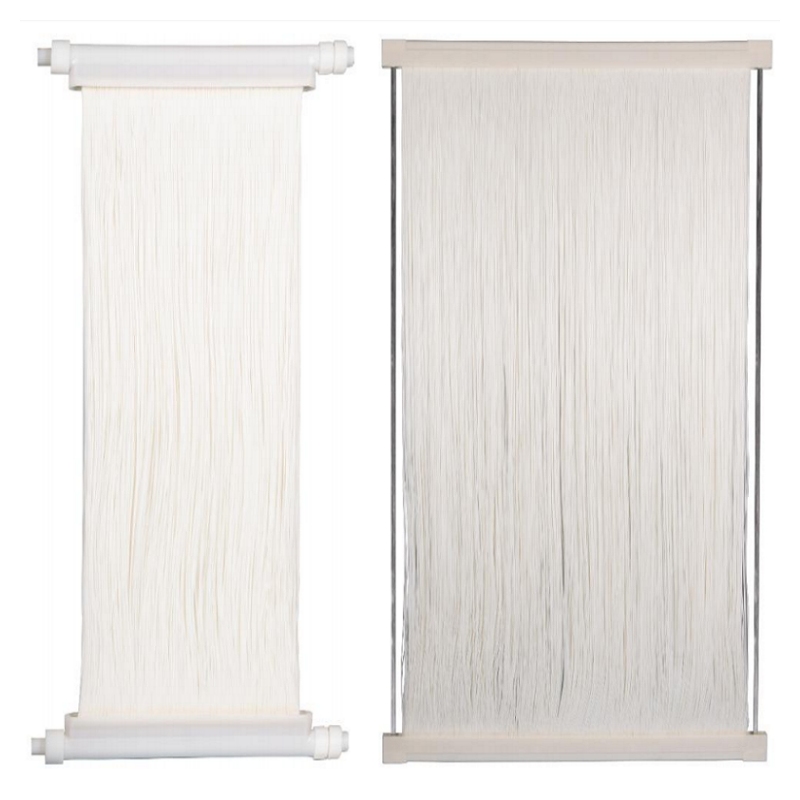
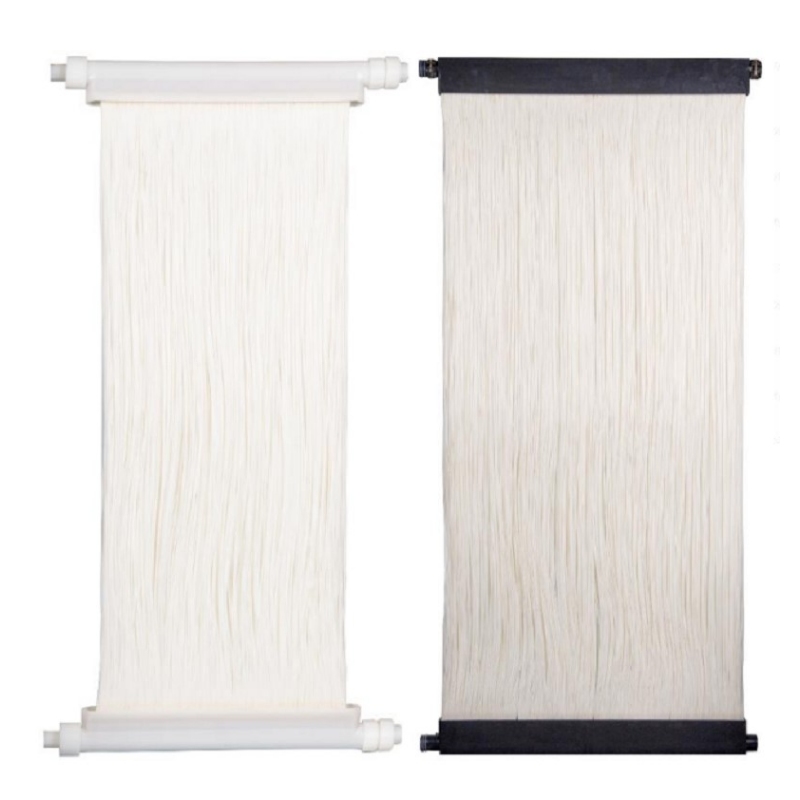
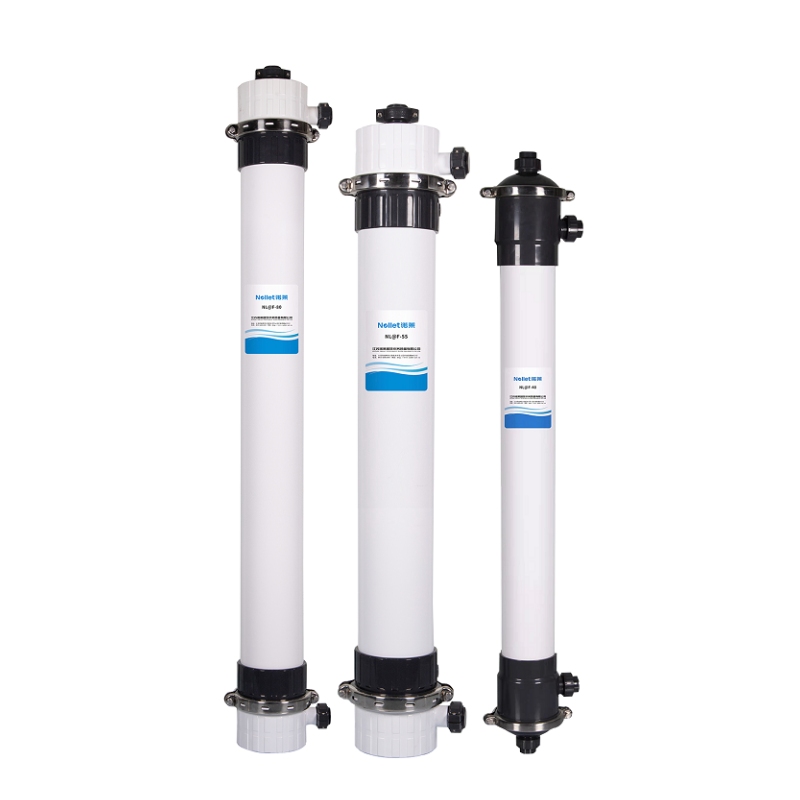
A microscopic “super sieve” is quietly transforming how the world purifies drinking water, desalinates seawater, and recycles industrial wastewater. Membrane technology – with pores smaller than a human hair’s thousandth – now underpins everything from home faucet filters to giant municipal plants. And China has leaped from importer to global powerhouse, cutting membrane prices by 70–80% and achieving full supply-chain independence.
What is a membrane?
Think of it as a selective barrier. Its surface is riddled with tiny holes that allow water molecules to pass while blocking impurities – bacteria, viruses, salts, and even heavy metals. Unlike heat-based or chemical treatments, membrane filtration works at ambient temperature, adds no reagents, consumes less energy, and produces no harmful by-products. That makes it one of the greenest water-treatment methods available.
Four filters, four jobs
Membranes are classified by pore size, each suited to a specific task:
- Microfiltration (MF)– 0.1–10 µm: removes sediment, rust, and suspended solids; used for pre-
- Ultrafiltration (UF)– 0.01–0.1 µm: blocks bacteria, viruses, and large organics; the workhorse for drinking-water purification and RO pre-
- Nanofiltration (NF)– 0.001–0.01 µm: strips hardness ions, pesticides, and colour; ideal for softening and partial desalination.
- Reverse osmosis (RO)– <0.001 µm: rejects nearly all salts, metals, and organics – only water gets through. RO is the gold standard for seawater desalination and ultrapure water production.
Ultrafiltration: the drinking–water champion
In municipal supply, UF membranes stand out for their 0.01–0.1 µm pores – roughly 1/1,000th of a hair’s width. They physically trap 99.99%+ of viruses and virtually 100% of bacteria, reducing turbidity to below 0.1 NTU (China’s national standard is ≤1 NTU). Modern UF modules feature hydrophilic surfaces that resist fouling, automated backwashing, and design lives of 5–8 years. They also protect downstream RO systems by removing colloids and macromolecular organics, acting as a reliable “bodyguard”.
Reverse osmosis: the desalination ace
RO reverses natural osmosis: pressure forces water from high-salt seawater through the membrane, leaving salts behind. Chinese-developed RO technology has made dramatic strides:
| Metric | Past | Now |
| Energy per ton of fresh water | >20 kWh | <4 kWh |
| Membrane cost | Import-dependent, high | One-third of the import price |
| Supply chain | Reliant on foreign materials | Fully indigenous |
For a 100,000-ton-per-day desalination plant, switching to domestic RO membranes saves over ¥20 million annually in electricity and cuts membrane procurement costs by more than 60%.
The “Dual–membrane” strategy
In practice, UF and RO are often combined: raw water → UF (pre-treatment) → RO (deep desalination) → high-quality product. UF handles the “heavy lifting” – removing suspended solids and microbes – while RO polishes the water by stripping salts and trace contaminants. This duo is widely deployed in seawater desalination, industrial zero-liquid-discharge systems, and reclaimed-water reuse projects.
From dependence to self–reliance
Not long ago, China relied on expensive imported membranes with long lead times. Today, it is one of the few nations mastering the full spectrum of membrane materials – from R&D and module manufacturing to system integration and large-scale engineering. Key milestones:
- Domestic membrane market share: from <20% to >60%
- UF membrane prices: down by >80%
- RO membrane prices: down by >70%
- Total industry output: exceeding ¥400 billion
What’s next?
Researchers are pushing for even lower energy consumption, fouling-resistant “self-cleaning” surfaces, and smart membranes that selectively remove specific pollutants like heavy metals or trace pharmaceuticals. AI-powered predictive maintenance and IoT-based cleaning alerts are already on the horizon.
From safeguarding every sip of drinking water to enabling deep-sea desalination and even closed-loop water systems in space – this invisible “super sieve” is writing a new chapter in the age of water sustainability.

Frequently Asked Questions (FAQ)
- Is membrane-filtered water drinkable directly?
UF membrane water removes bacteria and viruses, but is recommended to be boiled for safer drinking; RO membrane purified water meets direct drinking standards. - Do membranes need replacement? What is their service life?
Regular replacement is required. UF membranes last 7-10 years, and RO membranes last 3-5 years, depending on raw water quality and daily maintenance. - Do membrane systems produce wastewater?
RO systems generate concentrated wastewater with a water production rate of 50%-75%, which can be reused for flushing, greening, and other non-potable purposes. UF systems produce almost no wastewater. - What membranes do household water purifiers use?
Household ultrafiltration purifiers adopt UF membranes; pure water machines use RO membranes, usually equipped with a front activated carbon and rear antibacterial filter elements.