
Abstract
Traditional filtration technologies, such as sand filters and cartridge filters, have supported water treatment for decades. However, they often struggle to remove sub-micron contaminants, maintain consistent water quality during feed fluctuations, and meet increasingly strict water treatment requirements.
Ultrafiltration (UF) membranes provide an advanced barrier filtration solution with pore sizes typically ranging from 0.01 to 0.1 µm, effectively removing bacteria, viruses, colloids, and suspended solids. This article explains how ultrafiltration membranes overcome the limitations of conventional filters and improve reliability in municipal water treatment and industrial water reuse applications.
1. The Filtration Gap: Where Traditional Filters Reach Their Limits
1.1 Depth Filtration vs. Membrane Barrier Filtration: What Is the Difference?
Conventional sand and cartridge filters rely on depth filtration, where water passes through media layers or fibrous materials that capture particles through mechanisms such as mechanical straining and adsorption. However, these systems typically provide nominal filtration rather than absolute separation. Their pore structures are irregular, meaning smaller contaminants may pass through depending on flow conditions and filter loading.
For example, a 5-µm cartridge filter may capture a high percentage of particles around that size, but it does not provide a guaranteed barrier against all smaller contaminants.
Ultrafiltration (UF) membranes work through a different filtration mechanism. With precisely engineered pore structures typically ranging from 0.01 to 0.1 µm, UF membranes provide a consistent physical barrier that removes smaller particles and microorganisms that conventional filters may miss.
Unlike media filters, UF membranes offer more predictable rejection performance because water must pass through the membrane barrier rather than flow through variable media channels. This difference makes ultrafiltration membranes suitable for applications requiring stable water quality and reliable contaminant removal.
1.2 Which Contaminants Can Pass Through Traditional Filters?
Traditional filtration systems can effectively remove larger suspended particles, but they often struggle with smaller contaminants that affect water quality, regulatory compliance, and downstream treatment performance.
Common examples include:
- Bacteria (0.2–10 µm): Some larger bacteria may be partially removed, but smaller microorganisms and fragments can pass through conventional filters.
- Viruses (0.02–0.3 µm): Most sand and cartridge filters cannot reliably remove viruses, requiring additional disinfection or membrane-based treatment.
- Colloidal silica and organic particles (0.001–1 µm): These fine particles can contribute to RO membrane fouling and affect downstream treatment efficiency.
- Microplastics (1–5,000 µm): Smaller plastic particles and fibers may not be consistently captured by traditional media filtration.
- Cryptosporidium and Giardia oocysts (4–12 µm): These chlorine-resistant organisms require effective physical removal methods, making membrane filtration an important option for regulated water treatment applications.
| Παράμετρος | Sand Filter | Cartridge Filter | Μεμβράνη υπερφίλτρασης |
|---|---|---|---|
| Pore / Cutoff Size | 10–50 µm | 1–25 µm (nominal) | 0.01–0.1 µm (absolute) |
| Bacteria Removal Rate | 50–90% | 60–95% (variable) | >99.99% (4-log LRV) |
| Virus Removal Rate | <20% | <30% | >99.99% (4-log LRV) |
| Turbidity Output (NTU) | 0.5–2.0 | 0.3–1.0 | <0.1 (consistent) |
| Footprint / Space Requirement | Υψηλή | Medium | Low–Medium (modular) |
| Chemical Pre-treatment Dependency | High (coagulation) | Medium | Χαμηλή |
| Backwash / Regeneration Frequency | Daily | Weekly (replacement) | Automated CEB cycles |
| Typical Operating Pressure (bar) | 0.3–0.8 | 0.5–2.0 | 0.5–3.0 |
2. Core Technical Capabilities of Ultrafiltration Membranes
2.1 How Does an Ultrafiltration Membrane Work?
An ultrafiltration membrane works by using pressure-driven separation through microporous membrane layers. Water molecules pass through the membrane, while larger contaminants such as bacteria, colloids, suspended solids, and microorganisms are retained.
Unlike conventional depth filtration, UF membranes provide a controlled pore structure that delivers more predictable contaminant removal performance. This makes ultrafiltration suitable for applications where stable water quality and reliable filtration are required.
2.2 Membrane Materials, Configurations, and Key Specifications
Commercial ultrafiltration membranes are commonly manufactured from three polymer materials, each offering different advantages for specific water treatment applications:
- PVDF (Polyvinylidene Fluoride): Known for excellent chemical resistance and durability, PVDF membranes are widely used in industrial applications where frequent chemical cleaning and challenging feed conditions are expected.
- PES (Polyethersulfone): With strong thermal stability and broad pH tolerance, PES membranes are commonly selected for applications requiring reliable performance, including food, beverage, and pharmaceutical water treatment.
- PS (Polysulfone): Offering good mechanical strength and cost efficiency, PS membranes are often used in municipal and general water treatment systems.
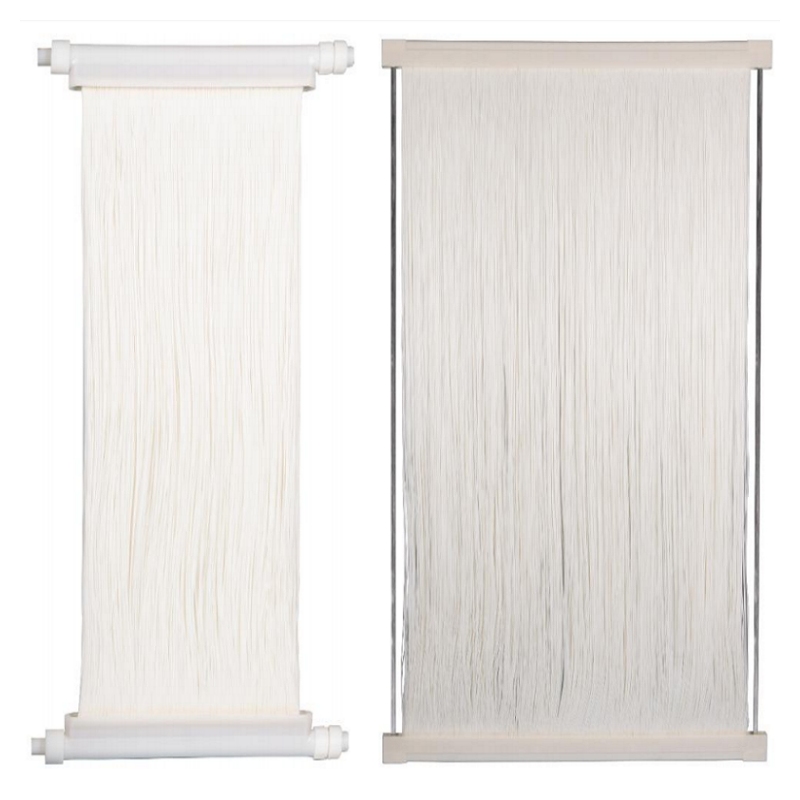
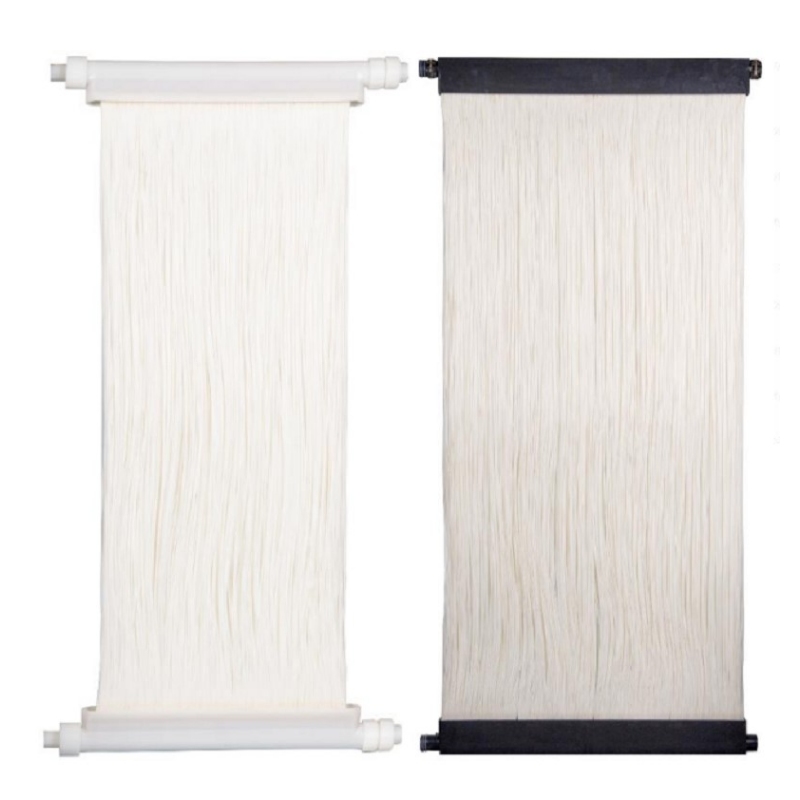
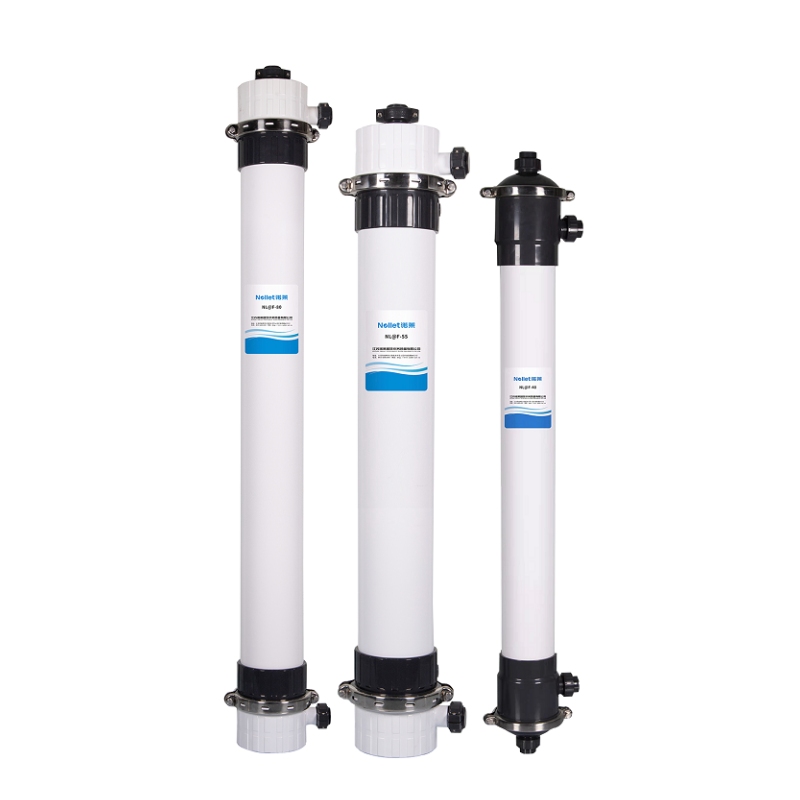
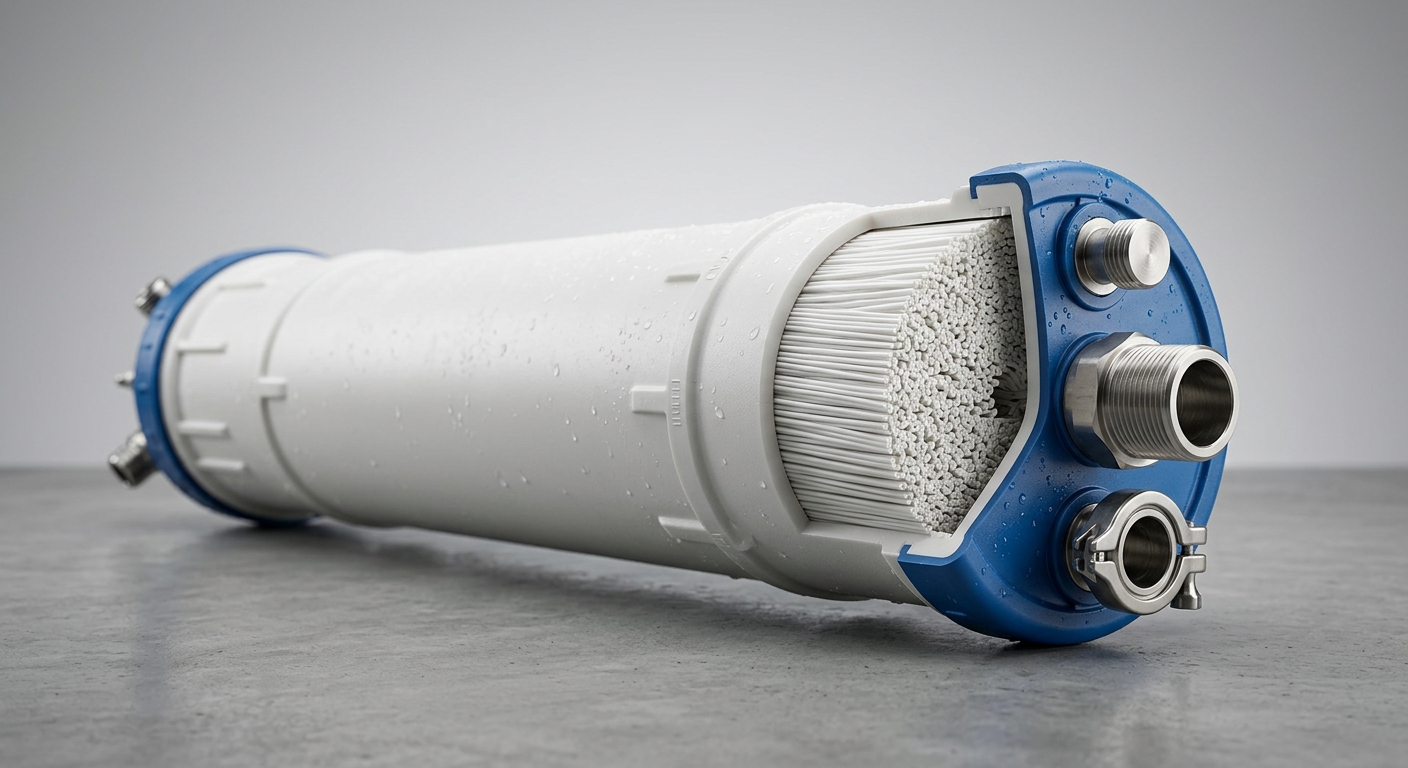
Membrane configuration also affects system performance. Hollow-fiber ultrafiltration membranes are widely used in large-scale installations because they provide high packing density and efficient filtration capacity. Depending on feed quality, systems can operate in inside-out or outside-in flow modes. Inside-out operation is typically used for cleaner water sources requiring precise control, while outside-in designs are better suited for feeds with higher suspended solids and greater fouling potential.
Important operating parameters include flux rates of approximately 20–80 LMH, transmembrane pressure (TMP) of 0.5–2.5 bar, and molecular weight cutoff (MWCO) selection based on the target contaminants and treatment objectives.
2.3 Maintaining Consistent Water Quality Under Changing Feed Conditions
One of the key advantages of ultrafiltration membranes is their ability to maintain stable effluent quality even when feed water conditions fluctuate.
Traditional filtration systems often experience performance changes when turbidity levels increase. For example, during heavy rainfall events, surface water turbidity can rise significantly, reducing the effectiveness of sand and media filtration systems.
UF membranes provide more consistent performance because their engineered pore structure remains stable regardless of changes in feed concentration. As a result, UF systems can continuously produce low-turbidity water suitable for downstream treatment processes.
Pathogen removal performance is commonly measured using log reduction values (LRV). Properly designed UF systems can achieve high removal rates for bacteria and protozoa, while membrane integrity testing methods such as pressure decay testing (PDT) help verify system performance and ensure reliable operation.
3. Application Scenarios: How Ultrafiltration Membranes Solve Real-World Water Treatment Challenges
3.1 Municipal Water Treatment: Improving Drinking Water Safety and Compliance
Meeting modern drinking water standards has become increasingly challenging for conventional filtration systems. Regulations such as the USEPA Long Term 2 Enhanced Surface Water Treatment Rule (LT2) and the EU Drinking Water Directive (2020/2184) have increased the demand for reliable pathogen removal and consistent water quality control.
Ultrafiltration membranes provide a physical barrier filtration step that helps remove microorganisms such as bacteria and protozoa without relying solely on chemical treatment. Compared with traditional treatment processes that may require multiple stages of coagulation, sedimentation, and media filtration, UF systems offer a more compact and reliable solution for many municipal water applications.
For surface water and groundwater under direct influence (GWUDI), where pathogen levels can change significantly, ultrafiltration membranes help maintain stable removal performance and provide an additional layer of protection for drinking water production.
Another advantage is reduced infrastructure requirements. UF membrane systems require less space compared with conventional treatment trains involving large sedimentation tanks and filter beds, making them suitable for facilities seeking capacity expansion or process upgrades.
3.2 Industrial Water Reuse: Protecting Downstream Treatment Systems
Industrial water reuse has become increasingly important due to stricter discharge regulations, rising water costs, and the growing adoption of zero-liquid-discharge (ZLD) strategies.
One of the biggest challenges in water reuse systems is protecting downstream reverse osmosis (RO) membranes from fouling. Ultrafiltration membranes act as an effective RO pretreatment step by removing suspended solids, colloids, and biological contaminants that can reduce RO performance.
Maintaining suitable RO feed quality is essential for reducing membrane fouling and extending system operating life. Compared with conventional pretreatment methods, UF provides more consistent filtration performance and can help reduce cleaning frequency and operating costs.
Common industrial applications include:
- Textile industry: Treating process wastewater containing dyes, surfactants, and suspended fibers before biological treatment or RO polishing.
- Food and beverage industry: Supporting process water reuse, CIP water recovery, and product recovery applications where reliable filtration performance is required.
- Semiconductor manufacturing: Providing advanced particle removal for high-purity water systems where sub-micron contamination control is critical.
- Power generation: Treating cooling tower blowdown and supporting boiler feed water pretreatment to improve overall water system efficiency.
4. Commercial and Operational Value of Ultrafiltration Membranes
4.1 Total Cost of Ownership: Why UF Can Reduce Long-Term Operating Costs
Although ultrafiltration membrane systems may require higher initial investment than conventional filtration equipment, their long-term operational advantages can significantly improve total cost of ownership (TCO).
Key cost-saving factors include:
- Reduced chemical consumption: UF systems can reduce the need for coagulants, flocculants, and filter aids by relying on physical membrane separation rather than extensive chemical conditioning.
- Lower maintenance requirements: Automated backwashing and chemically enhanced backwash (CEB) processes reduce manual intervention and simplify routine operation compared with traditional media replacement and regeneration.
- Flexible system expansion: Modular UF membrane designs allow capacity increases by adding additional membrane modules instead of requiring major infrastructure expansion.
- Protection of downstream RO systems: As an effective RO pretreatment technology, UF reduces suspended solids and colloidal fouling, helping extend RO membrane service life and reduce cleaning frequency.
Another operational advantage is reduced downtime risk. Individual hollow-fiber membrane modules can often be isolated for maintenance or replacement, allowing the overall treatment system to continue operating with minimal disruption.
4.2 Compliance Assurance and Operational Transparency
For water treatment facilities operating under strict regulations, reliable performance monitoring is as important as filtration capability itself.
Ultrafiltration membrane systems provide measurable operating data, including transmembrane pressure (TMP), flux performance, and membrane integrity test results. These monitoring capabilities help operators verify system performance, support regulatory reporting, and improve long-term operational control.
When selecting an ultrafiltration membrane supplier, buyers should consider important quality indicators, including:
- NSF/ANSI 61 certification for drinking water applications
- CE compliance for applicable European markets
- ISO 9001 quality management certification
- Verified membrane performance data
- Chemical compatibility documentation
- Proven experience with similar-scale installations
Choosing a supplier with reliable technical support and validated membrane performance helps ensure stable operation throughout the system lifecycle.
5. How to Choose a Reliable Ultrafiltration Membrane Supplier?
When selecting an ultrafiltration membrane supplier, buyers should evaluate:
Membrane Material Selection
PVDF, PES, and PS membranes should match the chemical environment and operating conditions.
Manufacturing Capability
Reliable suppliers should provide consistent pore size control, performance testing, and quality documentation.
Application Experience
A supplier with proven experience in municipal and industrial projects can provide more suitable membrane configurations.
Technical Support
After-sales service, troubleshooting support, and system optimization are important for long-term operation.
Συχνές Ερωτήσεις
1. What contaminants can an ultrafiltration membrane remove?
An ultrafiltration membrane can remove bacteria, protozoa, suspended solids, colloids, and many microplastic particles. With pore sizes typically ranging from 0.01 to 0.1 µm, UF provides reliable physical separation for applications requiring consistent water quality.
2. How does a UF membrane compare with a 5-micron cartridge filter?
A UF membrane provides finer and more consistent filtration than a 5-micron cartridge filter. It can remove smaller contaminants, including bacteria and colloids, while cartridge filters mainly capture larger suspended particles through nominal filtration.
3. Can ultrafiltration membranes treat high-turbidity wastewater?
Yes. With proper pretreatment and cleaning procedures, UF membranes can handle challenging industrial wastewater streams. PVDF hollow-fiber membranes are commonly used because of their chemical resistance and fouling tolerance.
4. What pretreatment is needed before ultrafiltration?
Most UF systems require basic pretreatment, such as screening or filtration of large particles. Additional steps depend on feed water quality and application requirements.
5. Can UF membranes be used as RO pretreatment?
Yes. Ultrafiltration membranes are widely used before reverse osmosis systems to remove suspended solids, colloids, and microorganisms, helping reduce RO fouling and improve system stability.
6. How long does an ultrafiltration membrane last?
The service life of a UF membrane depends on feed conditions, cleaning frequency, and operation practices. Well-maintained systems can typically operate for several years before membrane replacement is required.
Συμπέρασμα
Traditional filtration systems have clear limitations when removing sub-micron contaminants and maintaining consistent water quality under changing feed conditions. Ultrafiltration membranes provide a reliable barrier filtration solution that improves contaminant removal, supports regulatory compliance, and enhances the stability of municipal and industrial water treatment systems.
For facilities upgrading their water treatment processes, UF technology can help reduce chemical dependency, protect downstream RO systems, and enable flexible system expansion. If you are evaluating an ultrafiltration membrane solution for your application, contact Nolletfilter to discuss the right membrane configuration and treatment approach for your water quality requirements.