
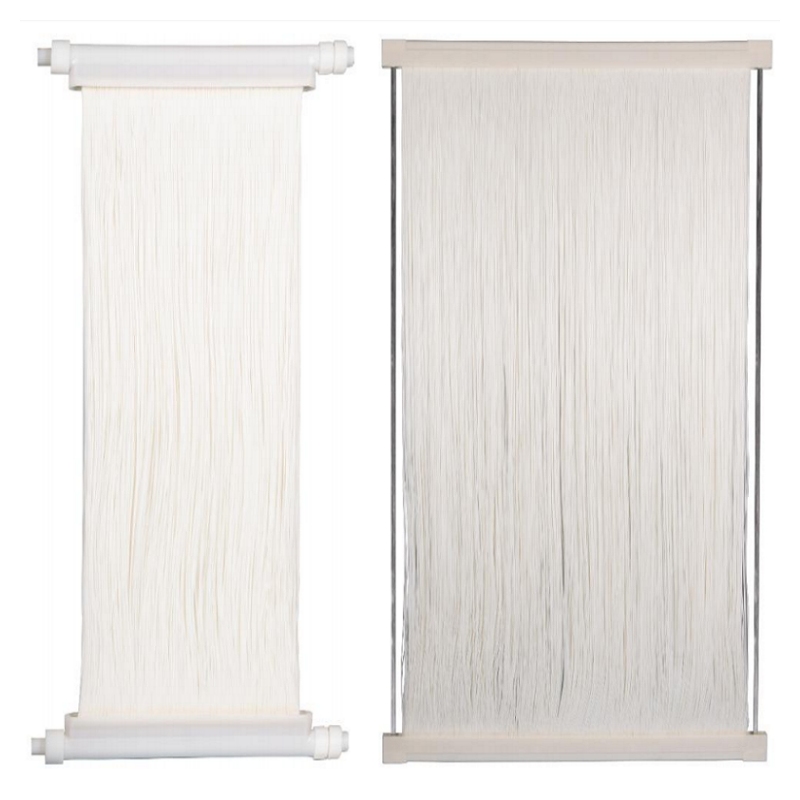
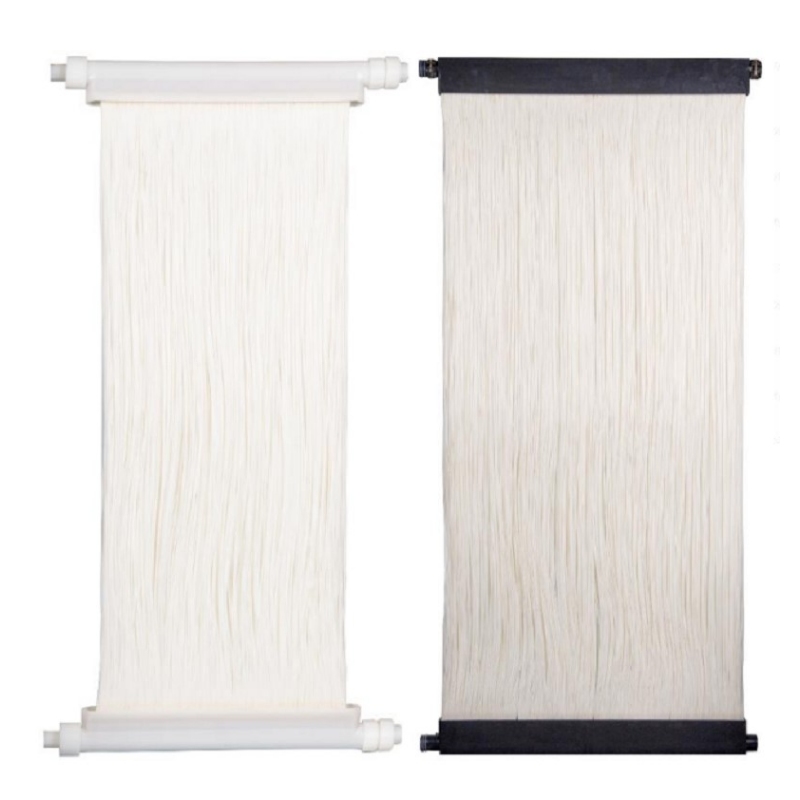
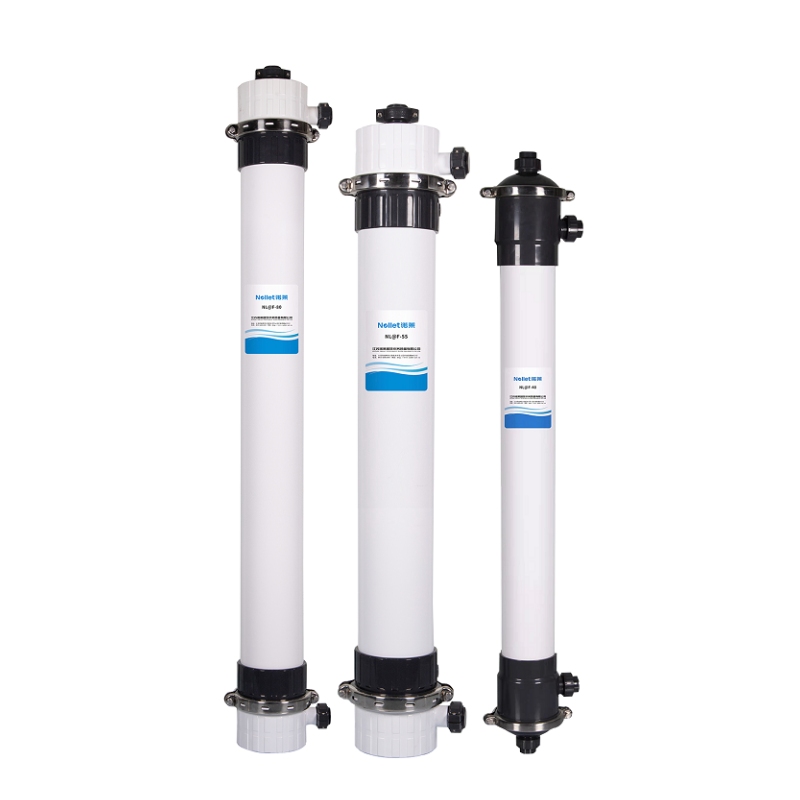
An inside-out membrane module improves MBR reliability by using a cross-flow filtration design that continuously transports suspended solids away from the hollow fiber lumen. Unlike traditional outside-in configurations, this flow direction helps control fouling, improves hydraulic cleaning efficiency, and supports more stable operation.
Designed with a 0.01 μm PES hollow fiber membrane, 50–120 L/m²·h filtration flux, and 0.2 MPa water backwashing capability, the module provides a reliable solution for wastewater treatment applications requiring long membrane life and consistent filtration performance.
Why Flow Direction Determines Membrane Reliability
In membrane bioreactor (MBR) systems, membrane reliability depends not only on contaminant rejection performance but also on how consistently the membrane can maintain stable operation under continuous filtration conditions. For long-term wastewater treatment applications, factors such as fouling control, cleaning frequency, and transmembrane pressure (TMP) stability often determine the actual service life of a membrane module.
The flow direction through a hollow fiber membrane plays a critical role in how suspended solids interact with the membrane surface. In an inside-out membrane module, feed water enters through the lumen (the hollow core of each fiber) and passes outward through the membrane wall, while filtered water (permeate) is collected on the shell side. In contrast, outside-in membrane configurations introduce feed water from the shell side, with permeate flowing into the fiber lumen.
This difference in flow path directly influences fouling behavior, backwashing efficiency, and long-term membrane performance. By controlling how solids are transported along the membrane surface, the flow configuration becomes one of the key factors affecting operational stability in MBR applications.
The Cross-Flow Advantage
One of the main reliability benefits of an inside-out membrane module is its cross-flow filtration mechanism. During operation, the feed stream moves axially through the hollow fiber lumen, parallel to the membrane surface, while filtration occurs across the membrane wall. This continuous sweeping effect helps reduce the accumulation of suspended solids and organic matter inside the fiber channels.
By comparison, many outside-in membrane systems operate under dead-end filtration conditions, where the feed flow is mainly directed toward the membrane surface. As solids are retained on the outer fiber surface, a concentrated cake layer can gradually form, increasing filtration resistance and accelerating flux decline.
From an operational perspective, the cross-flow design of inside-out membrane modules helps maintain more stable flux performance, reduces the frequency of intensive cleaning, and improves overall maintenance efficiency. The continuous removal of accumulated particles also helps prevent excessive cake layer formation, making routine backwashing more effective and supporting longer membrane service intervals.
How PES Membrane Chemistry Supports Long-Term Reliability
The membrane material is just as important as the module configuration when evaluating long-term performance in MBR systems. While flow direction influences fouling behavior and cleaning efficiency, the chemical properties of the membrane itself determine how well it withstands demanding wastewater conditions over extended operation.
PES (polyethersulfone) hollow fiber membranes are widely used in Μοντέλα μεμβρανών MBR because they provide a combination of chemical stability, mechanical strength, and filtration performance. Their strong oxidation resistance allows them to tolerate exposure to cleaning agents such as chlorine, while their broad pH compatibility helps maintain structural integrity across different wastewater treatment environments.
The membrane pore structure is another critical factor affecting filtration reliability. With a nominal pore size of 0.01 μm, PES membranes provide effective removal of bacteria, viruses, colloidal particles, and macromolecular organic matter while maintaining sufficient permeability for continuous operation. A controlled pore size distribution helps reduce the possibility of pore blockage and supports stable filtration flux during long-term wastewater treatment processes.
In practical MBR applications, maintaining stable flux and controlling fouling are key indicators of membrane reliability. PES hollow fiber membranes with optimized pore structures can help reduce cleaning frequency, maintain consistent permeate quality, and extend the operational lifespan of the membrane module.
The 0.01 μm Sweet Spot
Why is a 0.01 μm pore size commonly selected for MBR ultrafiltration applications?
Because it provides a practical balance between contaminant retention and hydraulic performance. A smaller pore size can improve particle rejection but may increase filtration resistance, while a larger pore size may improve permeability but reduce separation efficiency. The 0.01 μm range offers a suitable compromise for treating wastewater that contains microorganisms, suspended solids, and fine colloidal materials.
At this pore size, a PES hollow fiber membrane can effectively retain:
- Bacteria (typically 0.2–2.0 μm)
- Viruses (typically 0.02–0.3 μm)
- Colloidal particles and suspended solids
- Macromolecular organic compounds
Meanwhile, the typical flux range of 50–120 L/m²·h provides commercially practical productivity for MBR operation. This combination of high retention capability and stable permeability is one of the reasons 0.01 μm PES membrane technology is widely adopted in modern membrane bioreactor systems.
Inside-Out vs Outside-In: A Reliability Comparison
Let’s put these two configurations side by side across the metrics that define reliability in real-world MBR operations.
| Reliability Factor | Inside-Out (Cross-Flow) | Outside-In (Dead-End) |
|---|---|---|
| Flow direction | Lumen → shell | Shell → lumen |
| Operating mode | Cross-flow | Dead-end / submerged |
| Solids management | Swept away by axial flow | Accumulate on membrane surface |
| Fouling mechanism | Gradual, reversible | Rapid, often irreversible |
| Backwashing efficiency | High—flow reversal clears lumens | Lower—cake layer resists removal |
| Typical operating pressure | 0.1–0.3 MPa | Lower vacuum |
| Flux sustainability | Stable over longer periods | Declines faster |
| Cleaning frequency | Less frequent | More frequent |
| Fiber breakage risk | Lower—uniform pressure distribution | Higher—localized stress points |
The reliability gap isn’t subtle. Outside-in hollow fiber membranes operate in submerged configurations where solids accumulate on the exterior of the fibers. Over time, this cake layer becomes compacted and increasingly difficult to remove, even with aggressive backwashing.
Inside-out modules, by contrast, keep the fiber lumens clear through the combination of cross-flow sweeping and effective backwashing. The result is more stable transmembrane pressure, longer intervals between cleanings, and extended membrane life.
The Backwashing Advantage
Backwashing is one of the key operational advantages of an inside-out membrane module, especially in MBR systems where maintaining stable flux and controlling membrane fouling are critical for long-term performance.
The inside-out membrane module uses water backwashing at 0.2 MPa pressure to remove accumulated solids from the membrane surface. During the backwash cycle, the flow direction is reversed: permeate moves from the shell side through the membrane wall and back into the fiber lumen. This reverse flow helps dislodge retained particles and flush contaminants from the inside of the hollow fibers, restoring filtration performance.
The backwashing cycle typically takes only 1 minute per cycle, providing an efficient cleaning method without relying on frequent chemical treatment. Because fouling primarily occurs inside the lumen during operation, the reversed flow directly targets the area where solids accumulate. This helps reduce excessive cake layer formation, minimize pore blockage risks, and maintain stable transmembrane pressure (TMP) during continuous operation.
Compared with outside-in membrane configurations, inside-out modules generally offer more effective hydraulic cleaning. In outside-in systems, fouling often develops on the external surface of hollow fibers, where compacted cake layers can become more difficult to remove through backwashing alone. As a result, operators may need more frequent chemical cleaning to recover membrane performance.
Filtration Cycle Flexibility
Another operational benefit of an inside-out membrane module is its flexible filtration cycle design. The module supports both full filtration and cross-flow filtration modes, allowing operators to adjust operating conditions according to wastewater characteristics and fouling tendencies.
Typical filtration cycles range from 20 to 60 minutes. For relatively clean feed water with lower suspended solids concentrations, longer filtration cycles can reduce backwashing frequency and improve overall productivity. For wastewater streams with higher solids loading or fluctuating quality, shorter filtration cycles combined with more frequent backwashing can help maintain stable flux and delay intensive chemical cleaning requirements.
Where Inside-Out Membrane Modules Excel
The reliability advantages of an inside-out membrane module make it particularly suitable for wastewater treatment applications where stable operation, effective fouling control, and reduced maintenance requirements are critical. From industrial wastewater treatment to seawater pretreatment and water reuse systems, this configuration provides operational benefits under challenging feed conditions.
Βιομηχανική Επεξεργασία Λυμάτων
Industrial wastewater treatment often involves complex operating conditions, including fluctuating water quality, high suspended solids concentrations, variable organic loading, and exposure to chemical contaminants. Under these conditions, maintaining stable membrane performance and controlling fouling are key challenges for MBR systems.
The cross-flow design of an inside-out membrane module helps manage these challenges by continuously reducing solids accumulation inside the hollow fiber lumen. Combined with the chemical stability of PES hollow fiber membranes, the system can maintain reliable filtration performance even when wastewater characteristics change during operation.
PES membrane material is particularly valuable in industrial applications because of its strong oxidation resistance and broad chemical compatibility. Many industrial wastewater streams may contain residual oxidants or require chemical cleaning processes, and a chemically stable membrane material helps maintain structural integrity and extend membrane service life.
Seawater Desalination Pretreatment
Reverse osmosis (RO) systems require high-quality feed water to minimize fouling and maintain long-term membrane efficiency. As a pretreatment technology, ultrafiltration using inside-out membrane modules can effectively reduce suspended solids, colloidal particles, and microorganisms before water enters the RO process.
The fouling-resistant characteristics of the inside-out configuration are especially beneficial in seawater applications, where feed water conditions can change due to seasonal biological activity, temperature variations, and environmental factors. By improving feed water quality and reducing fouling potential, inside-out membrane modules help support more stable downstream RO operation.
Water Reuse and Recycling
With increasing demand for sustainable water management, MBR systems with inside-out membrane modules are gaining attention in municipal and industrial water reuse applications. These systems combine high-quality effluent production with reliable membrane operation and manageable maintenance requirements.
For water recycling projects, long-term operating stability is often as important as treatment efficiency. The combination of cross-flow filtration, effective backwashing, and PES membrane durability allows inside-out membrane modules to support continuous operation while helping operators reduce cleaning frequency and maintain consistent permeate quality.
The Numbers Behind the Reliability
Market growth in MBR hollow fiber membrane technology reflects a broader shift toward wastewater treatment solutions that deliver higher efficiency, operational stability, and lower maintenance requirements.
The global MBR hollow fiber membrane market continues to expand as industries and municipalities invest in advanced membrane-based treatment systems. According to market research estimates, the market was valued at approximately $1.08 billion in 2025 and is projected to reach $2.25 billion by 2032, representing a compound annual growth rate of nearly 11%. The wider membrane bioreactor (MBR) market is also expected to experience sustained growth, increasing from approximately $4.19 billion in 2025 to $8.83 billion by 2034.
This growth is driven by increasing demand for reliable wastewater treatment systems that can provide consistent effluent quality while reducing operational complexity. Compared with conventional treatment methods, MBR systems offer advantages such as compact footprint, high-quality treated water, and improved process control. However, long-term reliability depends heavily on membrane performance, especially factors such as fouling resistance, cleaning efficiency, and service life.
This is where inside-out membrane modules provide practical value. Their cross-flow filtration design helps reduce solids accumulation, their hydraulic backwashing process supports more efficient cleaning, and their PES hollow fiber membrane structure provides chemical stability under demanding operating conditions. Together, these features help maintain stable filtration performance and extend membrane operating cycles in modern MBR applications.
| Operating Parameter | Inside-Out Module Specification |
|---|---|
| Υλικό μεμβράνης | PES hollow fiber |
| Nominal pore size | 0.01 μm |
| Effective area (NL@S-15) | 15 m² |
| Effective area (NL@S-45) | 45 m² |
| Operating pressure | 0.1–0.3 MPa |
| Ρέοντας ρεύμα | 50–120 L/m²·h |
| Filtration cycle | 20–60 min |
| Backwash pressure | 0.2 MPa |
| Backwash time | 1 min |
| Υλικό κέλυφος | UPVC |
| Υλικό σφράγισης | Εποξειδική ρητίνη |
| Preservation | Wet storage / Dry preservation |
Common Misconceptions About Inside-Out Reliability
When comparing inside-out membrane modules with traditional outside-in hollow fiber membrane systems, several misconceptions often arise regarding fouling behavior and operational reliability. Understanding how flow direction affects solids transport and cleaning performance helps explain why inside-out configurations are increasingly considered for demanding MBR applications.
“Inside-out modules foul faster because the feed passes through the narrow lumen.”
This assumption overlooks the role of cross-flow velocity in controlling fouling. In an inside-out membrane module, wastewater flows through the hollow fiber lumen at a relatively high axial velocity. This continuous flow creates a sweeping effect that helps transport suspended solids along the fiber channel and reduces excessive accumulation on the membrane surface.
By contrast, in many outside-in membrane configurations, feed water surrounds the exterior surface of the hollow fibers. Under certain operating conditions, retained solids can accumulate on the outer fiber surface and form a concentrated cake layer, increasing filtration resistance and contributing to flux decline.
“Outside-in modules are more widely used, so they must be more reliable.”
Outside-in hollow fiber membranes have indeed been widely adopted, particularly in submerged MBR systems, due to their suitability for specific installation designs and operating conditions. However, widespread adoption does not necessarily indicate superior reliability in every application.
The reliability of a membrane module depends on multiple factors, including fouling control, backwashing efficiency, chemical resistance, and long-term operating stability. With its cross-flow filtration mechanism, effective hydraulic cleaning capability, and durable PES hollow fiber membrane structure, an inside-out configuration can provide advantages for operators seeking stable flux performance, reduced maintenance requirements, and extended membrane service life.
Making the Right Choice for Your MBR System
An inside-out membrane module is a strong option for MBR systems where stable operation, effective fouling control, and reduced maintenance requirements are priorities.
Choose an inside-out configuration when:
- Feed water contains variable or high levels of suspended solids
- Reducing chemical cleaning frequency is important
- Longer membrane service life is required
- Stable flux performance is needed during continuous operation
- Backwashing efficiency can help reduce operating costs
With its cross-flow filtration design, 0.01 μm PES hollow fiber membrane, and efficient water backwashing process, an inside-out membrane module helps MBR operators maintain reliable filtration performance while improving long-term operational stability.
For projects evaluating membrane upgrades or new MBR installations, our filtration engineers can help assess key factors such as feed water characteristics, flow requirements, and treatment objectives to determine whether an inside-out membrane module is the right solution.