
Introduktion
Water scarcity, stricter discharge regulations, and the growing need for water reuse are driving rapid advances in treatment technologies. Among these, immersion membrane filtration equipment has emerged as a key innovation. By submerging hollow-fiber membranes directly into a basin of feed water, this system forms a compact, energy-efficient, and highly effective barrier against contaminants.
Unlike traditional treatment systems that depend on gravity settling or large clarifiers, immersion membrane filtration equipment supports high mixed liquor concentrations, delivers superior effluent quality, and requires a much smaller footprint. This guide explores how industrial immersion membrane filtration equipment works, its main advantages, key considerations for system selection, and how it compares to alternative water treatment technologies.
What Is Immersion Membrane Filtration Equipment?
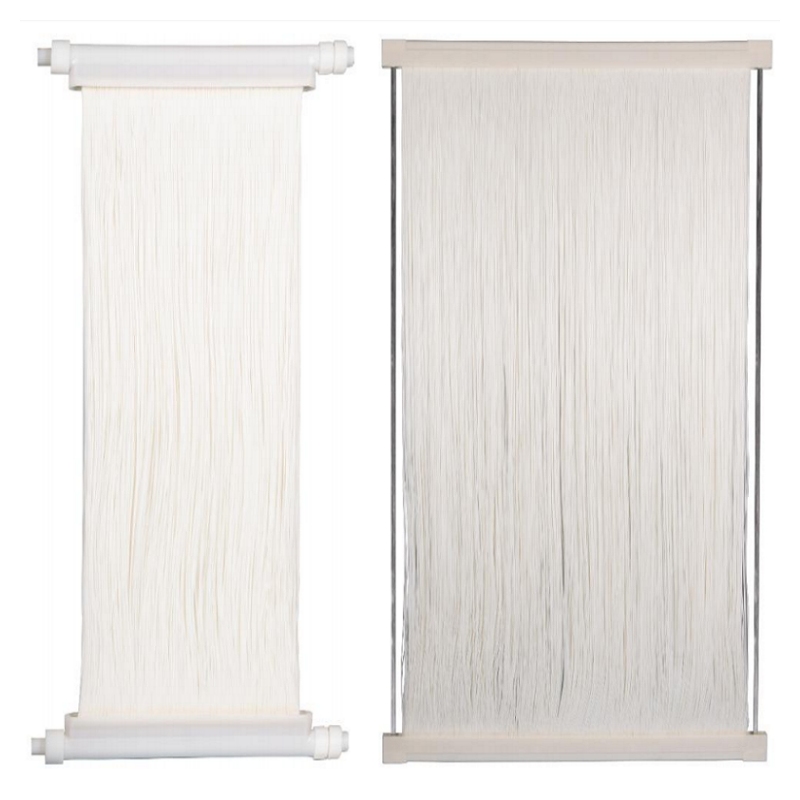
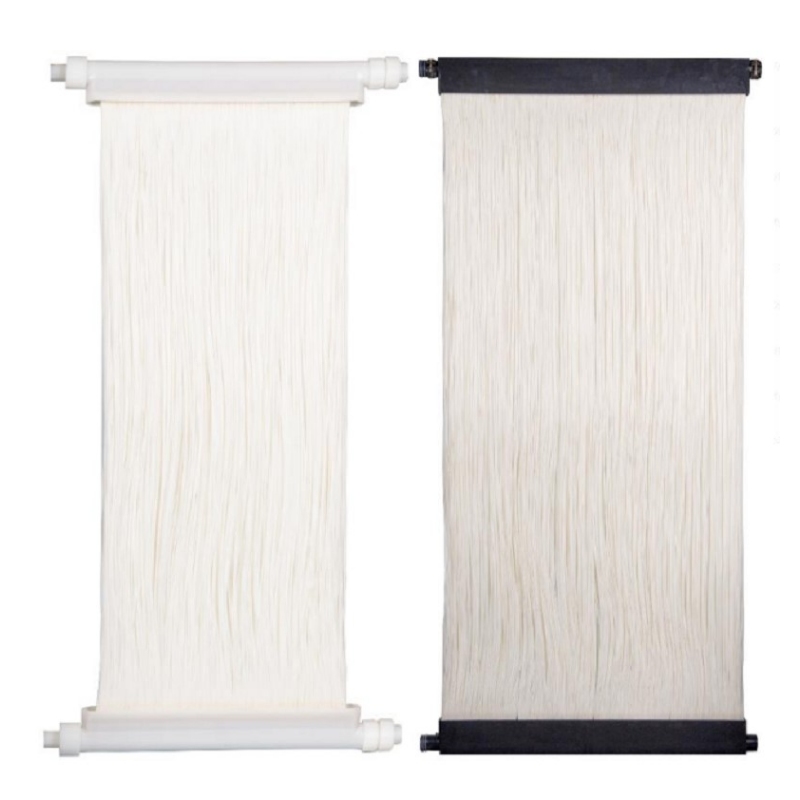
Immersion membrane filtration equipment refers to systems where hollow‑fiber ultrafiltration (UF) or microfiltration (MF) membranes are fully submerged in a tank containing the feed water or mixed liquor. A gentle vacuum or low-pressure pump draws water through the membrane walls, while suspended solids, bacteria, viruses, and other particles are retained on the outside of the fibers. This immersed configuration is sometimes called “submerged” or “internal” and is the dominant design for modern membrane bioreactors (MBRs) and many drinking water and tertiary treatment plants.
The membrane modules are typically made from robust materials such as PVDF (polyvinylidene fluoride), which offer excellent chemical resistance to acids, bases, and oxidants used during cleaning cycles. Because the membranes are open to the atmosphere on the feed side, the driving pressure is limited to the water column height plus the small suction created by a pump, typically in the range of 10‑70 kPa (0.1‑0.7 bar). This low-pressure operation is a defining characteristic of immersion membrane filtration equipment and contributes directly to its energy efficiency.
The most widely recognized commercial example is the ZeeWeed® immersed UF membrane from Suez (formerly GE/Zenon), which has been deployed in thousands of municipal and industrial plants worldwide. The membrane pores are nominally 0.04 μm, forming a physical barrier against virtually all suspended solids and colloidal materials, while operating under vacuum to minimize energy consumption and simplify hydraulics.
How Immersion Membrane Filtration Equipment Works
The working principle of immersion membrane filtration equipment integrates three core stages: filtration, relaxation/backwash, and air scouring.
Filtration Mode
The entire membrane cassette is submerged in the feed tank. A slight vacuum (or low suction) is applied to the inside of the hollow fibers, drawing clarified water (permeate) through the membrane wall. Suspended solids, bacteria, and pathogens larger than the nominal pore size (usually 0.01‑0.04 μm) are retained on the exterior surface, gradually forming a filter cake. Effective solids removal is achieved without the need for high transmembrane pressures, typically operating at fluxes of 20‑40 L/m²·h for MBR applications.
Relaxation and Backwash
To maintain stable flux, the filtration cycle is interrupted every 5‑20 minutes. During a brief relaxation phase, suction is stopped, allowing the accumulated cake layer to loosen. Many systems also perform a backwash, where a small volume of permeate is sent in the reverse direction through the membrane to dislodge retained particles. This periodic cleaning is crucial for controlling reversible fouling and minimizing chemical cleaning frequency.
Air Scouring
A key feature of high-efficiency immersion membrane filtration equipment is the injection of coarse bubbles at the base of the membrane modules. The rising bubbles create turbulence and shear forces that continuously scrub the membrane surfaces, preventing irreversible cake buildup. Air scouring is particularly effective for high‑solids MBR applications, where membrane fouling potential is greater. For pressure‑driven (sidestream) membrane systems, air lifting or cross‑flow is also applied, but immersed designs can achieve similar fouling control at significantly lower energy cost.
When these three mechanisms work together, smart immersion membrane filtration equipment can maintain stable operation for months between chemical cleans, delivering consistent high‑quality permeate.
Key Advantages of Immersion Membrane Filtration Equipment
The benefits of industrial immersion membrane filtration equipment go far beyond simple particle removal.
Superior Effluent Quality
The membrane acts as an absolute physical barrier. Effluent from a properly operated immersion filtration system is virtually free of suspended solids, turbidity, and pathogenic organisms such as Giardia and Cryptosporidium. In MBR configurations, removal of chemical oxygen demand (COD) and biochemical oxygen demand (BOD) typically exceeds 94% and 98%, respectively. For drinking water applications, the treated water can meet stringent reuse standards without the need for tertiary clarifiers or sand filters.
Small Footprint and Compact Design
By replacing sedimentation basins and secondary clarifiers with immersed membrane tanks, compact immersion membrane filtration equipment reduces the land area required by 30‑50% compared to conventional activated sludge plants. This is especially valuable in urban retrofits or facilities with limited space. The ability to operate at mixed liquor suspended solids (MLSS) concentrations of 10‑20 g/L means that biological reactors can be much smaller than traditional designs while achieving the same treatment capacity.
Energy Efficiency and Lower Operating Pressure
Because the membranes operate under vacuum rather than positive pressure, the energy demand for filtration is substantially lower than that of pressure‑driven (sidestream) systems. The vast majority of MBRs installed worldwide use immersed membranes, precisely because of their lower energy consumption and overall cost. For large‑scale municipal plants, this translates into significant operational savings over the life of the equipment.
High Solids Tolerance and Long Membrane Life
Modern high-efficiency immersion membrane filtration equipment is designed to handle influent with turbidity up to 100 NTU and TSS up to 300 mg/L without pre‑treatment. Reinforced PVDF membranes resist chemical attack and physical stresses, delivering service lives of 7‑10 years or more in many applications.
Simplified Operation and Maintenance
Automated filtration cycles, backwashes, and air scour sequences are managed by a programmable logic controller (PLC). Operators can monitor performance remotely, and the modular cassette design allows easy access for inspection and replacement. Compared to conventional sand filters or clarifiers, an industrial immersion membrane filtration equipment system requires far less daily operator attention.
Immersion Membrane Filtration vs. Pressure Membrane Filtration
A common question is how immersion membrane filtration equipment compares to pressurized membrane systems.
| Feature | Immersion (Submerged) System | Pressure (Sidestream) System |
|---|---|---|
| Driving force | Vacuum (~10‑70 kPa) | Positive pressure (200‑300 kPa) |
| Hydraulic configuration | Open tank, atmospheric | Closed vessel, pressurized |
| Energiförbrukning | Low (air scour + weak suction) | Higher (cross‑flow pump) |
| Typical flux (MBR) | 20‑40 LMH | 30‑80 LMH |
| Cleaning method | Air scour + backwash with relaxation | High‑velocity cross‑flow + backwash |
| Clogging risk | Lower (less affected by debris) | Higher (requires screening) |
| Capital cost | Lower for large facilities | Higher (pressure vessels, pumps) |
| Operating cost | Låg | Medium to high |
| Preferred scale | Large municipal, industrial | Small, high‑flux applications |
Pressure systems operate from inside the fiber outwards, requiring feed water to be pumped through the membrane under positive pressure of about 200‑300 kPa. They can achieve higher net fluxes, but at the cost of significantly greater energy use and more intensive cleaning requirements. Immersed systems, on the other hand, rely on a combination of vacuum and air scouring, making them far more economical for large water and wastewater treatment plants.
Industrial Applications of Immersion Membrane Filtration Equipment
Industrial immersion membrane filtration equipment serves a wide cross‑section of sectors.
Municipal Wastewater Treatment
MBRs using immersed membranes are widely adopted as the best available technology for nutrient removal and water reuse. Over 28,800 m³/day (7.6 million gallons per day) of secondary effluent can be treated with a nominal pore size of 0.04 μm, providing a physical barrier against suspended solids and colloidal materials. The high‑quality effluent is suitable for discharge to sensitive water bodies or further polishing for irrigation and industrial reuse.
Drinking Water Production
Immersion UF systems are increasingly replacing conventional sand filtration in drinking water plants. By combining powdered activated carbon (PAC) with immersed membranes, utilities achieve excellent removal of natural organic matter (NOM) and synthetic organic compounds (SOCs). Many facilities also use coagulation as a pretreatment to further reduce membrane fouling.
Food and Beverage Processing
The food industry requires high‑purity water for washing, formulation, and boiler feed. Immersion membrane filtration equipment effectively removes bacteria, viruses, and colloidal solids without the need for chemical disinfectants that could leave residues. Applications include dairy processing, beverage production, and ingredient water for canning operations.
Pharmaceutical and Biotechnology Sectors
Ultrapure water is essential for drug manufacturing and bioprocessing. Submerged ultrafiltration membranes provide reliable removal of endotoxins, microorganisms, and particulates, often as a pretreatment to reverse osmosis. The compact design fits cleanroom environments where space is at a premium.
Electronics and Semiconductor Manufacturing
The semiconductor industry demands ultrapure water with extremely low levels of particles and ionic contaminants. Immersion UF systems serve as a critical barrier ahead of RO and electrodeionization steps. The ability to operate at low transmembrane pressure reduces the risk of particle shedding from pump shearing.
Chemical and Petrochemical Industry
Process water, cooling tower makeup, and wastewater from chemical plants often contain high levels of suspended solids and oil emulsions. Industrial immersion membrane filtration equipment can handle challenging feeds while consistently producing low‑turbidity effluent suitable for reuse or discharge.
Tertiary Filtration for Water Reuse
For facilities looking to reclaim municipal or industrial wastewater for non‑potable uses (irrigation, cooling, toilet flushing), immersed UF provides an economical and robust tertiary treatment step. The permeate can often be reused directly or fed to a reverse osmosis system for higher‑quality applications.
Advantages of High-Efficiency Immersion Membrane Filtration Equipment
High-efficiency immersion membrane filtration equipment delivers measurable operational and economic improvements.
Productivity Gains
Modern systems achieve net fluxes of 20‑40 LMH at far lower energy consumption than pressure alternatives. For a large 40,000 m³/day municipal plant, this can translate into annual energy savings of hundreds of thousands of dollars compared to a pressurized system operating at similar recovery.
Reduced Chemical Cleaning
The combination of air scouring and relaxation cycles effectively controls biofouling and organic fouling. Consequently, the frequency of intensive chemical cleaning can be extended to weeks or months. When chemical cleaning is required, the PVDF membranes maintain their integrity after many hundreds of exposures to acids, bases, and chlorine.
Operational Flexibility
Immersed systems are less sensitive to feed flow variations and can recover quickly from shock loads. In MBR configurations, the high MLSS concentration provides a buffer against hydraulic and organic spikes, maintaining effluent quality even during upset conditions.
Skalbarhet
The cassette design allows easy scale‑up by simply adding more modules. This modularity is a key advantage for plants that anticipate future capacity expansion. For a greenfield installation, the tankage can be designed to accommodate additional cassettes without major civil works.
How to Select Industrial Immersion Membrane Filtration Equipment
Choosing the right industrial immersion membrane filtration equipment involves several technical and commercial considerations.
Determine Water Quality Goals
Start by defining the required effluent quality: turbidity (<0.1 NTU), pathogen removal (log removal value for bacteria/viruses), and whether reuse standards apply. For drinking water or high‑purity industrial water, specify a UF pore size of 0.01‑0.04 μm. For tertiary treatment of secondary effluent, MF membranes (around 0.1 μm) may be sufficient.
Evaluate Feed Water Characteristics
Assess turbidity, TSS, oil and grease, organic content (COD/BOD), and temperature. High‑fouling feeds may require a more robust air scour design, while waters containing abrasive particles dictate the use of reinforced fibers. Some industrial immersion membrane filtration equipment is specifically rated for feeds up to 100 NTU and 300 mg/L TSS, but consult the manufacturer for final limits.
Compare Flux and Recovery
Higher flux means fewer modules and lower capital cost, but it also increases fouling potential and may require more aggressive cleaning. A conservative design flux of 15‑25 LMH for difficult wastewater feeds is prudent, while 30‑40 LMH is feasible for clean surface water. Typical system recovery (permeate/feed) ranges from 90‑95% for UF systems, with the remainder being backwash reject.
Assess Energy Efficiency
Ask for specific energy consumption data in kWh/m³ of permeate. A well‑designed immersed UF system should consume less than 0.1‑0.2 kWh per cubic meter for filtration and air scouring combined. Compare this with pressurized alternatives that may use 0.2‑0.5 kWh/m³ at similar flux.
Evaluate Automation and Control
Advanced smart immersion membrane filtration equipment includes remote monitoring, real‑time fault detection, and automated chemical cleaning scheduling. These features reduce operator workload and improve system availability. Verify that the control system can integrate with your plant’s SCADA architecture.
Consider Maintenance and Spare Parts
Ask about the expected membrane lifespan, the cost of replacement modules, and the lead time for spare parts. Cassette designs that allow “hot” replacement (without emptying the tank) are preferred for continuous operation. Also, verify that the supplier offers technical support and training.
Case Study: Smart Immersion Membrane Filtration Equipment in China
Since 2003, ZeeWeed® immersed UF membranes have been used in China to treat about 28,800 m³/day of secondary effluent from municipal wastewater. With a nominal pore size of 0.04 microns, the system forms an absolute physical barrier against suspended solids and colloidal materials. The reclaimed water is used for non‑potable purposes such as landscape irrigation and industrial cooling, contributing to regional water conservation goals. The facility has operated reliably for over two decades, demonstrating the durability and cost‑effectiveness of immersion membrane filtration equipment.
Market Outlook for Immersion Membrane Filtration Equipment
The global immersed (MBR) membrane equipment market was valued at US$1,216 million in 2024 and is projected to reach US$1,847 million by 2031, growing at a compound annual growth rate (CAGR) of 6.1%. The broader immersed membrane bioreactor systems market is expected to reach US$3.7 billion in 2025 and surpass US$7.7 billion by 2034, reflecting a robust CAGR of 8.5%.
Drivers include tightening discharge regulations, growing industrial demand for water reuse, and the need for compact, energy‑efficient treatment solutions. The compact immersion membrane filtration equipment segment is particularly strong in Asia‑Pacific, where rapid urbanization and industrialization strain existing water infrastructure.
FAQ
Q1: What is the difference between immersion membrane filtration and pressure membrane filtration?
Immersion systems use vacuum and air scouring; they operate at lower pressure and energy cost. Pressure systems use positive pressure and cross‑flow, achieving higher fluxes but at higher energy consumption. Immersion is preferred for large municipal and industrial applications.
Q2: How often does immersion membrane filtration equipment require chemical cleaning?
Maintenance cleaning can be performed weekly to monthly, depending on feed quality. Recovery cleaning may be needed every 3‑12 months. A well‑operated immersed UF system can extend chemical cleaning intervals by using effective air scouring and relaxation cycles.
Q3: Can immersion membrane filtration equipment remove viruses from water?
Yes. UF membranes with pore sizes of 0.01‑0.04 μm provide a physical barrier against viruses, bacteria, and protozoa. Combined with proper pretreatment, they achieve high log removal values (LRVs) required for drinking water and reuse applications.
Q4: What is the typical lifespan of membranes in industrial immersion membrane filtration equipment?
With proper operation and maintenance, immersed PVDF membranes typically last 7‑10 years, and some systems continue effectively beyond a decade. Lifespan depends on feed water characteristics, cleaning protocols, and operating conditions.
Q5: How do I know if compact immersion membrane filtration equipment is suitable for my application?
Consider space constraints, required effluent quality, energy costs, and operator experience. For applications needing high‑quality effluent, low footprint, and moderate energy use, immersion UF is often the best fit.
Den nedsänkta membranmodulen representerar ett paradigmskifte inom vattenrening, som levererar överlägsna resultat i scenarier som kräver kompakt footprint, stabil utloppskvalitet, låg energianvändning och stark motståndskraft mot föroreningar. Från kommunala MBR-system och industriell vattenåteranvändning till dricksvattenproduktion och deponileckagebehandling överträffar den konventionella processer och tryckbelastade membrantekniker i de mest utmanande applikationerna.
Immersion membrane filtration equipment offers a proven, cost‑effective solution for a wide range of water and wastewater treatment challenges. Its submerged, vacuum‑driven design provides high‑quality permeate, a small footprint, low energy consumption, and operational simplicity. Compared to pressurized systems, it strikes an excellent balance between performance and lifecycle cost. From municipal wastewater reuse to drinking water production and industrial process water, industrial immersion membrane filtration equipment has become a cornerstone of modern water purification.
Ready to improve your water treatment process with high-efficiency immersion membrane filtration equipment? Nollet Filtration Equipment Co., Ltd. specializes in intelligent‑type immersion membrane filtration equipment with automated control, robust hollow‑fiber modules, and customizable configurations to meet your specific needs.
Kontakta oss to help you design a compact immersion membrane filtration equipment solution that delivers reliable, high‑quality water for years to come.