
Introduction
What Exactly Is an MBR Membrane Module?
An MBR membrane module is the key separation component in a membrane bioreactor system. It combines biological treatment with membrane filtration in one integrated process.
Instead of relying on a secondary clarifier for gravity settling, the membrane directly separates treated water from mixed liquor. This results in consistently clear effluent that can be discharged or reused without additional tertiary filtration steps such as sand filters.
In practical terms, it replaces “settling time” with “membrane precision,” making wastewater treatment more compact, stable, and easier to control.
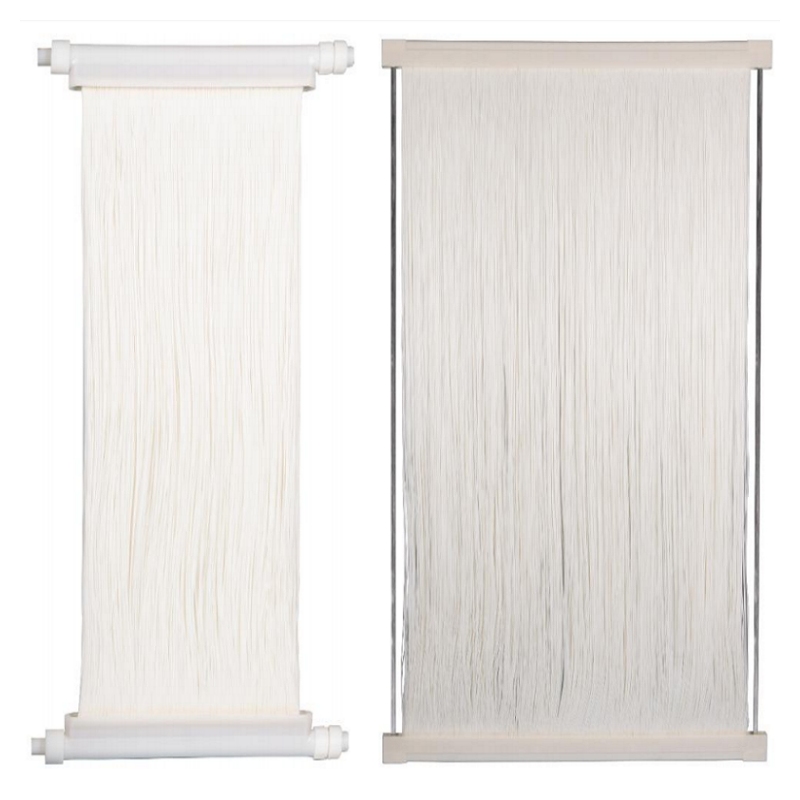
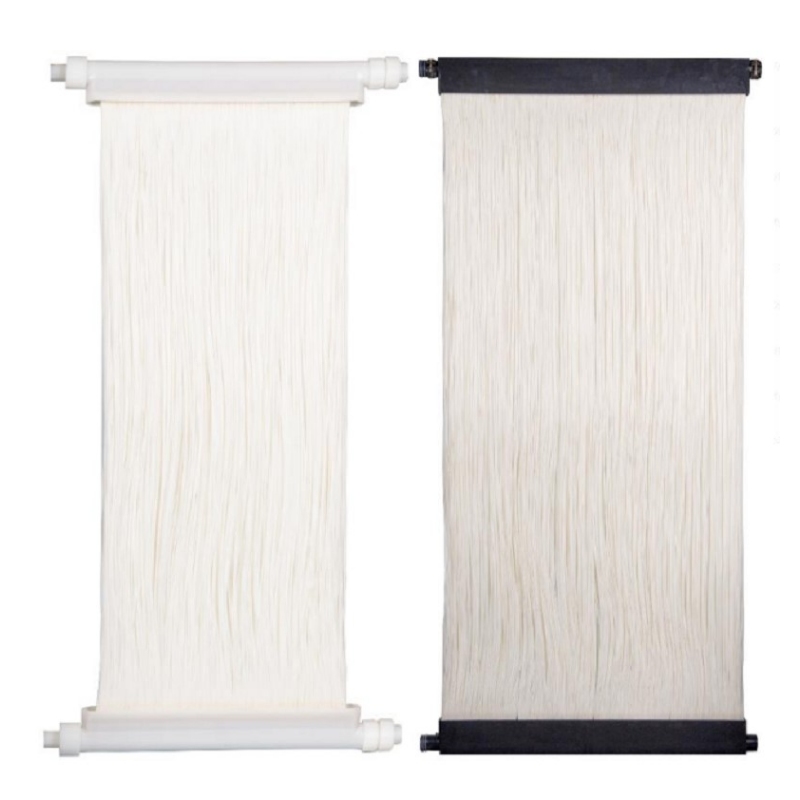
The Workhorse: PVDF Hollow Fiber Membranes
Most modern MBR systems use reinforced PVDF hollow fiber membranes due to their durability, chemical resistance, and stable long-term performance in biological environments.
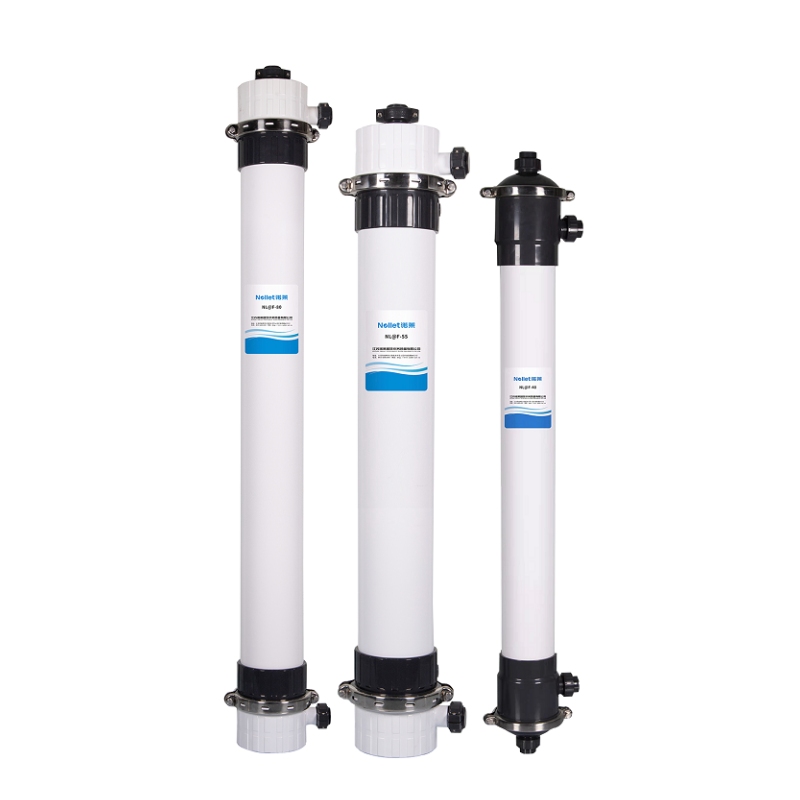
A typical example is the Nollet MBR membrane module, which uses PVDF hollow fibers with a nominal pore size of 0.02 μm. This allows the membrane to effectively retain bacteria, viruses, and suspended solids, ensuring consistently high effluent quality even under variable loading conditions.
Key operating parameters include:
- Membrane area: 25–35 m² per module
- Flux range: 10–25 L/m²·h
- Operation mode: intermittent suction cycles to reduce fouling and maintain stable permeability
Compared with PES membranes, PVDF offers lower hydraulic resistance and better mechanical stability, making it more suitable for long-term continuous wastewater treatment applications.
Where MBR Membrane Modules Shine: Five Key Applications
MBR membrane modules are used across a wide range of wastewater treatment scenarios, depending on influent quality, discharge standards, and space constraints. Below are five of the most common and high-impact applications.
1. Municipal Wastewater Treatment and Capacity Upgrades
MBR membrane modules are widely adopted in municipal plants that face stricter discharge limits and limited expansion space. In many cases, they are used to upgrade existing activated sludge systems without increasing footprint.
A well-known example is the Star City wastewater treatment plant in Morgantown, West Virginia, where an MBR system operates alongside a conventional activated sludge process. Over long-term operation, the MBR consistently produced much higher effluent quality, with BOD₅ below 1 mg/L and TSS below 2 mg/L, in some cases eliminating the need for UV disinfection.
The key advantage is footprint reduction. Studies show that MBR systems typically require about 40% less tank area than conventional activated sludge systems, and can reduce overall building volume by up to 25–40%. In space-constrained urban projects, this difference often determines whether plant expansion is even possible.
2. Industrial Wastewater: Food, Beverage, and Pharmaceuticals
Industrial wastewater is more complex and variable than municipal sewage, often containing high organic loads, fluctuating pH, fats, oils, and trace contaminants. MBR systems perform well in these conditions because membrane separation decouples biomass retention from hydraulic retention time, allowing stable operation even under load fluctuations.
In food and beverage applications such as breweries, slaughterhouses, and dairy plants, COD levels can reach several thousand mg/L. Pilot studies have shown that MBR systems can achieve high removal efficiency and even enable on-site water reuse in some facilities.
In pharmaceutical wastewater treatment, MBR technology is particularly valuable due to its ability to retain slow-growing microorganisms and improve the degradation of antibiotics and active compounds that are difficult to remove using conventional systems. With tightening regulations on pharmaceutical discharge, MBR systems are increasingly used as compliance-driven upgrades.
3. Water Reuse and Reclamation
Water reuse is one of the fastest-growing applications for MBR membrane modules. Because the membrane acts as a physical barrier to suspended solids and pathogens, MBR systems can produce high-quality effluent suitable for non-potable reuse in a single treatment step.
In practice, this has been proven in large-scale residential and municipal projects. For example, a township wastewater upgrade project in Hyderabad, India, replaced a failing biological system with an MBR solution, reducing BOD from 200 mg/L to below 10 mg/L and TSS to nearly 1 mg/L. The result was stable on-site water reuse and elimination of odor issues.
Similar upgrades are now being implemented in water-stressed regions where reuse is becoming a necessity rather than an option.
4. Landfill Leachate Treatment
Landfill leachate is one of the most difficult wastewater streams to treat due to its high ammonia concentration, organic load, and presence of heavy metals and refractory compounds.
MBR membrane modules are widely used in this application because they effectively retain suspended solids and protect downstream processes such as reverse osmosis. This improves overall system stability and reduces fouling risk in polishing stages, making the entire treatment train more reliable and easier to operate.
5. Decentralized and Rural Treatment Systems
For small communities, remote sites, and temporary installations, MBR membrane modules offer a compact and modular solution.
By eliminating the need for secondary clarifiers and operating at higher mixed liquor concentrations, MBR systems significantly reduce tank volume requirements. This makes them ideal for containerized or skid-mounted treatment plants that can be rapidly deployed and scaled as demand increases.
In these cases, simplicity, footprint, and automation are often more important than the lowest upfront cost—making MBR a strong fit for decentralized wastewater treatment.
Why Efficiency Keeps Improving: Material and Design Innovations
If MBR membrane modules had stayed where they were ten years ago, the economics would still be marginal. But the technology is moving fast. Membrane costs have dropped significantly. In the Chinese market alone, PVDF hollow fiber membrane prices fell to approximately 201 yuan per square meter in 2025—a 34% reduction from 2020 levels. Globally, membrane costs have seen the largest reduction in operational expenditure from before 2010 to after 2020, declining by 71%. That is not a gradual trend—it is a cost revolution.
The material landscape is also evolving. PVDF remains the dominant material, but new hybrid membranes—including graphene-enhanced variants—are entering commercial deployment. These novel materials offer higher fluxes, better fouling resistance, and longer service lives. One 2025 review found that modified anti-biofouling membranes achieved a 57% reduction in the rate of transmembrane pressure increase without affecting microbial metabolism in the bulk solution—a significant operational improvement. Meanwhile, modular design innovations are compressing construction timelines. Some integrated MBR systems now deliver unit energy consumption reductions of 18% and membrane lifespan extensions beyond eight years, enabled by AI-optimized cleaning cycles and smarter aeration control.
MBR vs. CAS vs. MBBR: A Side-by-Side Reality Check
To understand where MBR membrane modules fit, it helps to see them in direct comparison with the two main alternatives: conventional activated sludge (CAS) and moving bed biofilm reactor (MBBR). The trade-offs are real, and no technology wins on every metric.
| Parameter | Conventional Activated Sludge (CAS) | MBBR | MBR Membrane Module |
|---|---|---|---|
| Effluent quality | Moderate (TSS 10–30 mg/L) | Good (TSS <20 mg/L typical) | Excellent (TSS <1–2 mg/L) |
| Footprint | Baseline (largest) | 25–30% smaller than CAS | 40–50% smaller than CAS |
| Operational cost (OPEX) | $0.02–0.40/m³ | Moderate (lower aeration than MBR) | $0.09–0.45/m³ |
| Energy consumption | 0.30–0.64 kWh/m³ | Lower than MBR | 0.40–1.15 kWh/m³ |
| Sludge production | Highest | Moderate | Lowest (reduces disposal cost) |
| Resilience to load shocks | Poor (flocs wash out) | Good (biofilm is stable) | Excellent (membrane retains biomass) |
| Disinfection requirement | Tertiary needed | Tertiary needed | The membrane provides a log reduction |
Data sources: Engineering review 2025; hospital wastewater study 2024
The comparison is becoming increasingly clear. Conventional activated sludge (CAS) remains the lowest-cost option for plants with ample space and relatively relaxed discharge requirements, but it requires larger footprints and generates more sludge. MBBR offers improved process stability and lower energy consumption, yet still depends on additional tertiary treatment for high-quality water reuse.
MBR membrane modules stand out by delivering the highest effluent quality and the smallest footprint in a single integrated system. Although MBR systems typically consume more energy, the gap is narrowing as membrane costs decline and aeration efficiency continues to improve.
In regions with limited land availability or stricter discharge standards, the economics of MBR are becoming far more competitive. Recent studies show that MBR operating costs are now only slightly higher than conventional biological treatment processes, while significantly reducing sludge disposal volume and long-term operating burdens.
The Data Behind MBR Membrane Module Economics
Let us look at the economics behind modern MBR adoption. A typical 200 m³/day low-energy MBR project in China requires an investment of approximately ¥1.2–1.5 million ($165,000–$206,000), with membrane modules accounting for around 40–45% of total system cost. However, much of that investment can be offset through lower sludge disposal costs, reduced chemical usage, and the growing value of reclaimed water. In regions where freshwater costs range from $0.50–1.50/m³, water reuse can significantly shorten the payback period.
The broader market trend points in the same direction. The global membrane bioreactor market is projected to grow from approximately $1.02 billion in 2024 to $1.56 billion by 2031, at a CAGR of 6.2%. This steady expansion reflects increasing adoption across municipal, industrial, and decentralized wastewater treatment applications, as more facilities prioritize compact design, stricter discharge compliance, and sustainable water reuse.
FAQ
Q1: What is the typical lifespan of an MBR membrane module?
With proper operation and maintenance, PVDF hollow fiber membrane modules typically last 5–8 years. Advanced cleaning protocols and AI-optimized maintenance cycles can extend this to eight years or more.
Q2: How does the operating cost of MBR compare to conventional treatment?
MBR operating costs typically range from $0.09–0.45/m³, compared with approximately $0.02–0.40/m³ for conventional activated sludge systems. However, MBR technology eliminates the need for secondary clarifiers and significantly reduces sludge disposal costs, narrowing the overall cost gap in many applications.
Q3: Can MBR membrane modules be retrofitted into existing plants?
Yes. Retrofitting CAS tanks with submerged membrane modules is a common upgrade path. The process leverages existing basin infrastructure while eliminating the clarifier and dramatically improving effluent quality without expanding the facility’s physical footprint.
Q4: Do MBR membranes require chemical cleaning?
Periodic chemical cleaning is necessary to control fouling. Maintenance cleaning (weekly to monthly) uses low-concentration chemicals like sodium hypochlorite or citric acid. Recovery cleaning (every 3–12 months) uses higher concentrations to restore permeability.
Q5: Is MBR technology suitable for small-scale or decentralized applications?
Absolutely. Modular MBR systems are available from 1 m³/day to large municipal scales. The compact footprint and robust performance make MBR ideal for containerized plants, rural communities, resorts, and industrial facilities lacking connection to centralized sewer systems.
The Bottom Line: MBR Membrane Modules Are a Proven Solution
MBR membrane modules have proven their value in modern wastewater treatment, delivering high-quality effluent and enabling water reuse in municipal plants, food and pharmaceutical facilities, and decentralized systems.
Economics are improving: membrane costs have dropped over 70% in fifteen years, energy consumption is falling, and smarter aeration and advanced materials enhance efficiency. Adoption is also driven by space constraints, stricter discharge limits, and water scarcity.
For facilities aiming to save space, meet tougher standards, or reuse water efficiently, MBR modules offer a compact, reliable, and future-ready solution.
Contact us to determine the optimal membrane configuration for your project.