
Introduction: Why Flow Direction Matters
You’ve got a water treatment plant. Your feed water is dirty – really dirty. High suspended solids, lots of algae, maybe some oil and grease. You try a standard inside‑out UF membrane, but it keeps clogging. You spend half your day backwashing. Sound familiar?
Here’s the solution: Outside-in Ultrafiltration Membrane Modules. Instead of pushing water from the inside of hollow fibers outwards, these modules do the opposite. Water flows from the outside of the fibers into the lumen. That simple change makes a huge difference – especially for tough feed waters.
The best Outside-in Ultrafiltration Membrane Modules handle higher solids, foul less often, and are easier to clean. In this guide, I’ll walk you through how they work, why you might need them, and how to pick the right one. No fluff, no fake brand names – just real talk for engineers and operators.
What Exactly Are Outside-in Ultrafiltration Membrane Modules?
Let’s start simple. An ultrafiltration (UF) membrane is a hollow fiber, like a tiny straw with pores in the wall. Pores are around 0.01 to 0.1 microns. They catch particles, bacteria, viruses, and colloids, but let water and dissolved salts pass.
In inside‑out (also called bore‑side) flow, water goes into the hollow fiber lumen, then filters out through the wall. In Outside-in Ultrafiltration Membrane Modules, water flows around the outside of the fibers, then passes inward through the wall and collects in the lumen.
Think of it like this: inside‑out is like squeezing water from a sponge from the center; outside‑in is like wrapping a dirty sponge with a clean cloth and letting water flow inwards. The outside‑in design keeps the big stuff on the outside surface, where it’s easier to wash away.
Typical Construction
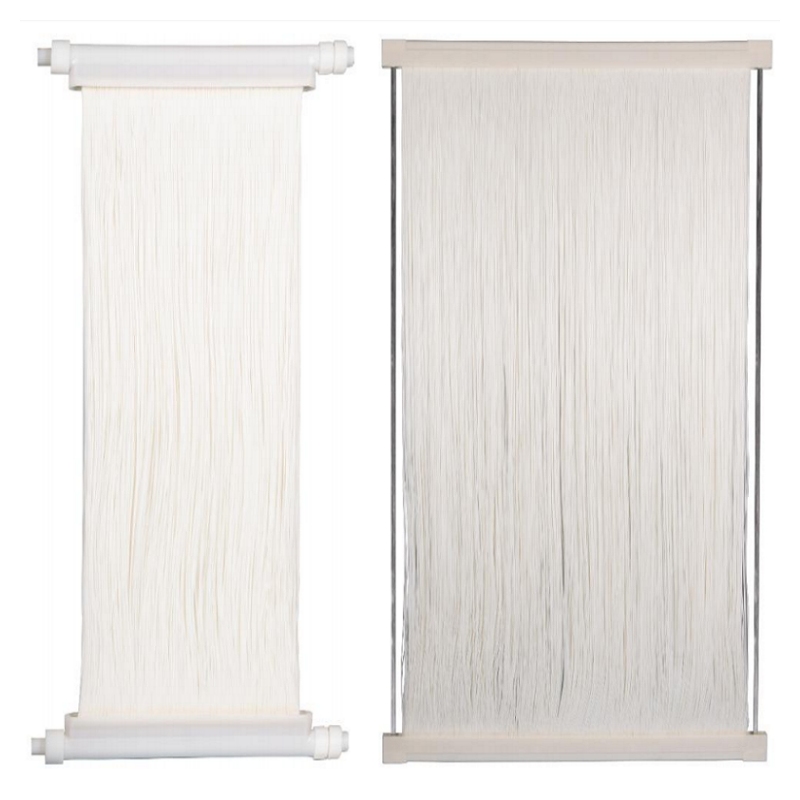
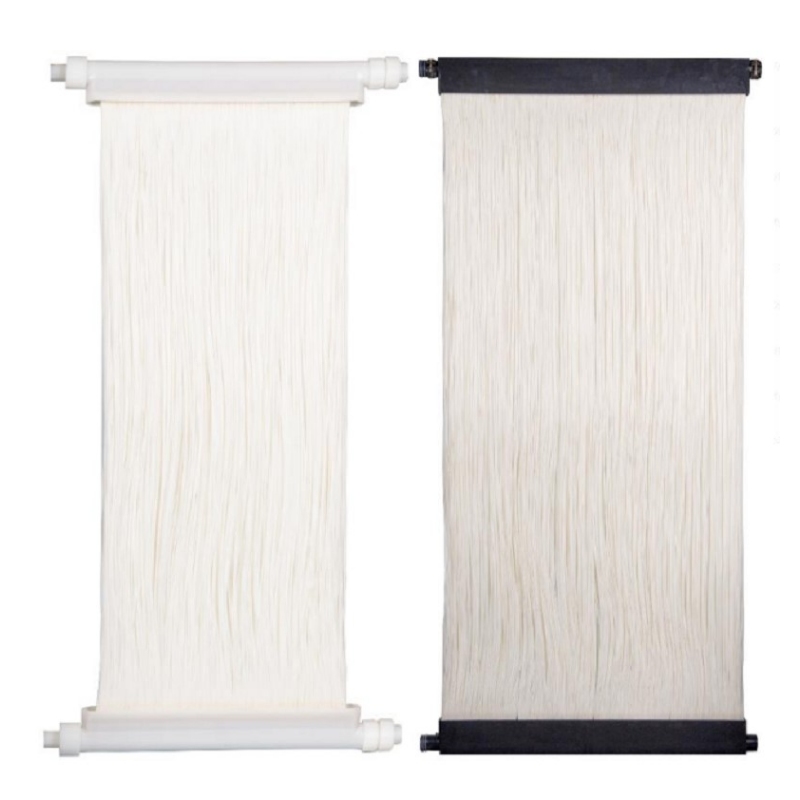
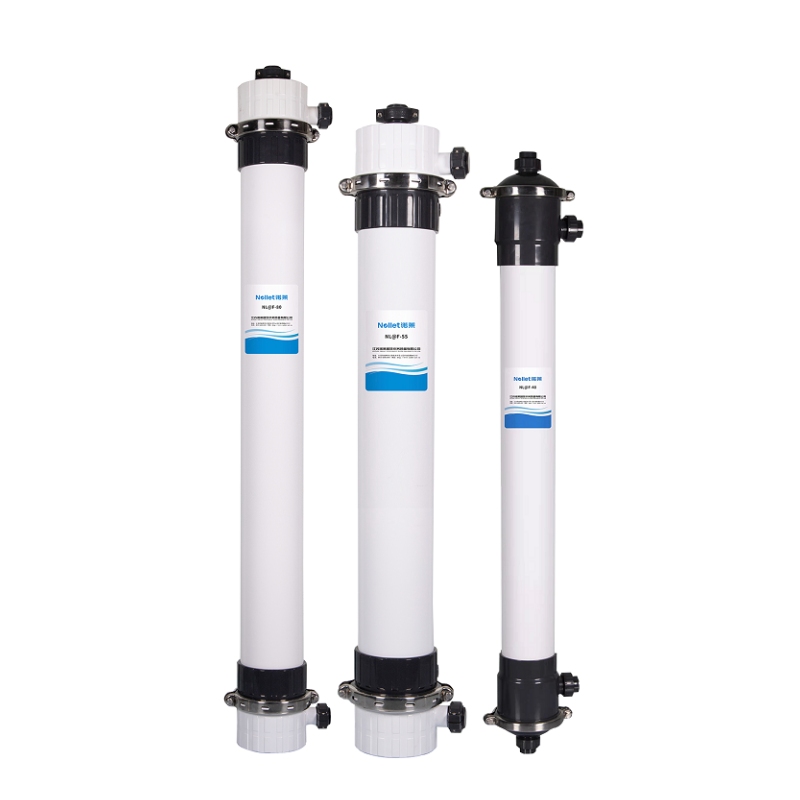
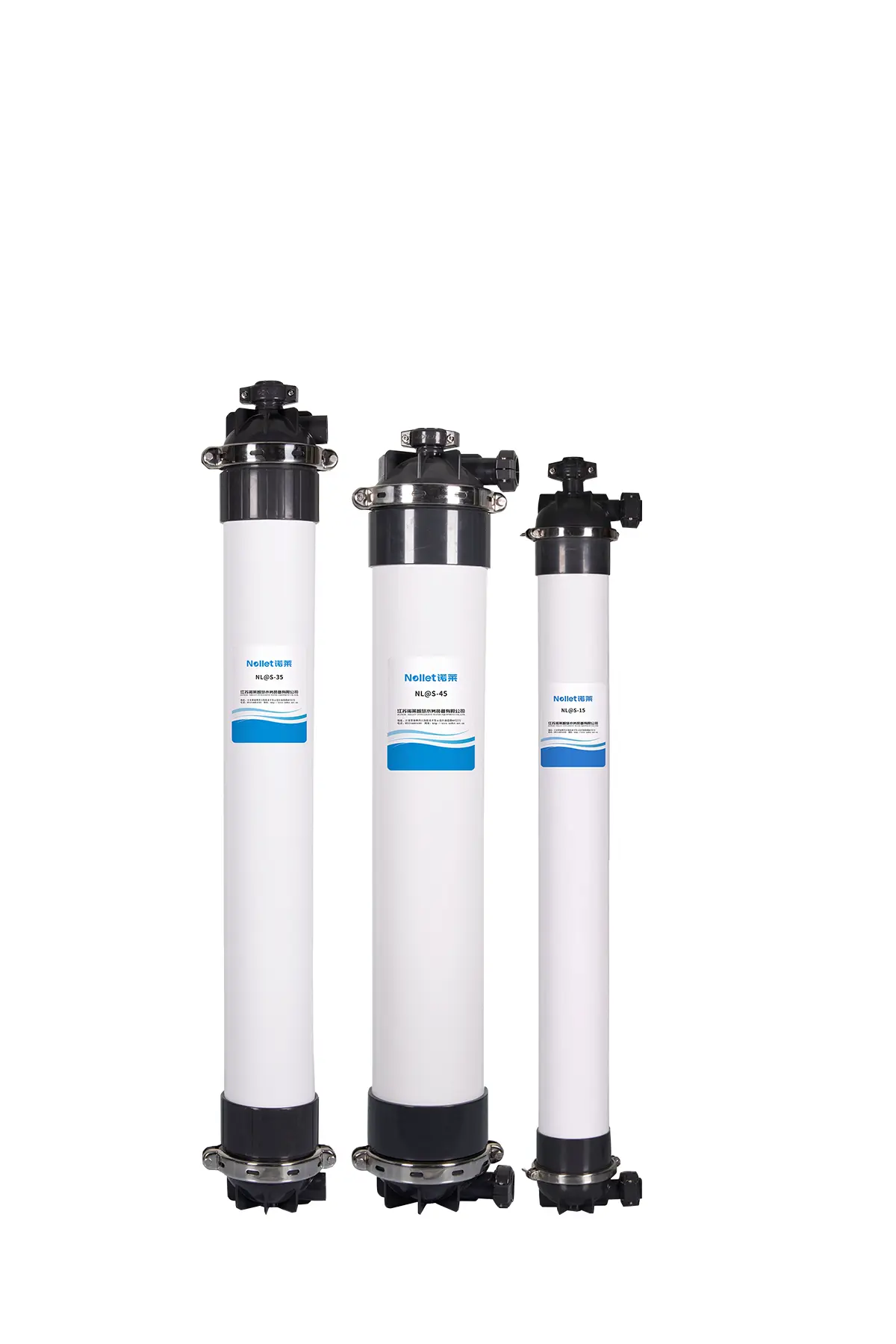
Most Outside-in Ultrafiltration Membrane Modules look like a bundle of hollow fibers potted into a cylindrical housing. Key parts:
-
Fiber material: Usually PVDF (polyvinylidene fluoride), PES (polyethersulfone), or PVC. PVDF is tough, chemical‑resistant, and hydrophilic.
-
Fiber diameter: 0.8 to 1.5 mm outside diameter (OD). Wall thickness around 0.2–0.5 mm.
-
Housing: UPVC or stainless steel. End caps have feed, permeate, and concentrate/backwash ports.
-
Flow direction: Feed enters the shell side (outside fibers). Permeate exits from the lumen ends.
You’ll find these modules in sizes from 2 inches up to 10 inches in diameter, with membrane areas from 5 m² to over 80 m² per module.
How Outside-in Ultrafiltration Membrane Modules Work – Step by Step
Here’s the flow path in plain English:
-
Feed water enters the module through the feed inlet (usually at the bottom or side). It fills the space around the hollow fibers – that’s the shell side.
-
Pressure (typically 0.5 to 3 bar) drives water through the fiber wall from outside to inside. Particles, bacteria, and colloids are too big – they stay outside.
-
Clean water (permeate) collects inside the fiber lumen and flows out through the permeate ports at one or both ends.
-
Retentate – the concentrated dirty water – leaves through the concentrate/backwash port. You either drain it or recirculate.
-
Periodically, you backwash: push permeate or air backwards from the lumen to the outside. That lifts off the cake layer. With Outside-in Ultrafiltration Membrane Modules, backwash is super effective because the foulants are on the outside surface – they just fall off.
That’s it. Simple, right? The key advantage is that the outside surface is much easier to clean hydraulically and with air scouring.
Why Choose Outside-in Ultrafiltration Membrane Modules? (5 Big Benefits)
Compared to inside‑out designs, Outside-in Ultrafiltration Membrane Modules offer several real‑world advantages.
1. Handles Higher Solids Without Constant Clogging
Inside‑out modules hate high solids. The feed channel inside the fiber is tiny – only 0.5 to 1 mm. A few big particles can plug it completely. Outside‑in modules have a much larger feed channel (the shell side). You can feed water with up to 300 mg/L of suspended solids without pre‑treatment. Some designs handle even more.
2. Much Easier to Clean
Foulants collect on the outside of the fibers. When you backwash (reverse flow), they just detach and fall into the bulk liquid. You can also use air scouring – bubbles scrub the fiber surfaces. Try doing that with inside‑out modules. You can’t. That’s why Outside-in Ultrafiltration Membrane Modules are the go‑to for wastewater, surface water, and industrial effluents.
3. Lower Energy Consumption (Sometimes)
Because the feed channel is open, the pressure drop is lower for the same flow. You might save 15–30% on pumping energy compared to inside‑out. But don’t take my word for it – check the manufacturer’s data sheet.
4. Reliable for Pre‑treatment of RO
Reverse osmosis (RO) systems need low SDI (silt density index) water. Outside-in Ultrafiltration Membrane Modules consistently produce permeate with SDI < 3, even when feed water quality swings wildly. That protects your RO membranes from fouling.
5. Fewer Chemical Cleanings
Because physical cleaning (backwash + air scour) is so effective, you need less frequent chemical-enhanced backwashes (CEB). That means less downtime, lower chemical costs, and longer membrane life.
“We switched from inside‑out to outside‑in modules for our surface water plant. Chemical cleaning frequency dropped from weekly to once a month. And we stopped having to rod out blocked fibers.” – Plant operator (real feedback, anonymized).
Where Do You Use Outside-in Ultrafiltration Membrane Modules?
These modules aren’t for every job. But for certain applications, they’re the only smart choice.
Surface Water Treatment (Lakes, Rivers, Reservoirs)
Surface water has algae, silt, and seasonal changes. Outside-in Ultrafiltration Membrane Modules handle the peaks. They’re used in drinking water plants worldwide as a pre‑treatment to RO or as a standalone filtration.
Wastewater & Tertiary Treatment
After activated sludge or MBR, you still have fine solids. Outside‑in UF polishes the effluent to near‑drinking quality. Many industrial plants use them to meet strict discharge limits or for water reuse.
Seawater Reverse Osmosis Pre‑treatment
Seawater has high solids, marine organisms, and oil. Inside‑out membranes clog fast. Outside-in Ultrafiltration Membrane Modules are now standard for large SWRO plants – they provide reliable SDI < 3 for the RO stage.
Industrial Process Water
Food & beverage, power plants, textiles – they all need clean water. Outside‑in UF removes particles and bacteria without chemicals. Perfect for cooling tower make‑up, boiler feed, or product rinse water.
Landfill Leachate Treatment
Leachate is nasty – high organics, colloids, and variable solids. Outside‑in UF as a pre‑treatment to reverse osmosis is a proven technique.
Outside-in vs Inside-out – A Quick Comparison
Let’s put them side by side. This will help you decide.
| Feature | Outside-in UF Modules | Inside-out UF Modules |
|---|---|---|
| Flow direction | Feed outside fibers → permeate inside lumen | Feed inside lumen → permeate outside |
| Maximum feed TSS | Up to 300 mg/L (some designs 500 mg/L) | Typically < 50 mg/L |
| Backwash effectiveness | Excellent (foulants on outside, easily detached) | Fair (foulants inside, harder to dislodge) |
| Air scouring | Yes – very effective | Not possible (fibers collapse) |
| Energy use | Lower pressure drop | Higher pressure drop for dirty feeds |
| Cleaning frequency | Lower | Higher |
| Typical applications | Surface water, wastewater, seawater pre‑RO, industrial effluent | Cleaner feeds, drinking water, RO pre‑treatment with good pre‑filtration |
| Cost per m² | Slightly higher (more complex potting) | Slightly lower |
The bottom line? If your feed water is clean (SDI < 3 already), inside‑out works fine. But if you have variable or dirty water, Outside-in Ultrafiltration Membrane Modules will save you headaches.
How to Choose the Right Outside-in Ultrafiltration Membrane Modules
Not all modules are equal. Here’s what to look for.
1. Material – PVDF is King
Most good Outside-in Ultrafiltration Membrane Modules use PVDF (polyvinylidene fluoride). Why? It’s tough, resists chlorine (up to 200 ppm for cleaning), and has high mechanical strength. Some cheaper modules use PES or PVC – they work, but they’re less tolerant of harsh cleaning.
2. Hydrophilicity
Hydrophilic membranes wet easily and resist fouling from oils and organics. Check if the manufacturer uses a permanent hydrophilic modification (not just a coating that washes off). A good module will have a contact angle < 60°.
3. Fiber Integrity
Look for a high burst strength (e.g., > 1.0 MPa). Also, ask about the breach detection method. Some modules come with an automatic integrity test (pressure decay or bubble point). That’s a big plus.
4. Packing Density
Higher packing density = more membrane area per module. But too high, and cleaning becomes less effective. For Outside-in Ultrafiltration Membrane Modules, a packing density of 100–200 m²/m³ is typical. Don’t just chase the highest number.
5. Port Configuration
Do you want two‑end permeate collection (lower pressure drop) or one‑end (simpler piping)? Most large plants use two ends. Also check if the module has a dedicated air scour inlet – that’s essential for effective cleaning.
6. Certifications
Look for NSF/ANSI 61 for drinking water, or CSA B483.1 for Canada. For industrial use, ISO 9001 manufacturing is a must. Some modules also have USFDA compliance for food contact.
Operating & Maintenance Tips for Outside-in Ultrafiltration Membrane Modules
You’ve bought your modules. Now, how do you keep them running for 5–8 years?
Routine Backwash
Do it every 20–60 minutes, depending on feed quality. Use permeate water, and backwash for 30–60 seconds. Flow rate should be 1.5 to 2 times the filtration flux. With Outside-in Ultrafiltration Membrane Modules, backwash recovery is typically > 95%.
Air Scouring
Before or during backwash, inject compressed air (at 0.5–1 bar) into the shell side. Bubbles scrub the fiber surfaces. This is your secret weapon against irreversible fouling. Do it every 1–3 backwashes.
Chemical Enhanced Backwash (CEB)
When physical cleaning isn’t enough, do a CEB. Typical chemicals:
-
Chlorine (200–500 ppm) – for organic fouling.
-
Citric acid (pH 2–3) – for inorganic scale.
-
Caustic (pH 11–12) – for oil and biological fouling.
Always check the membrane’s chemical tolerance. PVDF can handle chlorine; PES cannot.
Online vs Offline Cleaning
Most plants use online CEB (chemicals injected during backwash). For heavy fouling, do an offline soak: fill the module with cleaning solution and let it sit for 1–12 hours.
Integrity Testing
Every week or month, do a pressure decay test. Pressurize the lumen side with air (1–2 bar) and watch for pressure drop. If it falls too fast, you have broken fibers. Plug them in or replace the module.
الأسئلة الشائعة
Q1: Are outside-in ultrafiltration membrane modules more expensive than inside-out?
A: Slightly. The manufacturing is a bit more complex because you have to support the fibers from collapsing inward. But the price difference is usually only 10–20%. And when you factor in lower cleaning costs and longer life, the total cost of ownership is often lower for outside‑in. So don’t let a slightly higher upfront price scare you.
Q2: Can I use outside-in UF modules for seawater desalination pre-treatment?
A: Absolutely. In fact, most large seawater RO plants built in the last five years use Outside-in Ultrafiltration Membrane Modules as pre‑treatment. They handle the high algae and solids during red tides much better than inside‑out or conventional media filters. Just make sure the module material is chlorine‑resistant (PVDF) for periodic shocks.
Q3: How long do outside-in UF modules last?
A: With good operation and maintenance, you can get 5 to 8 years of useful life. The fibers themselves last longer, but the potting (epoxy) can degrade over time. After 8 years, you might see more fiber breakage or increased pressure drop. Some plants run them for 10 years, but that’s pushing it.
Q4: What’s the typical rejection rate for outside-in UF membranes?
A: For bacteria and viruses, > 99.99% (4‑log). For turbidity, permeate will be < 0.1 NTU regardless of feed. For dissolved salts, zero rejection. That’s not what UF does. For organic matter (TOC), rejection is 30–80% depending on molecular weight. If you need salt removal, add RO after UF.
Q5: How do I know if my outside-in module has a broken fiber?
A: You’ll see higher turbidity in the permeate, or you’ll fail a pressure decay test. A quick field test: take a sample of permeate and add a few drops of red food coloring. If you see red streaks, you have a broken fiber. Time to plug it. Most modules come with a fiber repair kit – little stainless steel pins or epoxy.
Conclusion – Make the Switch to Outside-in UF
If you’re tired of cleaning fiber bundles, rodding out plugged channels, and high chemical bills, it’s time to look at Outside-in Ultrafiltration Membrane Modules. They handle dirty water better, clean easier, and last longer than inside‑out designs. Yes, they cost a bit more upfront. But the savings in downtime, energy, and maintenance will pay you back within a year or two.
For surface water, wastewater, seawater pre‑treatment, or industrial process water, these modules are the workhorse you need.
Ready to upgrade your filtration system?
Stop fighting with clogged fibers. Go outside‑in and breathe easier.