
Abstract
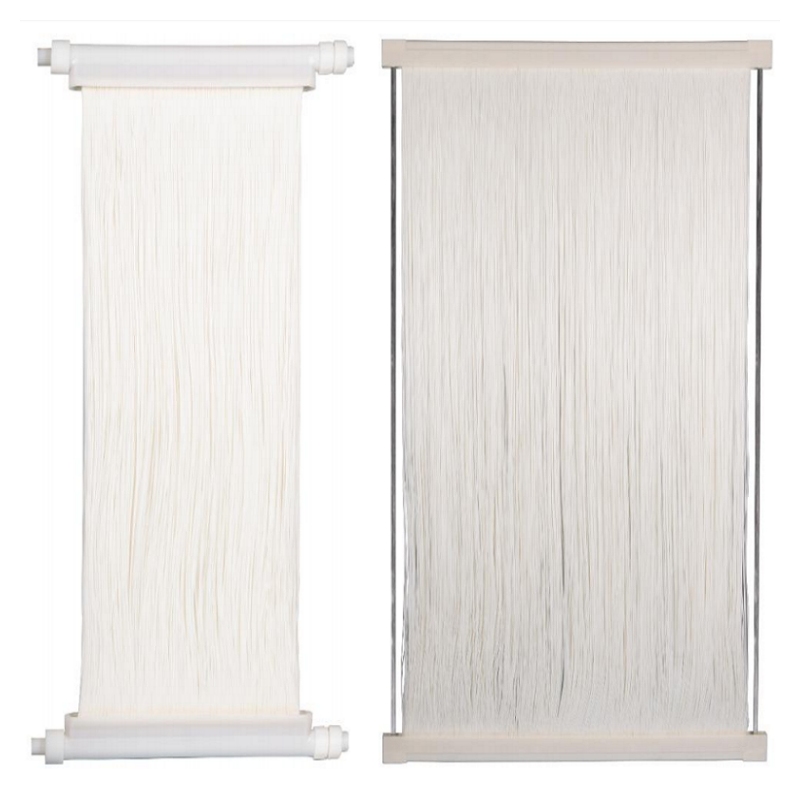
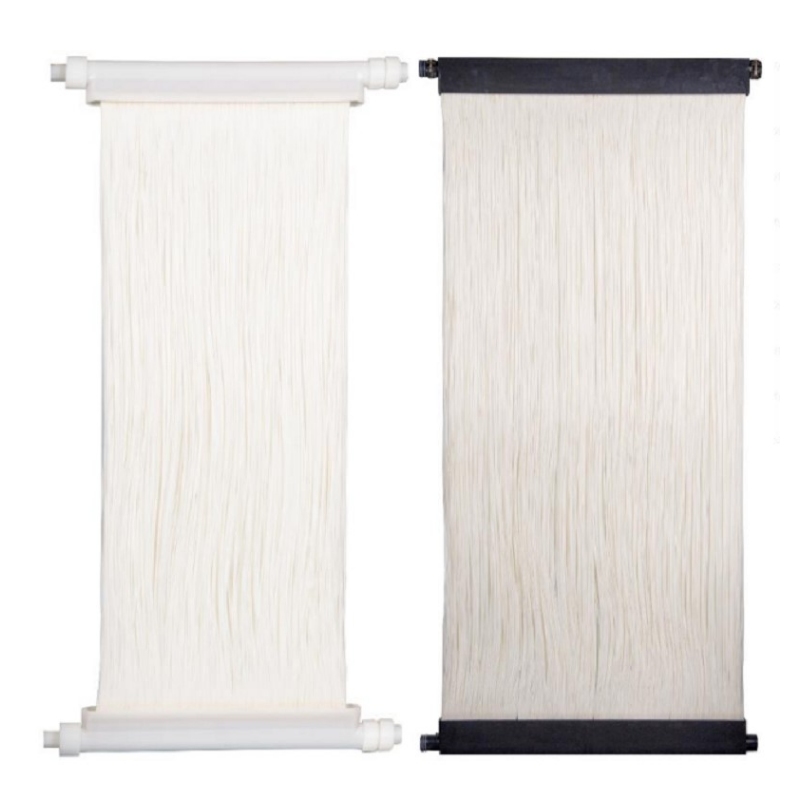
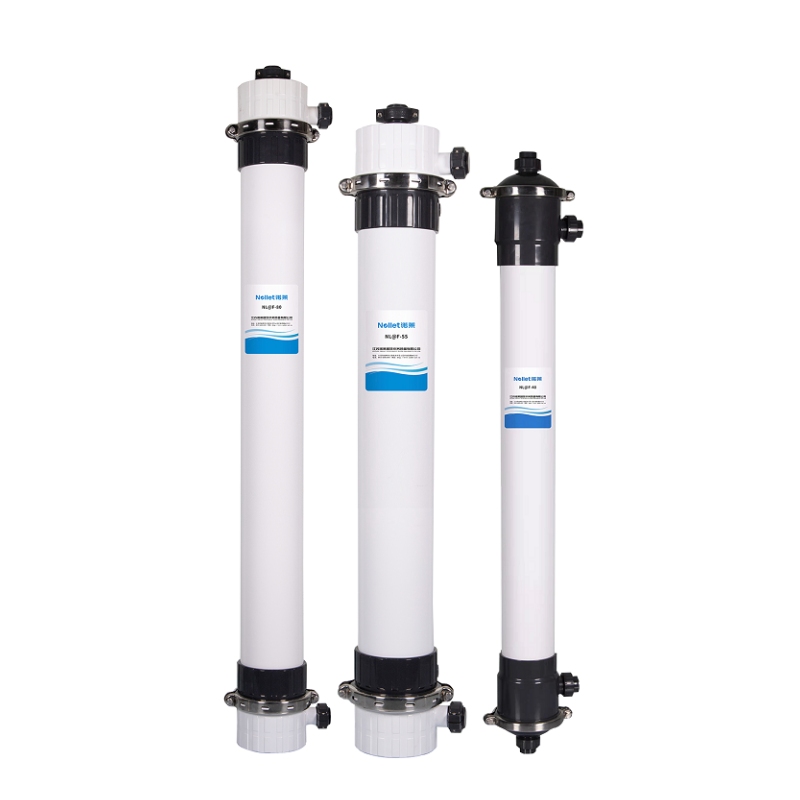
An وحدة الغشاء من الداخل إلى الخارج routes feed water through the inner bore of hollow fibers, driving filtrate radially outward through the membrane wall to the shell side for collection. This bore-side feed configuration generates controlled wall shear rates that actively resist fouling — a critical advantage when processing turbid, high-suspended-solids, or chemically complex feed streams where outside-in designs would rapidly blind.
This article examines the core operating mechanics, performance specifications, compliance benchmarks, and industrial applications that define when an inside-out hollow fiber configuration delivers superior engineering and commercial value. Whether you are designing a municipal water treatment plant, an industrial wastewater reclamation loop, or a food-grade clarification system, understanding the decision criteria for inside-out module selection will sharpen your procurement strategy and reduce lifecycle costs.
Key evaluation factors covered include: crossflow dynamics and self-scouring behavior, fiber geometry and pore size selection, pressure and chemical compatibility limits, integrity testing requirements, and total cost of ownership relative to competing configurations.
1. Operating Principle: How Inside-out Flow Differs from Outside-in Design
1.1 Bore-Side Feed Mechanics and Crossflow Dynamics
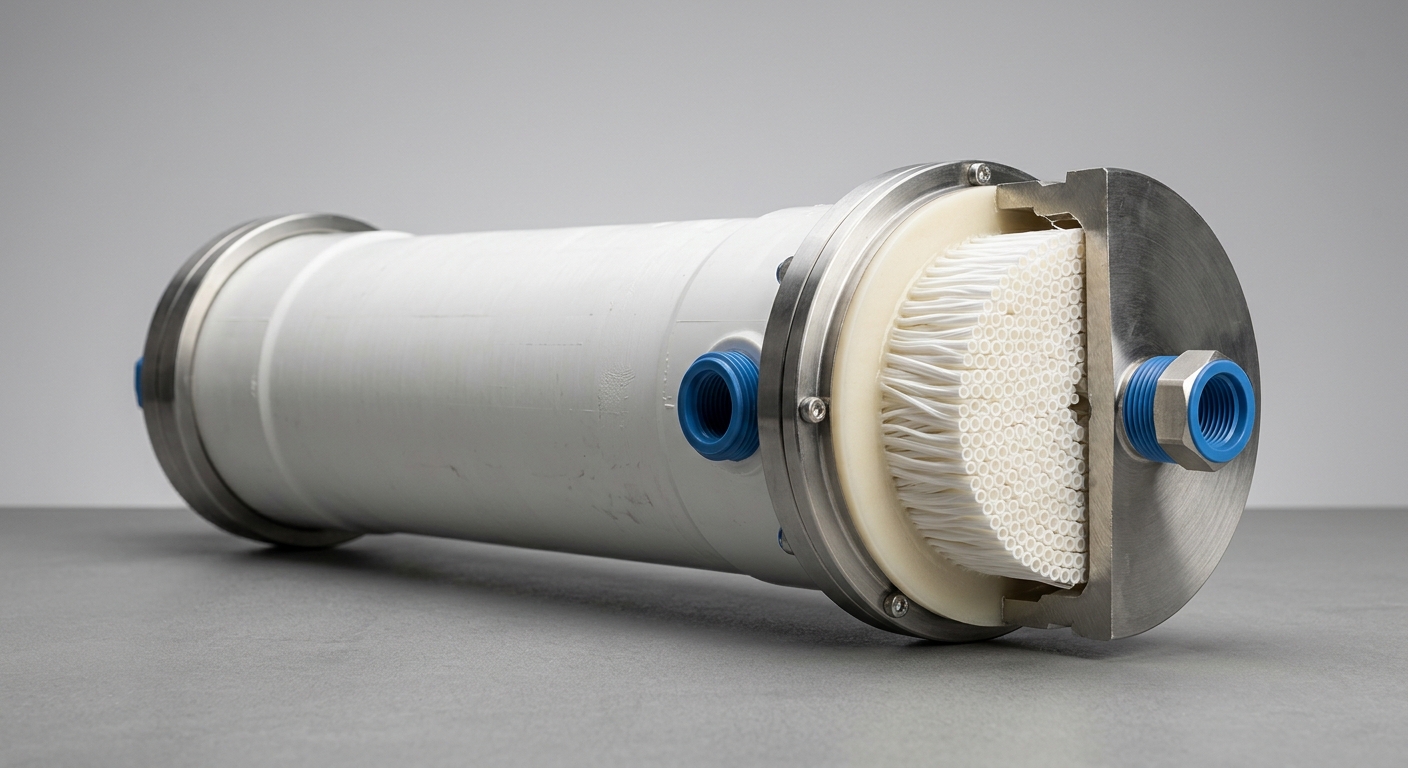
In an inside-out hollow fiber module, pressurized feed enters each fiber through its open bore. As the fluid travels axially along the fiber length, transmembrane pressure (TMP) drives water molecules — and dissolved species below the membrane’s molecular weight cut-off (MWCO) — radially outward through the fiber wall. The resulting permeate collects in the shell space and exits through a dedicated port, while the concentrated retentate exits from the opposing bore end.
This flow geometry is fundamentally a crossflow architecture. Unlike dead-end filtration, where feed flows perpendicular to the membrane surface, bore-side feed maintains a tangential velocity component along the membrane wall throughout operation. The magnitude of wall shear stress is directly governed by feed flowrate, fiber inner diameter, and fluid viscosity — all parameters that engineers can tune at the design stage to match specific feed characteristics.
The bore-side configuration also provides hydraulically predictable behavior. Because each fiber is an independent flow channel with a defined cross-sectional area, pressure drop across the module can be calculated with precision, enabling accurate pump sizing and energy budgeting — a practical advantage over shell-side feed systems where channeling and uneven distribution are harder to eliminate.
1.2 Fouling Resistance Advantages in Challenging Feed Streams
The self-scouring effect generated by bore-side crossflow is the primary reason engineers specify inside-out modules for challenging feed streams. Suspended solids, colloidal particles, and biological matter that would otherwise accumulate on the membrane surface are continuously swept toward the retentate outlet, reducing the rate of cake layer formation.
This mechanism makes inside-out modules compatible with feed turbidities that would quickly foul outside-in configurations operating in dead-end or low-crossflow modes. The bore geometry also enables effective backwash and backpulse cycles: reversing permeate flow briefly dislodges fouling layers from the inner bore surface and restores flux without chemical intervention, extending intervals between chemical cleaning-in-place (CIP) events.
For feeds with high biological oxygen demand (BOD) or variable suspended solids loads — common in municipal secondary effluent or industrial process streams — this combination of active shear and reversible hydraulic cleaning translates directly into more stable long-term flux and lower operational downtime.
2. Key Specifications and Performance Parameters
The table below compares representative UF-grade and MF-grade inside-out hollow fiber module configurations across the parameters most critical to system design.
| المعلمة | UF-Grade Module | MF-Grade Module |
|---|---|---|
| Fiber Inner Diameter (mm) | 0.8 – 1.2 | 1.5 – 2.5 |
| Operating Pressure Range (bar) | 0.5 – 3.0 | 0.2 – 1.5 |
| MWCO / Pore Size | 10 – 150 kDa | 0.1 – 0.45 µm |
| Max. Feed Turbidity (NTU) | Up to 100 | Up to 500 |
| Flux Rate (LMH) | 40 – 120 | 80 – 250 |
| Temperature Range (°C) | 5 – 45 | 5 – 60 |
| pH Tolerance | 2 – 11 | 2 – 13 |
| Housing Material | PVC / SS 316L | PVC / SS 316L / PP |
2.1 Fiber Geometry, Pore Size, and Flux Ratings
Fiber inner diameter is the most consequential geometric variable in inside-out module design. Smaller bore diameters (0.8–1.2 mm, typical of UF grades) generate higher wall shear at equivalent crossflow velocities, improving fouling resistance for colloidal and macromolecular foulants. However, smaller bores also increase hydraulic resistance, raising energy requirements and limiting the maximum tolerable feed suspended solids without plugging risk.
Larger bore diameters (1.5–2.5 mm, MF grades) accommodate higher TSS feeds and reduce pressure drop, but require higher volumetric crossflow to maintain equivalent shear. System designers must balance these trade-offs against feed water characterization data — specifically particle size distribution, turbidity, and TSS concentration.
Pore size selection follows application logic: UF membranes (10–150 kDa MWCO) target virus removal, macromolecule rejection, and colloidal clarification; MF membranes (0.1–0.45 µm) focus on bacteria, suspended solids, and turbidity reduction. Nominal ratings indicate the pore size at which 50% rejection occurs; absolute ratings (used in pharmaceutical and food applications) certify 99.9%+ rejection at the stated size.
2.2 Pressure, Temperature, and Chemical Compatibility Limits
Transmembrane pressure should be operated conservatively — typically 30–50% below the module’s rated maximum — to minimize compaction of the membrane’s active layer and extend service life. Exceeding TMP limits accelerates irreversible fouling and can compromise fiber mechanical integrity over time.
Material selection drives chemical compatibility. PVDF (polyvinylidene fluoride) offers the broadest chemical resistance, tolerating NaOCl concentrations up to 2,000 ppm for CIP and pH excursions from 2 to 11, making it the preferred polymer for municipal and industrial applications. PES (polyethersulfone) provides superior hydrophilicity and lower fouling propensity for protein-containing feeds but has narrower oxidant tolerance. PP (polypropylene) suits aggressive acid or solvent environments. All three polymers are available with NSF 61 or food-contact certifications depending on the supplier and module configuration.
3. Compliance Standards and Quality Benchmarks
3.1 Relevant International and Industry Standards
Inside-out membrane modules deployed in regulated applications must satisfy a layered compliance framework. NSF/ANSI 61 governs materials in contact with drinking water, requiring extraction testing to confirm that module housing, potting compounds, and fiber polymers do not leach harmful substances at specified service conditions. Modules destined for EU markets must additionally align with the EU Drinking Water Directive (2020/2184), which sets microbiological and chemical quality targets that directly inform LRV documentation requirements.
ISO 8573 applies when membrane modules are integrated into compressed air or gas-phase separation systems, specifying purity classes for particulates, water, and oil. For laboratory characterization of membrane pore size, ASTM E1294 provides the standard bubble point and liquid-liquid displacement porometry methodology referenced by suppliers in product datasheets.
Procurement teams should request compliance documentation proactively — not all suppliers maintain current third-party certifications, and gaps can delay project commissioning in regulated sectors.
3.2 Integrity Testing and Validation Requirements
Membrane integrity is non-negotiable in applications where pathogen removal must be demonstrated to regulators. The pressure decay test (PDT) is the industry-standard field method: the permeate side is pressurized with air to a defined test pressure, isolated, and monitored for pressure drop over a fixed interval. A decay rate exceeding the module’s specified threshold indicates fiber damage or potting failure requiring module replacement.
The bubble point test provides a complementary bench-scale assessment of maximum pore size, critical for absolute-rated MF membranes in pharmaceutical pre-filtration or sterile filtration upstream processes.
Log-removal value (LRV) documentation — derived from challenge testing with MS2 bacteriophage (for virus-rated UF) or كريبتوسبوريديوم surrogates (for MF) — is required for regulatory submissions under the US EPA Long Term 2 Enhanced Surface Water Treatment Rule and equivalent frameworks. Suppliers should provide module-specific LRV data, not generic polymer-class data.
4. Industrial Applications and Commercial Value
4.1 Target Application Scenarios
Inside-out hollow fiber modules address a broad spectrum of industrial separation challenges:
- Municipal water treatment: Surface water clarification, pre-treatment ahead of RO, and secondary effluent polishing for water reuse schemes benefit from the high-turbidity tolerance and backwashability of bore-side feed designs.
- Industrial wastewater reclamation: Oil-water separation, cooling tower blowdown treatment, and process water recovery in chemical and petrochemical plants require the chemical resistance and solids-handling capacity that inside-out PVDF or PP modules provide.
- Food & beverage clarification: Juice, beer, and dairy applications leverage UF-grade inside-out modules for gentle, additive-free clarification that preserves flavor compounds while removing haze-forming colloids and microorganisms.
- Pharmaceutical pre-filtration: Bore-side crossflow reduces bioburden and particulate load ahead of sterile filtration steps, extending downstream filter cartridge life and reducing consumable costs.
- Produced water treatment: High-TSS, hydrocarbon-contaminated produced water from oil and gas operations demands the robust solids handling and aggressive CIP tolerance that MF-grade inside-out modules with large bore diameters deliver.
4.2 Total Cost of Ownership and Procurement Considerations
Inside-out modules carry a higher initial unit cost than equivalent outside-in configurations due to more precise fiber spinning tolerances and potting requirements. However, total cost of ownership analysis consistently favors inside-out designs for challenging feeds because:
- Longer membrane service life: Reduced irreversible fouling extends module replacement intervals from 3–5 years (outside-in on difficult feeds) to 5–8 years under well-managed CIP programs.
- Lower chemical consumption: Effective hydraulic backwashing reduces CIP frequency, cutting reagent costs and chemical waste disposal expenses.
- Higher system availability: Stable long-term flux reduces unplanned downtime for emergency cleaning or module changeouts.
- Energy efficiency: Optimized bore diameter and crossflow velocity design allows energy-efficient operation compared to high-pressure outside-in systems compensating for rapid flux decline.
When evaluating suppliers, request module-specific flux decline data under representative feed conditions, not only clean-water flux ratings. Lead times for large-format modules (8-inch diameter and above) can reach 12–16 weeks; early procurement planning is essential for project schedules.
الأسئلة الشائعة
Q1: What feed water turbidity or TSS level makes an inside-out membrane module the preferred choice over an outside-in design?
As a general engineering guideline, inside-out configurations become preferable when feed turbidity consistently exceeds 30–50 NTU or TSS exceeds 50 mg/L. Outside-in dead-end modules can handle moderate turbidity with frequent backwashing, but above these thresholds, bore-side crossflow provides more stable flux and longer cleaning intervals. For highly variable feed quality — common in surface water intakes — inside-out designs offer operational resilience that outside-in systems cannot match without extensive pre-treatment.
Q2: How do you size an Inside-out Membrane Module system for a given flow rate and recovery target?
Sizing begins with the design permeate flux (LMH) selected from pilot data or conservative literature values for the specific feed matrix. Divide the required permeate flow rate by the design flux to determine total membrane area needed, then select module count and configuration (series/parallel) to achieve that area while meeting recovery targets — typically 85–95% for water treatment applications. Always include a 15–20% area contingency to accommodate flux decline over the membrane’s service life.
Q3: What CIP protocols and chemical concentrations are compatible with inside-out hollow fiber membranes without compromising fiber integrity?
For PVDF membranes, standard CIP protocols use NaOCl (200–500 ppm, pH 10–11) for organic fouling and citric acid (1–2%, pH 2–3) for mineral scaling. PES membranes require lower oxidant concentrations (50–200 ppm NaOCl) to prevent oxidative degradation. Always confirm CIP chemical compatibility with the specific module supplier’s datasheet — polymer grade, fiber wall thickness, and potting compound formulation all affect chemical tolerance limits.
الخاتمة
The inside-out hollow fiber membrane module is the engineering-preferred configuration when feed stream complexity, solids loading, or regulatory LRV requirements exceed the practical limits of outside-in or dead-end designs. Its bore-side crossflow mechanics deliver active fouling resistance, predictable hydraulic behavior, and reliable backwash recovery — translating to higher system availability and lower lifecycle costs in demanding industrial environments.
Decision criteria converge on four pillars: feed characterization (turbidity, TSS, chemistry), required separation performance (pore size, LRV), regulatory compliance framework (NSF 61, EU DWD, EPA LT2), and total cost of ownership over the module’s service life. When these factors align with inside-out module capabilities — particularly in municipal water reuse, industrial wastewater reclamation, food-grade clarification, and produced water treatment — the configuration delivers measurable commercial and operational value that justifies the procurement investment.
Engage suppliers early, demand application-specific performance data, and validate integrity testing protocols before commissioning to ensure the selected module meets both engineering specifications and regulatory obligations throughout its operational life.