
Abstract
Nanofiltration membrane elements provide an efficient solution for industrial water treatment by combining selective filtration, lower energy consumption, and reliable separation performance. Positioned between reverse osmosis and ultrafiltration, nanofiltration technology effectively removes divalent ions, organic compounds, and targeted contaminants for applications such as water softening, desalination, and process water purification. Operating at moderate pressures with high flux rates, NF membranes help industries achieve a balance between treatment efficiency and operational costs.
For companies evaluating membrane solutions, selecting the right nanofiltration membrane element supplier is essential. Factors such as membrane consistency, customization options, quality certifications, and technical support play a key role in ensuring long-term system performance and lifecycle value.
Understanding Nanofiltration Membrane Technology
How Does Nanofiltration Membrane Technology Work?
Nanofiltration (NF) membranes are advanced filtration solutions designed to remove specific contaminants while maintaining efficient water flow. Positioned between ultrafiltration (UF) and reverse osmosis (RO), nanofiltration provides a balance between filtration performance, energy consumption, and operating costs.
Unlike traditional filtration methods that only separate particles based on size, nanofiltration membranes use both pore structure and surface properties to achieve selective separation. This allows them to effectively remove:
- Hardness-causing ions, such as calcium and magnesium, to reduce scaling problems;
- Organic compounds and color-causing substances in industrial process water;
- Specific dissolved contaminants while allowing certain beneficial minerals and salts to remain.
This selective filtration capability makes nanofiltration membrane elements suitable for applications where complete desalination is unnecessary, but improved water quality is required.
Key Advantages of Nanofiltration Membrane Elements
For industrial water treatment systems, nanofiltration offers several practical advantages:
1. Lower Energy Consumption Compared with RO
Nanofiltration systems typically operate at lower pressures than reverse osmosis systems, helping reduce energy requirements while maintaining effective contaminant removal. This makes NF an attractive option for industries looking to improve water treatment efficiency and reduce operating costs.
2. Selective Contaminant Removal
Unlike RO membranes that remove almost all dissolved salts, nanofiltration allows more selective separation. It can reduce hardness and targeted contaminants while preserving certain minerals, making it suitable for water softening and partial desalination applications.
3. Stable Performance for Industrial Applications
Modern nanofiltration membrane elements use thin-film composite (TFC) structures that provide reliable filtration performance, good chemical resistance, and long service life when operated under suitable conditions.
Important Performance Factors When Selecting NF Membranes
When choosing a nanofiltration membrane element for an industrial system, buyers should consider several key factors:
- Feedwater quality: The level of hardness, dissolved solids, and organic contaminants affects membrane selection.
- Required rejection performance: Different applications require different levels of ion and contaminant removal.
- Operating conditions: Pressure, temperature, and flow requirements influence system efficiency.
- Supplier technical support: Professional guidance helps ensure proper membrane selection, installation, and long-term operation.
By evaluating these factors, companies can select a nanofiltration membrane solution that delivers reliable performance and better lifecycle value.
Common Nanofiltration Membrane Element Configurations
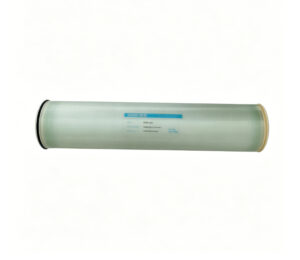
Most industrial nanofiltration membrane elements use a spiral-wound design, which provides a compact structure and high membrane area within a limited installation space. Available in common 4-inch and 8-inch formats, these elements can be integrated into various water treatment systems, from small-scale projects to large industrial facilities.
| المعلمة | Nanofiltration | Reverse Osmosis | Ultrafiltration |
|---|---|---|---|
| Pore Size | 0.5-2 nm | <0.5 nm | 2-100 nm |
| MWCO | 200-1000 Da | <100 Da | 10,000-100,000 Da |
| ضغط التشغيل | 5-20 bar | 15-70 bar | 0.5-5 bar |
| NaCl Rejection | 20-60% | 98-99.5% | <10% |
| Divalent Ion Rejection | 85-98% | 99-99.8% | <20% |
| استهلاك الطاقة | معتدلة | عالية | منخفضة |
| Typical Applications | Water softening, partial desalination, color removal | Seawater desalination, ultrapure water | Suspended solids, bacteria removal |
How to Evaluate Nanofiltration Membrane Element Quality
Choosing the right nanofiltration membrane element involves more than comparing filtration performance. Industrial buyers need to consider membrane quality, application requirements, system compatibility, and supplier capabilities to ensure long-term operating efficiency.
Key factors to evaluate include:
- Membrane performance consistency: High-quality NF membrane elements should provide stable flux, reliable rejection performance, and consistent results between production batches.
- Material quality and durability: Advanced thin-film composite (TFC) structures offer good chemical resistance, mechanical strength, and longer service life under proper operating conditions.
- Application suitability: Different industries require different separation performance. Membrane selection should be based on feedwater conditions, target contaminants, operating temperature, and required permeate quality.
- Technical support and customization: Experienced suppliers can provide membrane selection guidance, system optimization recommendations, and customized solutions for specific water treatment challenges.
By evaluating these factors, companies can select a nanofiltration membrane element that delivers reliable performance, reduced maintenance requirements, and better lifecycle value.
Industrial Applications and Use Cases
Nanofiltration membrane elements are widely used in industrial water treatment because they provide selective separation with lower energy requirements than conventional reverse osmosis systems. Depending on treatment goals, NF technology can be applied for water softening, process water purification, contaminant removal, and RO pre-treatment.
Water Softening and Hardness Removal
One of the most common applications of nanofiltration is reducing water hardness in industrial systems. NF membranes selectively remove calcium and magnesium ions that contribute to scaling, helping protect boilers, heat exchangers, cooling towers, and process equipment.
Compared with traditional ion exchange softening, nanofiltration provides a chemical-free alternative that reduces the need for salt regeneration and wastewater disposal. This makes NF an attractive option for industries seeking more sustainable and cost-efficient water treatment solutions.
Typical applications include:
- Boiler feedwater treatment: Reducing hardness to minimize scale formation and improve equipment efficiency.
- Cooling tower water management: Controlling scale-forming minerals while improving water utilization.
- Industrial process water treatment: Providing consistent water quality without complete demineralization.
Process Water Purification
Many industries require precise water quality control for manufacturing processes. Nanofiltration membrane elements help remove selected contaminants while maintaining efficient water flow, making them suitable for applications where full desalination is unnecessary.
Common industrial applications include:
Pharmaceutical Manufacturing
NF membranes are used for process water treatment, concentration processes, and removal of specific organic compounds. Their selective separation capability helps manufacturers improve product recovery while maintaining strict quality requirements.
Electronics Manufacturing
In semiconductor and electronics production, water purity is critical for preventing contamination during manufacturing. Nanofiltration is often used as a pre-treatment step before reverse osmosis or other polishing technologies, helping reduce fouling and improve downstream system performance.
Food and Beverage Processing
NF technology supports applications such as dairy processing, juice clarification, and ingredient concentration. By selectively removing unwanted minerals, colors, and organic compounds, nanofiltration helps improve product quality while reducing energy consumption compared with traditional thermal concentration methods.
Overall, nanofiltration membrane elements provide industries with a flexible treatment solution that balances separation efficiency, energy consumption, and operating costs.
Commercial and Operational Advantages
Energy Efficiency and Cost Reduction
One of the key advantages of nanofiltration membrane elements is their ability to achieve effective separation with lower energy consumption compared with conventional reverse osmosis systems.
Operating at moderate pressures, typically around 5–20 bar, nanofiltration requires less energy while still providing reliable removal of hardness-causing ions, organic compounds, and targeted contaminants. This makes NF technology an attractive option for industries looking to reduce operating costs without compromising water treatment performance.
Compared with traditional treatment methods, nanofiltration can help companies reduce expenses related to:
- Energy consumption: Lower operating pressure reduces power requirements for pumps and system operation.
- Chemical usage: Selective ion removal can reduce dependence on chemical softening processes.
- Maintenance costs: Stable membrane performance helps extend equipment service intervals.
- Waste management: Reduced chemical regeneration requirements minimize wastewater disposal needs.
For industrial facilities evaluating water treatment upgrades, nanofiltration provides a practical balance between treatment efficiency and long-term operating economics.
Compliance and Quality Standards
For industrial buyers, product quality and regulatory compliance are important factors when selecting nanofiltration membrane elements. Reliable membrane manufacturers should provide products that meet relevant industry standards and undergo strict quality control throughout the manufacturing process.
Depending on the application, buyers may need to consider:
- Material safety certifications for drinking water and food-related applications;
- Quality management systems such as ISO 9001 to ensure consistent manufacturing processes;
- Application-specific compliance for industries including pharmaceuticals, food processing, and electronics manufacturing;
- Performance testing data to verify membrane stability and separation capability.
Choosing a supplier with proven quality management practices helps reduce operational risks and ensures more reliable long-term membrane performance.
Selection Criteria for Procurement
Technical Evaluation Parameters
Selecting the right nanofiltration membrane element requires a clear understanding of both water quality requirements and system operating conditions. Before purchasing, industrial users should evaluate several key factors:
Feedwater Characteristics
Water composition directly affects membrane performance and lifespan. Important factors include:
- Total dissolved solids (TDS);
- Water hardness levels;
- Organic content;
- pH and temperature;
- Fouling potential.
Understanding feedwater conditions helps determine the most suitable membrane specifications and required pre-treatment processes.
Required Filtration Performance
Different applications require different levels of separation. For example:
- Water softening applications may prioritize high rejection of calcium and magnesium;
- Partial desalination systems may require balanced salt removal and water recovery;
- Industrial process applications may focus on removing specific organic compounds or contaminants.
Selecting the correct membrane performance characteristics helps achieve better efficiency without unnecessary treatment costs.
System Capacity and Operating Conditions
Membrane selection should also match system requirements, including:
- Required water production capacity;
- Available installation space;
- Operating pressure range;
- Cleaning requirements;
- Expected service life.
Proper system design combined with suitable membrane selection can improve reliability and reduce maintenance requirements.
Supplier Assessment Checklist
Choosing a reliable nanofiltration membrane element supplier is as important as selecting the right membrane specification. A qualified supplier should provide not only quality products but also technical support throughout the project lifecycle.
Key evaluation factors include:
1. Manufacturing Capability
Suppliers with advanced production facilities and strict quality control systems can provide more consistent membrane performance and product reliability.
2. Technical Support
Professional suppliers should offer membrane selection guidance, system optimization recommendations, and troubleshooting assistance to help customers achieve stable operation.
3. Customization Options
Different industries have unique water treatment requirements. Suppliers with customization capabilities can provide solutions based on feedwater conditions, rejection targets, and system design requirements.
4. Supply Reliability
Stable production capacity, responsive delivery, and reliable after-sales support help minimize downtime and ensure continuous operation for industrial users.
Why Choose a Reliable Nanofiltration Membrane Element Supplier?
The success of a nanofiltration system depends not only on membrane performance but also on supplier expertise and service capabilities. An experienced supplier can help customers select suitable membrane solutions, optimize system performance, and reduce long-term operating risks.
When evaluating suppliers, companies should look beyond product specifications and consider factors such as manufacturing quality, technical expertise, customization capability, and long-term support.
A reliable nanofiltration membrane element supplier can provide greater confidence throughout the entire project lifecycle, from initial membrane selection to system operation and maintenance.
وحدة الأسئلة الشائعة
Q1: What is the typical lifespan of a nanofiltration membrane element in industrial applications?
A nanofiltration membrane element typically lasts 3–5 years under proper operating conditions and regular maintenance. Actual service life depends on feedwater quality, pre-treatment efficiency, cleaning frequency, and operating conditions. Proper system design and routine maintenance can help extend membrane performance and reduce replacement costs.
Q2: How does nanofiltration differ from reverse osmosis in terms of operational costs?
Nanofiltration generally has lower operating costs than reverse osmosis due to its lower pressure requirements and reduced energy consumption. While RO provides higher salt removal, NF offers selective filtration with lower energy demand, making it suitable for applications such as water softening, partial desalination, and contaminant removal.
Q3: What pre-treatment is required before nanofiltration membrane systems?
Proper pre-treatment helps protect nanofiltration membranes from fouling and extends service life. Common pre-treatment methods include particle filtration, removal of excessive organic matter, and control of scaling factors. The specific requirements depend on feedwater quality and the target application.
الخاتمة
Nanofiltration membrane elements offer an efficient solution for industrial water treatment applications requiring selective filtration, water softening, and partial desalination. With lower energy consumption, reduced chemical requirements, and stable performance, NF technology helps industries improve water treatment efficiency while controlling operating costs.
For companies selecting nanofiltration solutions, factors such as feedwater conditions, system requirements, and supplier capabilities are essential. Partnering with an experienced nanofiltration membrane element supplier ensures reliable product performance, technical support, and long-term value for industrial water treatment projects.