
Introduction: When “Membrane Magic” Meets Microbes
The wastewater we produce daily – from household drains to industrial outflows – is packed with organic pollutants and nutrients that can choke our waterways. Traditional treatment plants work like oversized settling tanks: bacteria consume the contaminants, and gravity pulls the resulting sludge to the bottom. But this old-school approach is land-hungry, and its treated water often falls short of the high standards needed for reuse, especially as water scarcity becomes more acute.
Now imagine a technology that could instantly filter “muddy water” into near-drinking-quality clarity, while taking up only one-third the space of conventional systems. That technology is the membrane bioreactor (MBR), widely hailed as a 21st-century game changer in water treatment.
What Is an MBR?
In simple terms, an MBR combines biological degradation with physical filtration into a single, high-tech unit.
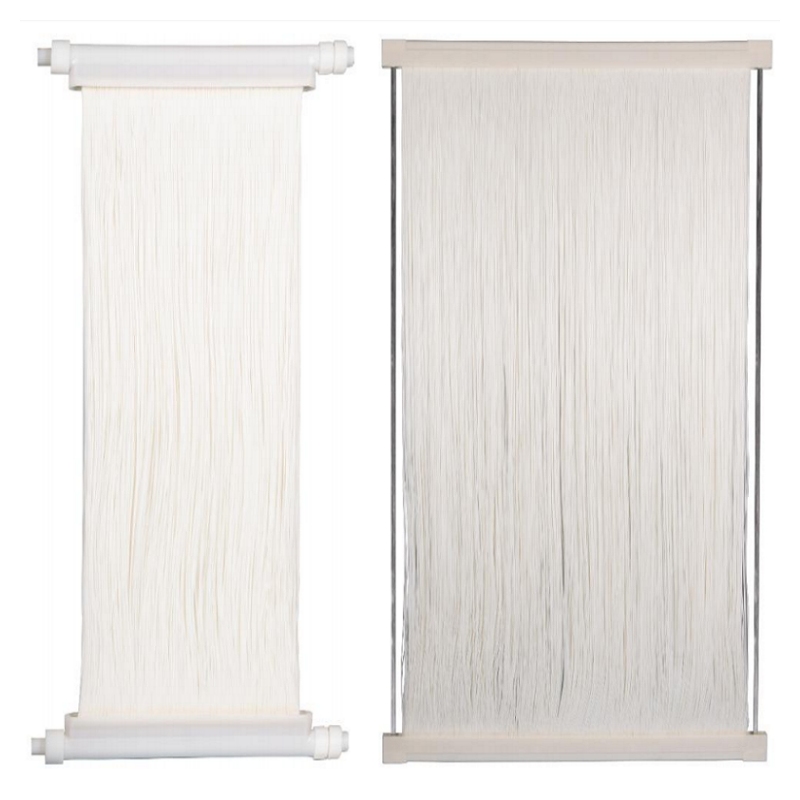
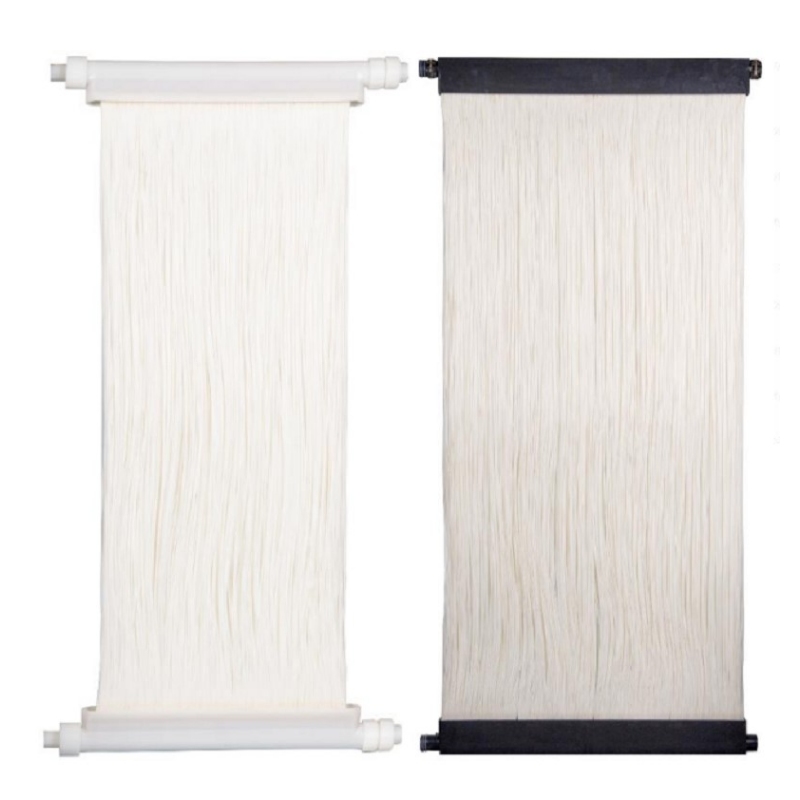
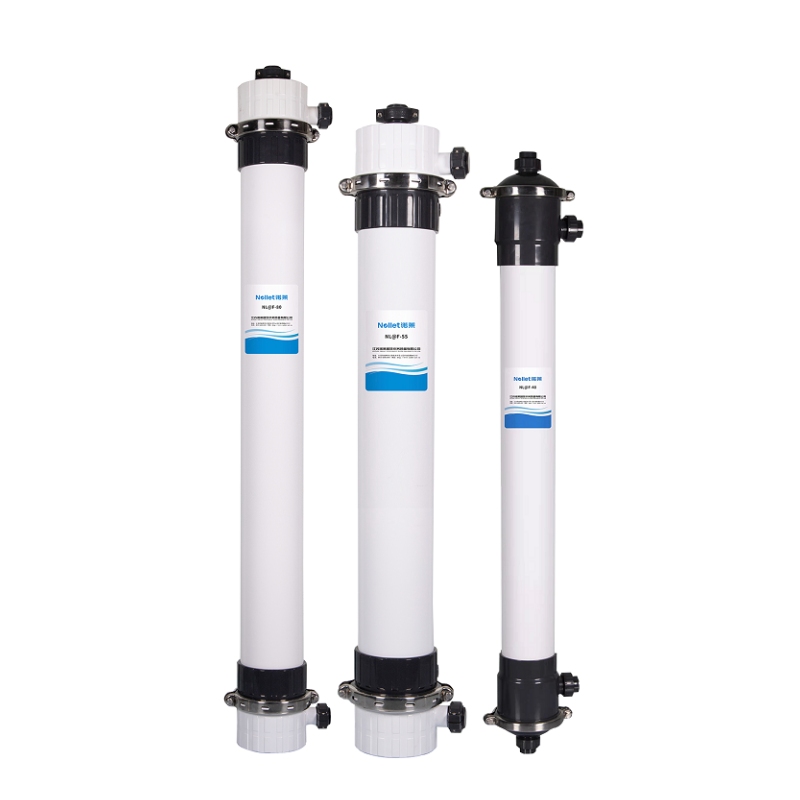
Picture a high-tech factory where billions of specially selected microbes—the “activated sludge”—work as a crack team, devouring pollutants in the wastewater. At the factory’s exit, instead of a simple drain, there is an ultra-precise security checkpoint: the membrane module. The pores in this membrane are only 0.01 microns across (about one ten-thousandth the width of a human hair). Only water molecules can squeeze through; bacteria, viruses, and larger particles are all blocked.
Breakthrough: From Energy Hog to Green Pioneer
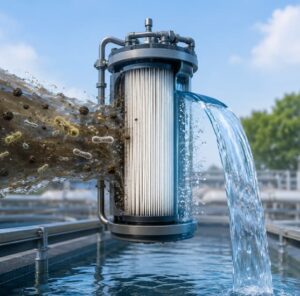
For all its filtration prowess, MBR has long suffered from a costly “rich-person’s problem”: high energy consumption. To prevent sludge from clogging the membrane surface, conventional systems rely on vigorous aeration – like constantly blasting bubbles over the membrane – which eats up electricity.
But in 2025, China achieved a disruptive breakthrough. The Membrane Bioreactor and Wastewater Reclamation Engineering Technology Center, under the Ministry of Ecology and Environment, successfully developed a low-energy vibrating membrane bioreactor (VMBR) technology. Instead of relying on “bubble scouring”, VMBR uses mechanical vibrations to make the membrane modules “shake off” contaminants on their own.
The results are striking: energy use for membrane fouling control has dropped by more than 60%, while total nitrogen removal efficiency has improved by 30%. The technology has been rated as world-leading. This means future wastewater treatment plants will be able to gobble up dirty water and produce high-quality reclaimed water – all while paying much lower electricity bills.
The Future Is Now: Membranes That “Photosynthesize“
If you think membrane technology is all about filtration, think again. At the cutting edge of research, scientists are now introducing photosynthesis into membrane bioreactors.
These are called algal membrane bioreactors (AMBRs). Algae and bacteria are co-cultured inside the membrane system. The algae produce oxygen via photosynthesis, which is directly used by the bacteria to break down pollutants. In turn, the bacteria release carbon dioxide that feeds the algae. This “algae-bacteria symbiosis” brings multiple benefits:
- No external aeration needed-oxygen is self-supplied, dramatically reducing energy use.
- Simultaneous removal- not only organic pollutants but also nitrogen and phosphorus (the culprits behind algal blooms) are efficiently absorbed.
- Resource recovery -the resulting algal biomass can even be turned into biofuel, truly turning waste into treasure.
Real–World Applications: From Lab to Rivers and Lakes
These sophisticated technologies have already moved from the lab into practical use.
In cities like Taicang (Jiangsu Province) and Doudian (Beijing), VMBR demonstration projects are now operating at scales of tens of thousands of tons per day. The treated water is crystal clear, with very low total nitrogen, making it an excellent source for ecological replenishment of urban lakes.
In Zhangjiagang City, a domestically produced ceramic flat-sheet membrane bioreactor has also been successfully put into operation. Compared to traditional organic polymer membranes, ceramic membranes are virtually indestructible – resistant to acids, alkalis, and wear. They solve the headaches of difficult maintenance and large footprints, while also reducing sludge production by 50%.
Conclusion
Membrane bioreactor technology is like giving Earth’s kidneys – our rivers and lakes – a powerful external circulatory support system. It is evolving from a purely separation process that was once energy-intensive into a sustainable technology that is energy-efficient, low-carbon, and focused on resource recovery.
As China pursues its “dual carbon” goals (carbon peak and carbon neutrality), MBR technology will allow every drop of wastewater to be reborn as a reliable, urban “second water source.” Perhaps in the not‑too‑distant future, the water flowing from our household taps will have already experienced this magical “membrane journey.”