
Abstract
Selecting the wrong membran ultrafiltrasi doesn’t just compromise effluent quality — it drives up operational costs, accelerates equipment failure, and creates compliance exposure. Yet many industrial procurement teams still default to price-per-unit comparisons without evaluating flux stability, fouling resistance, or chemical cleaning compatibility against their actual process conditions.
This article addresses the core selection challenges facing industrial buyers. Whether you are designing a membrane bioreactor (MBR) system, upgrading a municipal wastewater plant, or building an RO pre-treatment train for water reuse, the decision criteria go well beyond pore size. We systematically cover filtration mechanisms, material trade-offs, critical performance parameters, certification requirements, and industry-specific application scenarios — giving procurement and engineering teams a structured framework to match membrane specifications to operational realities and total cost of ownership (TCO).
1. What Is an Ultrafiltration Membrane and How Does It Work
1.1 Filtration Mechanism & Membrane Structure
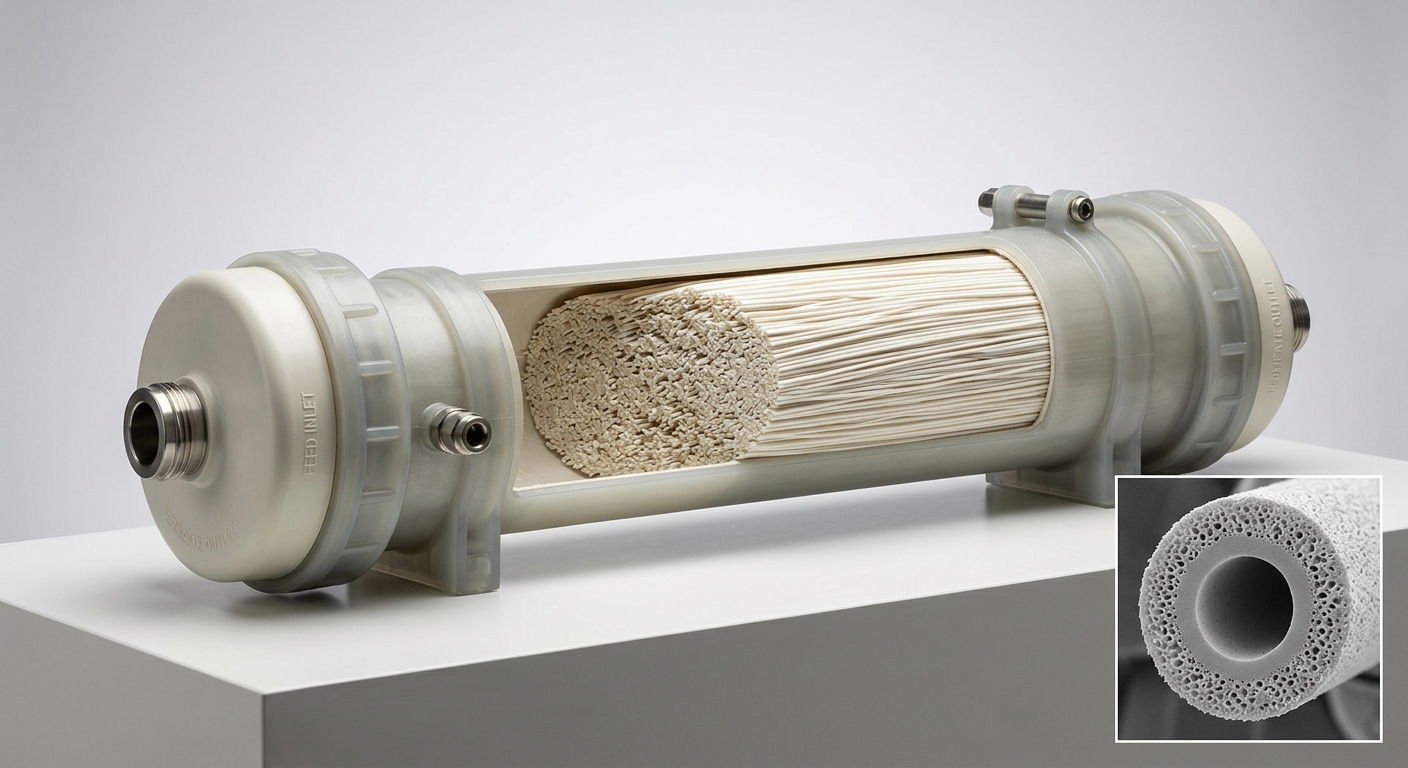
Ultrafiltrasi (UF) is a pressure-driven membrane separation process that removes suspended solids, colloids, bacteria, and macromolecules while allowing water and low-molecular-weight solutes to pass through. Operating pore sizes typically range from 0.01 to 0.1 µm, placing UF between microfiltration and nanofiltration on the separation spectrum.
Two dominant configurations are used in industrial systems:
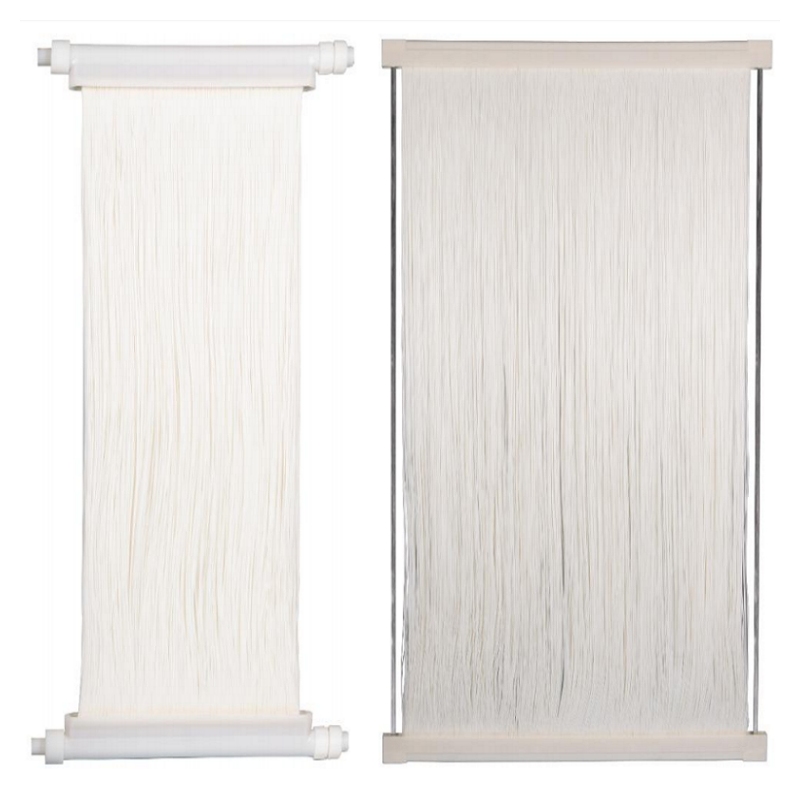
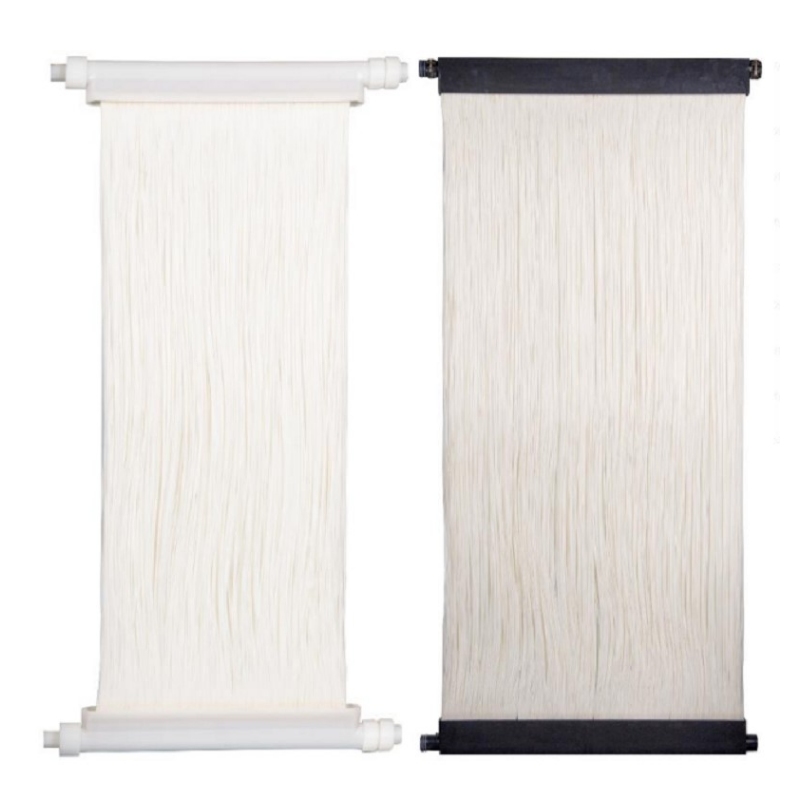
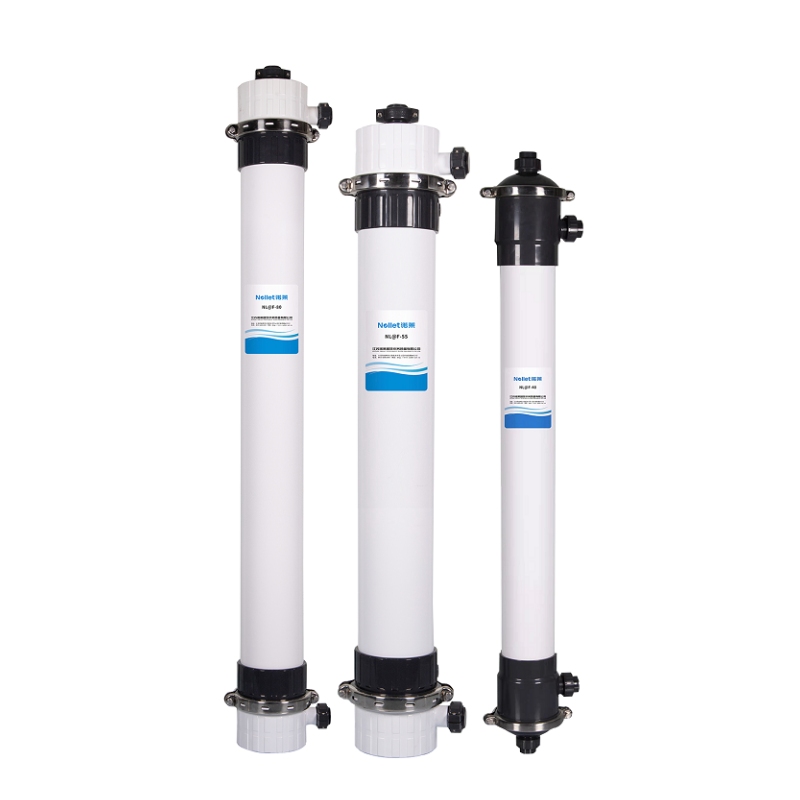
- Hollow fiber membranes: Self-supporting tubular fibers bundled inside a pressure vessel. They offer high packing density (surface area per module volume), are backwashable, and are the preferred format for large-volume wastewater and water reuse applications.
- Flat sheet / plate-and-frame membranes: Used primarily in MBR submerged configurations. They allow easier mechanical cleaning but require more footprint per unit of treated flow.
The Molecular Weight Cut-Off (MWCO), expressed in kiloDaltons (kDa), defines the membrane’s ability to reject dissolved macromolecules. A membrane rated at 100 kDa MWCO will reject approximately 90% of molecules at or above that molecular weight. For most industrial wastewater applications, MWCO values between 10–150 kDa cover the majority of target contaminant profiles.
1.2 Key Material Types: PVDF, PES, and Beyond
Material selection directly determines chemical durability, hydrophilicity, and service life. The three most commercially significant materials are:
- PVDF (Polyvinylidene Fluoride): The industry benchmark for industrial UF. Excellent chemical resistance to acids, alkalis, and oxidants (including chlorine up to 200,000 ppm·h cumulative exposure). Naturally hydrophobic but routinely surface-modified to improve flux. Best suited for harsh wastewater streams and long-cycle operation.
- PES (Polyethersulfone): Inherently more hydrophilic than PVDF, offering lower fouling propensity in clean-water and food-grade applications. However, PES has narrower chemical resistance — it degrades under strong oxidizing agents and is less suitable for aggressive CIP protocols.
- PP (Polypropylene): Lower cost, good acid resistance, but limited alkali tolerance and shorter service life. Typically used in lower-pressure, non-critical filtration stages.
For industrial water reuse and wastewater treatment, PVDF hollow fiber membranes represent the highest-value long-term choice despite higher initial unit cost.
2. Critical Performance Specifications You Must Evaluate
2.1 Core Technical Parameters
Four parameters define operational performance and must be matched to your feed water conditions:
- Flux (LMH — Liters per square Meter per Hour): Typical sustainable flux for UF membranes ranges from 20–80 LMH depending on feed quality and operating mode. Higher flux increases throughput but accelerates fouling. Design flux should be set at 60–70% of the critical flux threshold.
- Transmembrane Pressure (TMP): Operating TMP for most industrial UF systems runs between 0.1–0.5 bar. A rising TMP trend under constant flux is the primary indicator of fouling onset.
- Rejection Rate: For bacteria and viruses, high-quality UF membranes achieve >6-log dan >4-log removal, respectively. For TSS and turbidity, rejection exceeds 99% under normal operation.
- Recovery Rate: System recovery (permeate/feed ratio) typically targets 85–95% in water reuse applications. Higher recovery reduces concentrate disposal costs but increases fouling load.
2.2 Fouling Resistance & Cleaning Compatibility
Fouling is the single largest driver of lifecycle cost in UF systems. Evaluate membranes on three dimensions:
- Surface modification: Hydrophilic coatings (e.g., PVP blending, sulfonation, or nano-composite surface treatments) reduce organic fouling propensity and maintain stable flux over longer intervals.
- CIP tolerance: Industrial membranes must withstand repeated cleaning cycles. Verify tolerance to NaOH (pH 12–13), HCl/citric acid (pH 1–2), and sodium hypochlorite (500–2,000 ppm) at temperatures up to 40–45°C.
- Service life: Quality PVDF membranes in well-operated systems achieve 5–10 years of service life. PES membranes in aggressive environments may require replacement in 3–5 years.
📊 Ultrafiltration Membrane Performance Comparison
| Tekanan Operasional | PVDF Hollow Fiber | PES Flat Sheet | PP Hollow Fiber |
|---|---|---|---|
| Pore Size / MWCO | 0.02–0.1 µm / 100 kDa | 0.01–0.05 µm / 10–50 kDa | 0.1–0.2 µm / 150+ kDa |
| Operating Flux | 20–80 LMH | 15–60 LMH | 15–40 LMH |
| Max Operating Pressure | 3–5 bar | 2–4 bar | 1.5–3 bar |
| pH Tolerance | 1–13 | 2–11 | 2–10 |
| Operating Temperature | 5–45°C | 5–40°C | 5–40°C |
| Chlorine Resistance | High (200k ppm·h) | Low–Medium | Medium |
| Typical Application | Wastewater / RO pretreatment/reuse | Food & beverage/drinking water | Low-load industrial pre-filtration |
| Estimated Service Life | 5–10 years | 3–5 years | 2–4 years |
3. Compliance Standards & Certification Requirements
3.1 International Standards for Industrial Filtration Membranes
Procurement teams must verify certifications before finalizing supplier selection. Key standards include:
- NSF/ANSI 61: Mandatory for membranes used in potable water applications in North America. Certifies that membrane materials do not leach harmful contaminants into drinking water.
- NSF/ANSI 58: Applicable to RO/NF systems; often referenced when UF serves as pre-treatment in a certified system train.
- ISO 9001: Quality management system certification. While not product-specific, it signals manufacturing consistency and traceability — critical for long-term supply reliability.
- CE Marking (EU): Required for pressure equipment and systems marketed in European markets under the Pressure Equipment Directive (PED).
Procurement risk: Suppliers offering uncertified membranes at significant price discounts introduce regulatory liability. In municipal contracts and food-grade applications, non-certified membranes can invalidate operating permits and trigger project shutdowns.
3.2 Discharge & Reuse Regulations by Industry
Effluent quality requirements vary substantially by sector:
- Municipal wastewater: UF permeate typically achieves turbidity <0.1 NTU and TSS <1 mg/L, meeting Class A reclaimed water standards (e.g., US EPA 2012 Guidelines for Water Reuse, EU 2020/741).
- Electronics / semiconductor: Ultra-low particle counts and TOC <0.1 mg/L required for process water reuse. UF as RO pre-treatment is standard.
- Food & beverage: FDA 21 CFR and EU Regulation 10/2011 govern materials in contact with food products. NSF 61 or equivalent certification is non-negotiable.
- Petrochemical: Oily wastewater with high COD requires membranes with demonstrated resistance to hydrocarbon fouling; PVDF with oleophobic modification is preferred.
4. Application Scenarios & Industrial Water Reuse Use Cases
4.1 Ultrafiltration Membrane for Wastewater Treatment
In municipal and industrial wastewater treatment, UF membranes are most commonly deployed in Membrane Bioreactor (MBR) configurations, where submerged flat sheet or hollow fiber modules replace secondary clarifiers. Key performance outcomes:
- TSS removal: >99.9%, producing effluent suitable for direct reuse or tertiary polishing
- COD reduction: UF alone achieves 30–50% COD reduction; in MBR integration, biological degradation combined with membrane filtration achieves 85–95% COD removal
- Pathogen barrier: Consistent 6-log bacterial removal, eliminating the need for high-dose disinfection in many reuse schemes
For high-flow industrial wastewater (>10,000 m³/day), outside-in hollow fiber PVDF modules operating in dead-end or cross-flow mode deliver the best balance of flux, backwash efficiency, and footprint.
4.2 Best Ultrafiltration Membrane for Industrial Water Reuse
UF is increasingly positioned as the enabling technology for zero-liquid-discharge (ZLD) and water recycling programs across manufacturing sectors:
- Cooling tower blowdown reuse: UF removes suspended solids and biological growth before softening and RO polishing, enabling 80–90% water recovery from cooling circuits.
- Electroplating wastewater recovery: UF separates heavy metal hydroxide sludge from treated effluent, recovering water for rinsing operations while concentrating metals for recovery.
- RO pre-treatment: UF as RO feed pre-treatment reduces Silt Density Index (SDI) to <3 and turbidity to <0.1 NTU, extending RO membrane life by 30–50% and reducing RO cleaning frequency — delivering measurable TCO savings across the integrated system.
The commercial case for UF in water reuse is compelling: in water-stressed regions with rising discharge fees, a well-designed UF system typically achieves ROI within 2–4 years through reduced freshwater intake and avoided wastewater discharge costs.
FAQ
Q1: How do I choose the right ultrafiltration membrane pore size for my wastewater treatment application?
Start with your target contaminants. For bacteria, viruses, and colloidal solids in municipal or industrial wastewater, a pore size of 0.02–0.04 µm (MWCO: 100–150 kDa) provides the appropriate barrier. If your goal is macromolecule retention (proteins, polysaccharides), select tighter MWCO values of 10–30 kDa. Always cross-reference pore size with your required flux rate — tighter membranes require higher TMP or lower flux targets.
Q2: What is the typical lifespan of an industrial ultrafiltration membrane, and what factors shorten it?
High-quality PVDF hollow fiber membranes in well-operated systems last 5–10 years. Lifespan is shortened by exceeding recommended TMP thresholds, inadequate or infrequent CIP protocols, exposure to incompatible chemicals (e.g., strong oxidants on PES membranes), feed water with high oil or surfactant content, and operating above the rated temperature range. Proper commissioning and automated monitoring significantly extend service life.
Q3: How does PVDF ultrafiltration membrane compare to PES in terms of cost and performance for water reuse projects?
PVDF membranes carry a 20–40% higher initial cost than PES equivalents but deliver superior chemical resistance, longer service life, and compatibility with aggressive CIP protocols. For industrial water reuse — where feed water quality varies, and cleaning cycles are frequent — PVDF consistently delivers lower TCO over a 5–10 year horizon. PES is cost-effective in stable, clean-water applications such as food-grade filtration where oxidant exposure is minimal.
Modul membran terendam merupakan pergeseran paradigma dalam pengolahan air, memberikan hasil unggul dalam skenario yang menuntut tapak kompak, kualitas effluent stabil, penggunaan energi rendah, dan ketahanan fouling yang kuat. Dari sistem MBR kota dan penggunaan ulang air industri hingga produksi air minum dan pengolahan air limbah TPA, modul ini unggul dibandingkan proses konvensional dan teknologi membran bertekanan dalam aplikasi yang paling menantang.
Selecting the right ultrafiltration membrane is a multi-variable engineering and procurement decision — not a commodity purchase. The core decision dimensions are: material compatibility with your feed chemistry and cleaning protocols, flux and TMP targets matched to your hydraulic load, MWCO selection aligned to your contaminant rejection requirements, and certification compliance with applicable discharge and reuse regulations.
Critically, procurement decisions should be evaluated on Total Cost of Ownership rather than unit price. A PVDF hollow fiber membrane at a 30% price premium over a PES alternative will routinely deliver 50–100% longer service life, fewer chemical cleaning events, and reduced system downtime — translating to lower annualized cost and higher operational reliability.
As water scarcity regulations tighten globally and industrial discharge fees continue to rise, the strategic value of a correctly specified UF membrane system extends beyond filtration performance — it becomes a core asset in your water risk management and sustainability compliance framework. Work with suppliers who can provide certified performance data, application-specific references, and lifecycle cost modeling to support your selection decision.