
Abstract
For procurement engineers, plant operators, and system integrators evaluating membrane filtration for demanding feed waters, the buiten-in membraanmodule presents a compelling but frequently misunderstood solution. The central question this article resolves is straightforward: can outside-in hollow fiber membrane modules reliably sustain performance when feed water carries high suspended solids, elevated turbidity, or variable particulate loading?
The short answer is yes — and the engineering rationale is well-established. Unlike inside-out configurations where feed water is forced through narrow fiber lumens, outside-in modules present an open-channel feed environment on the shell side, fundamentally changing how solids interact with the membrane surface. This geometry translates directly into higher tolerable TSS loads, more effective backwash cycles, and reduced fouling irreversibility.
This article examines the hydraulic mechanics behind that advantage, defines the critical specifications procurement teams must evaluate, outlines applicable compliance benchmarks, and quantifies the commercial value across key industrial applications. Whether you are specifying a system for municipal wastewater reuse or high-turbidity surface water intake, the evidence supports outside-in technology as a technically sound and commercially defensible choice.
1. How the Outside-in Flow Path Addresses High-Solids Feed Water
1.1 Mechanics of Outside-in Filtration
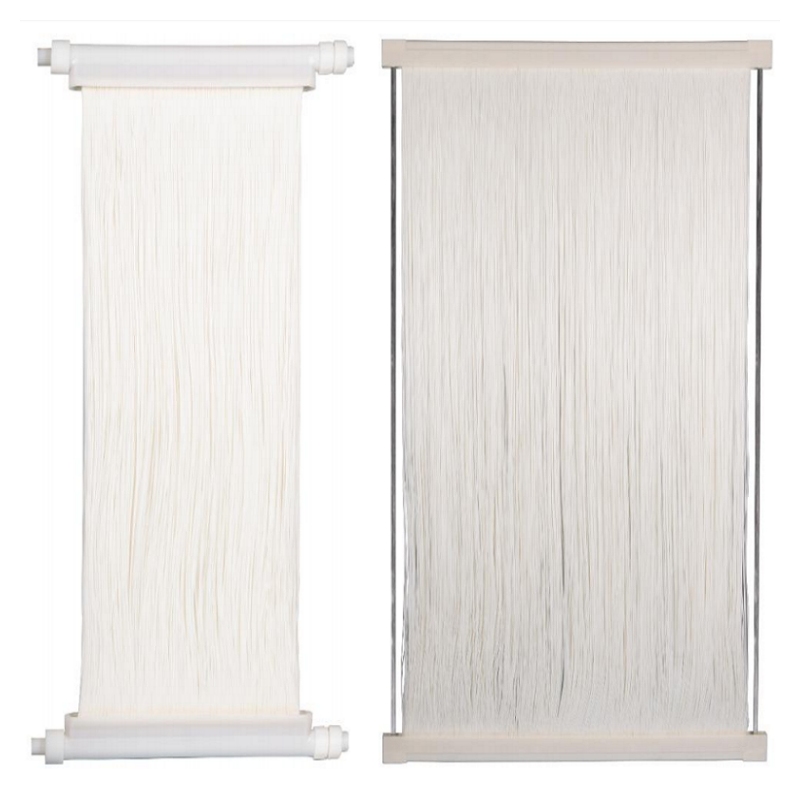
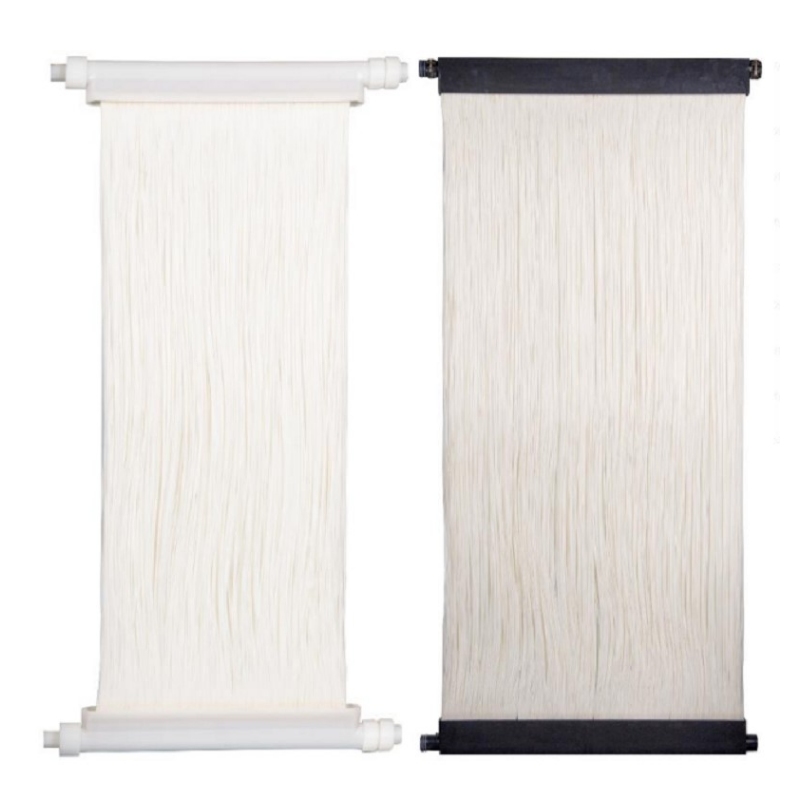
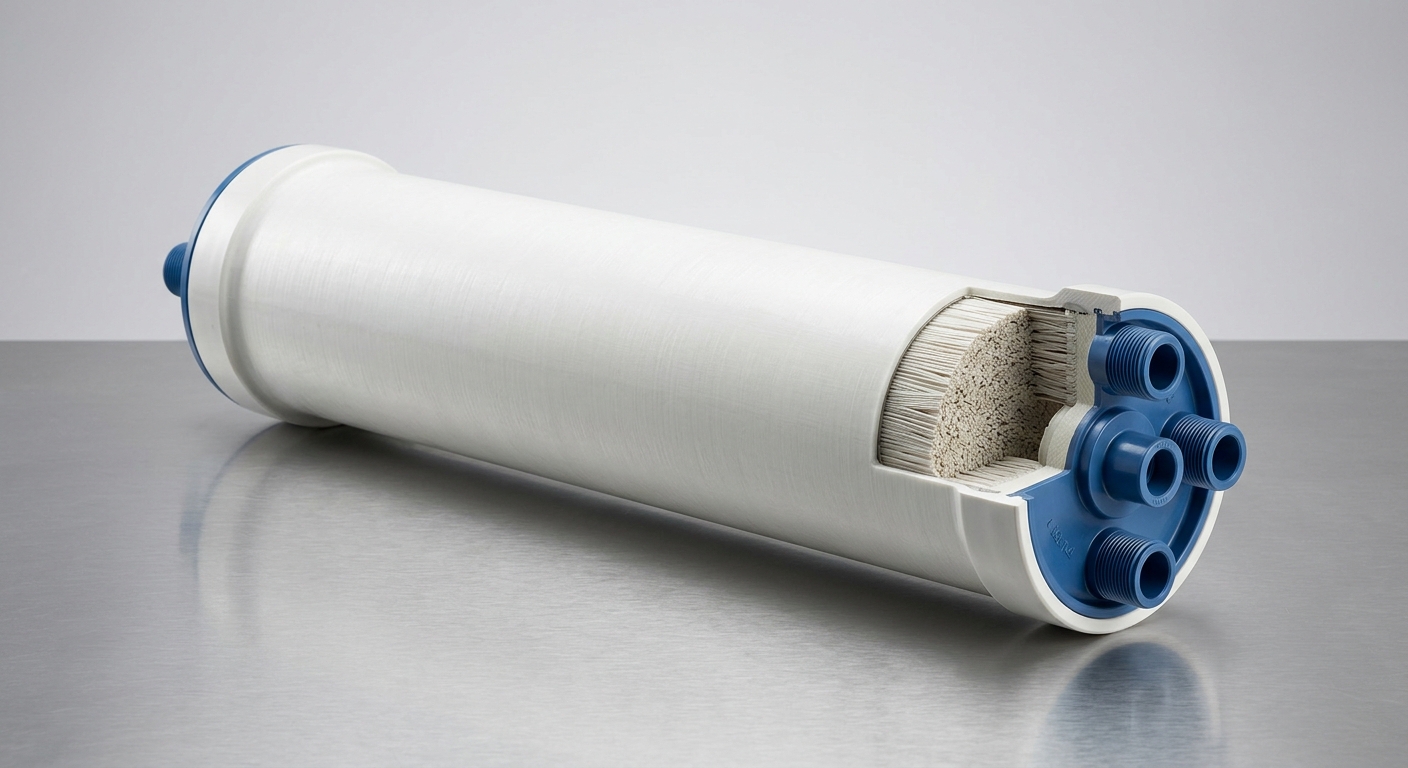
In an outside-in hollow fiber membrane module, raw feed water enters the shell side of the module and contacts the outer surface of each fiber. Filtration occurs radially inward — solids and foulants accumulate on the outer fiber wall while clean permeate migrates through the membrane wall and is collected from the fiber lumen. This architecture produces two immediate hydraulic advantages.
First, the feed-side flow path is unrestricted. There is no lumen diameter governing the maximum particle size the system can accept without plugging. Second, backwashing is mechanically efficient: pressurized clean water or air is introduced through the lumen side, driving accumulated solids off the outer fiber surface and into a drain stream. The backwash force acts in the same radial direction as the fouling mechanism, maximizing cake layer disruption.
This contrasts with inside-out modules, where feed enters the lumen and filtration proceeds outward. At elevated TSS concentrations, lumen plugging becomes a failure mode, not merely a performance variable.
1.2 Why Fiber Geometry Matters at High Turbidity
The fiber OD/ID ratio defines the mechanical strength available for backwash pressure and the wall thickness available for membrane selectivity. Outside-in modules are typically engineered with thicker walls and larger outer diameters, supporting higher backwash pressures without fiber collapse — a critical advantage when solids loading spikes.
The open-channel feed side eliminates the hydraulic dead zones that form in lumen-fed systems under high TSS conditions. Solids that would otherwise bridge across a lumen inlet simply pass along the shell side or settle to a drain point during relaxation cycles.
Backwash efficiency in outside-in systems is quantifiably superior because the entire outer fiber surface is accessible simultaneously. In inside-out systems, lumen blockage can create uneven backwash distribution across the fiber bundle.
| Parameter | Outside-in Module | Inside-out Module |
|---|---|---|
| Feed-side flow path | Open shell side (unrestricted) | Lumen-restricted (narrow bore) |
| Tolerable TSS range | Up to 200–500 mg/L (application-dependent) | Typically <50 mg/L without pre-filtration |
| Tolerable turbidity | Up to 200+ NTU with CEB protocol | Generally <30 NTU recommended |
| Backwash pressure requirement | Moderate (lumen-side pressurization) | Higher (overcome lumen resistance) |
| Fouling reversibility rating | High — physical backwash effective | Moderate — chemical cleaning more frequent |
| Recommended pre-treatment level | Coarse screening (1–3 mm) | Fine screening or multimedia filtration |
2. Key Performance Parameters & Design Specifications
2.1 Critical Specs Procurement Engineers Must Evaluate
Three parameters define whether a given outside-in module is suited to a specific high-solids application.
MWCO (Molecular Weight Cut-Off) determines pathogen and colloid rejection capability. For municipal reuse and industrial effluent applications, ultrafiltration membranes with MWCO values between 100,000 and 150,000 Daltons are standard, providing log-4 or greater removal of bacteria and turbidity-contributing colloids while maintaining practical flux rates.
The operating TMP (Transmembrane Pressure) range is the operational envelope within which the module sustains design flux without accelerated fouling. Quality outside-in modules for high-solids duty typically operate between 0.05 and 0.3 MPa. Sustained TMP creep above the rated ceiling is the primary early indicator of irreversible fouling and signals the need for chemically enhanced backwash (CEB).
Maximum feed TSS (mg/L) is the single most important procurement specification for high-solids applications. Reputable manufacturers publish validated TSS limits — typically 200 to 500 mg/L for outside-in UF modules — supported by pilot or field test data. Procurement teams should request this data with corresponding flux and recovery rates, not accept nominal figures alone.
2.2 Membrane Material & Module Construction Standards
PVDF (Polyvinylidene Fluoride) is the dominant fiber material for high-solids outside-in applications due to its chemical resistance to oxidizing cleaning agents (sodium hypochlorite, citric acid), mechanical flexibility under cyclic backwash stress, and hydrophilicity when surface-modified. PES (Polyethersulfone) offers higher initial hydrophilicity but exhibits lower chlorine tolerance, making it less suitable for aggressive CEB protocols common in high-turbidity applications.
Potting material compatibility is a frequently overlooked specification. Epoxy-potted modules offer superior resistance to thermal cycling and chemical exposure compared to polyurethane alternatives in industrial duty cycles. Pressure vessel ratings — typically 6 to 10 bar for industrial outside-in modules — must be matched to the system’s peak backwash and integrity test pressures, not just normal operating conditions.
3. Compliance, Certifications & Industry Standards
3.1 Regulatory Benchmarks for High-Solids Applications
NSF/ANSI 61 certification is the baseline requirement for any membrane module contacting potable water or water intended for municipal reuse. It validates that module materials — including fiber, potting compound, and housing — do not leach contaminants above established thresholds. For industrial effluent applications where treated water is discharged rather than reused, regional discharge compliance standards (EPA effluent guidelines in North America, EU Water Framework Directive in Europe) define the turbidity and pathogen reduction targets the membrane system must achieve.
ISO 8573 is directly relevant when outside-in modules are deployed in compressed air or gas filtration contexts within industrial plants, defining particulate cleanliness classes that membrane systems must meet downstream of compressors or dryers.
Procurement teams specifying modules for regulated applications should confirm that the manufacturer maintains current NSF/ANSI 61 listing — not merely a historical certification — and can provide documentation of the specific module model listed.
3.2 Validation Testing Protocols
Integrity testing is non-negotiable for high-solids applications where pathogen removal claims must be defensible. The two standard methods are the Pressure Decay Test (PDT) and the Diffusive Airflow Test (DAF). Both detect fiber breaches that would compromise log-removal performance. Reputable outside-in module suppliers provide factory integrity test data for each module and specify field test procedures compatible with automated CIP/integrity test systems.
Log-Removal Value (LRV) quantification — typically LRV ≥ 4 for bacteria, LRV ≥ 3 for protozoa — must be supported by challenge test data, not inferred from MWCO alone. Third-party certification from recognized bodies (NSF International, Water Research Foundation, or equivalent regional authorities) provides the evidentiary standard procurement teams should require for regulated municipal or reuse applications.
4. Industrial Application Scenarios & Commercial Value
4.1 Where Outside-in Modules Deliver Measurable ROI
Municipal wastewater reuse is the highest-volume application for outside-in UF modules. Secondary effluent with TSS ranging from 10 to 80 mg/L and periodic spikes above 100 mg/L during storm events is handled reliably by outside-in systems operating on 20–30 minute filtration cycles with 30–60 second backwash intervals. Plants report system availability exceeding 95% annually with well-designed CEB protocols.
Industrial effluent pre-treatment — particularly in food and beverage, pulp and paper, and chemical processing — presents feed waters with TSS regularly exceeding 200 mg/L. Outside-in modules configured with coarse inlet screening (1–2 mm) and automated backwash achieve consistent permeate turbidity below 0.1 NTU, enabling downstream RO systems to operate at design recovery rates without accelerated scaling.
High-turbidity surface water intake for drinking water production, where raw water turbidity can exceed 500 NTU during flood events, benefits from the outside-in module’s tolerance for variable loading. Systems designed with conservative flux rates (40–60 LMH) and frequent backwash cycles maintain stable TMP profiles through turbidity excursions that would plug inside-out systems within hours.
4.2 Total Cost of Ownership vs. Conventional Alternatives
Chemical cleaning frequency is the primary OPEX driver in membrane systems. Outside-in modules in well-matched applications typically require CEB (chemically enhanced backwash) every 24–72 hours and full CIP (clean-in-place) every 30–90 days, compared to inside-out systems in equivalent feed waters requiring CIP every 7–21 days. This difference alone can reduce chemical consumption by 40–60% annually.
Membrane replacement cycle for PVDF outside-in modules in industrial applications typically ranges from 7 to 10 years under normal operating conditions — a significant improvement over earlier-generation PES modules with 5-year typical lifespans. The CAPEX/OPEX breakeven point relative to conventional multimedia filtration plus cartridge pre-filtration generally occurs within 3 to 5 years in high-TSS applications, driven primarily by reduced chemical costs, eliminated cartridge replacement labor, and higher system uptime.
Veelgestelde vragen
1. What is the maximum TSS or turbidity level an outside-in membrane module can reliably handle without pre-filtration?
Most commercial outside-in UF modules are validated for feed TSS up to 200–500 mg/L with only coarse screening (1–3 mm) as pre-treatment. Turbidity tolerance typically extends to 200 NTU under standard operating protocols, with some systems designed for higher peaks during short-duration events. Always request the manufacturer’s validated operating envelope with supporting pilot data rather than relying on nominal maximums.
2. How does backwash performance compare between outside-in and inside-out modules when solids loading spikes unexpectedly?
Outside-in modules recover more completely from solids spikes because backwash acts on the outer fiber surface — the same surface where fouling occurs — with uniform hydraulic force across the entire fiber bundle. Inside-out modules can experience uneven backwash distribution if lumen blockage has occurred during the spike, leaving residual fouling that compounds over subsequent cycles and accelerates TMP rise.
3. What certifications or test reports should procurement teams require before specifying an outside-in module for a regulated application?
Minimum requirements: current NSF/ANSI 61 listing for the specific module model, third-party LRV challenge test data (bacteria and protozoa), factory PDT/DAF integrity test records, and material safety data confirming potting compound and fiber compatibility with the intended cleaning chemistry. For municipal reuse projects, Water Research Foundation validation or equivalent regional authority approval is increasingly required by regulators.
Conclusie
The evidence is clear: outside-in membrane modules are not merely a viable option for high-solids feed waters — they are frequently the technically superior choice. The open-channel feed geometry, efficient lumen-side backwash mechanics, and PVDF material durability combine to deliver sustained performance in applications where inside-out configurations require either extensive pre-treatment or accept higher operating costs.
For procurement engineers, the selection checklist is concrete: validate the manufacturer’s TSS and turbidity operating envelope with real data, confirm NSF/ANSI 61 listing and LRV certification, evaluate PVDF fiber construction with epoxy potting for industrial duty cycles, and model the full TCO including chemical cleaning frequency and membrane replacement cycle against your specific feed water profile.
Outside-in membrane modules have earned their position as the preferred technology for high-turbidity and high-solids filtration. The next step is matching the right module specification to your application — request pilot data, demand third-party validation, and engage suppliers who can provide documented field performance in comparable feed water conditions.