
Introductie
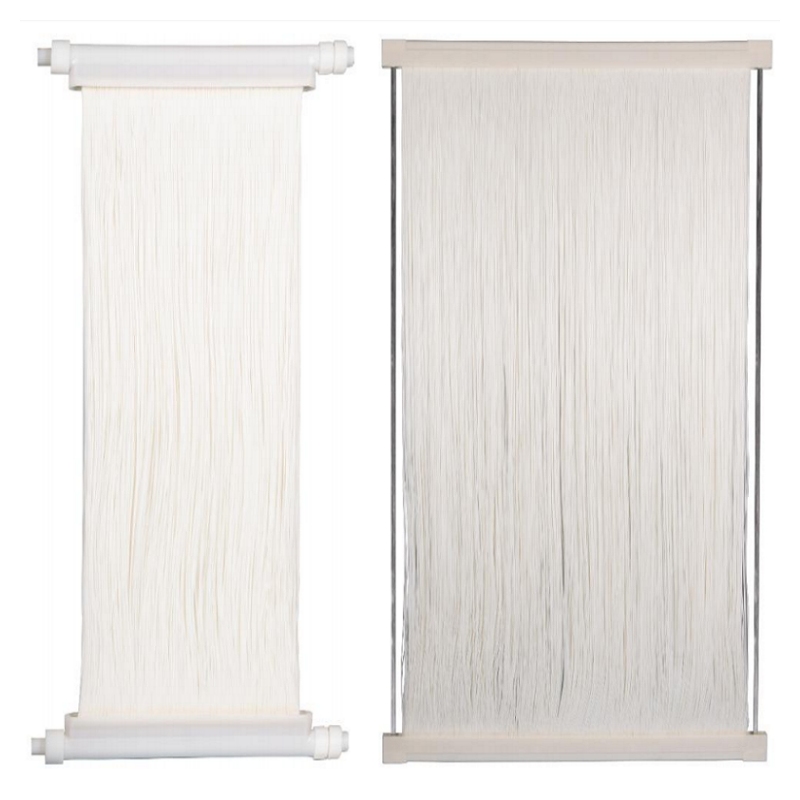
If you’ve struggled with clogged membrane systems—frequent backwashes, downtime, and constant maintenance—an buiten-in membraanmodule can change that. Its flow design lets feed water pass along the outside of hollow fibers, keeping solids on the exterior where air scouring or backwashing can remove them easily. This reduces fouling, lowers operating costs, and keeps your system running smoothly. Outside-in modules handle higher turbidity and need less pretreatment than inside-out designs, making them ideal for challenging water sources.
What Is an Outside-in Membrane Module?
A hollow fiber membrane module contains thousands of tiny fibers inside a housing. The main difference between designs is where raw water flows:
- Inside-out (lumen feed): Water flows inside the fibers. Solids get trapped in the narrow lumen, making cleaning difficult.
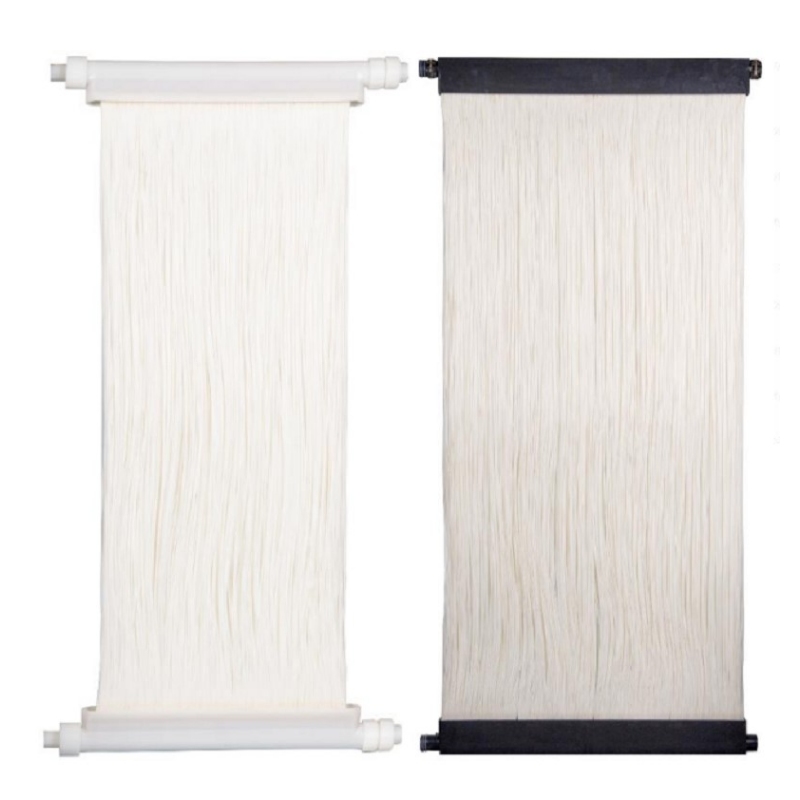
- Outside-in (shell feed): Water flows around the outside of the fibers. Permeate is collected from the lumen, while solids remain on the exterior and can be easily removed with air scouring or backwashing.
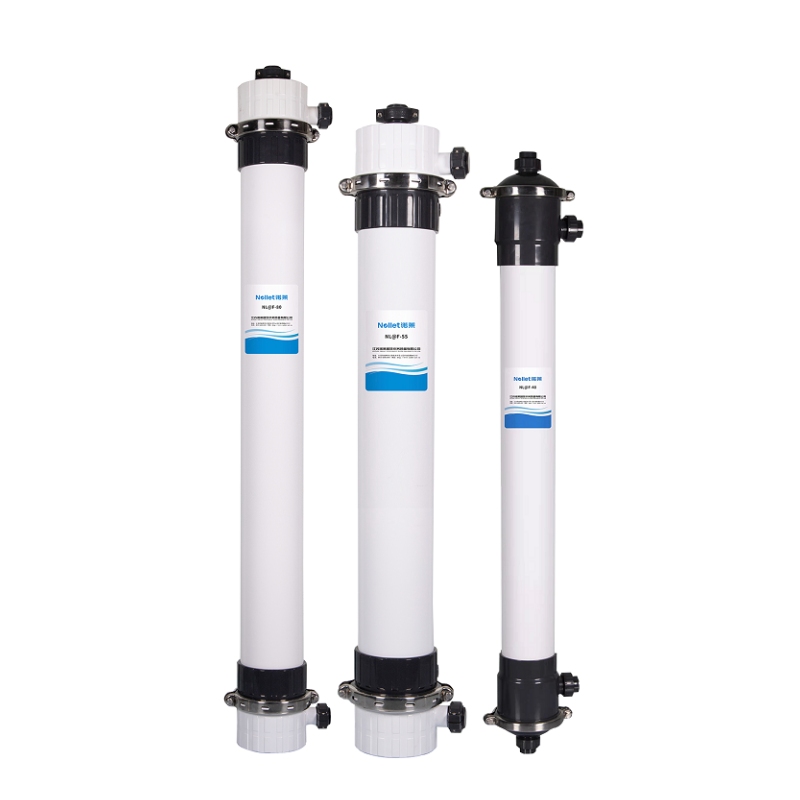
The Nollet outside-in membrane module, for example, uses PVDF hydrophilic fibers with 0.01-micron pores. This removes bacteria, viruses, algae, and suspended solids, while maintaining open channels to prevent clogging. The exterior flow design makes it ideal for wastewater and high-turbidity surface water, with influent tolerances up to 100 NTU—much higher than typical inside-out systems.
Why Inside-Out Modules Clog Faster
Inside-out fibers act like narrow straws. Solids enter the lumen, lodge against the inner wall, and gradually block the fiber. Once clogged, backwashing rarely restores full performance, and the fiber may need to be replaced.
Research consistently shows inside-out modules foul faster. Studies from the Journal of Membrane Science (2025) and pilot tests in Qingdao Jiaozhou Bay found that outside-in modules maintain higher flux, lower transmembrane pressure, and more stable permeability—especially with air-enhanced backwash.
The reason is simple: outside-in fibers keep solids on the exterior, where crossflow and air scouring can remove them. Any well-designed outside-in membrane module leverages this physical advantage, ensuring fewer clogs and more reliable operation.
| Clogging Factor | Inside-Out Module | Outside-In Module |
|---|---|---|
| Where solids accumulate | Inside fiber lumen (bore) | On the exterior fiber surface |
| Ease of cleaning | Difficult—solids are mechanically lodged | Easier—air scouring and backwashing are effective |
| Tolerance to high turbidity | Low—requires extensive pretreatment | Higher—can handle up to 100 NTU |
| Fiber plugging risk | High—fiber foods can become permanently blocked | Low—exterior accumulation is reversible |
| Cleaning mechanism | Chemical-enhanced backwash is typically needed | Air-enhanced backwash works well |
Note: Data compiled from pilot studies and manufacturer comparisons. An outside-in membrane module consistently shows advantages across all clogging-related metrics.
How the Outside-in Design Prevents Clogging in Practice
The outside-in membrane module reduces clogging through three built-in design advantages. These are not theoretical improvements—they directly affect daily operation and cleaning frequency.
1. Larger flow area, lower fouling pressure
Because feed water flows around the outside of the fiber bundle, the effective flow area is much larger than the fiber lumens. This lowers local velocity and reduces the force that pushes particles into the membrane surface. In practice, this means less particle embedding and slower cake layer formation.
2. Air scouring-friendly structure
Outside-in modules are designed for air bubble scouring from the tank bottom. The rising bubbles create turbulence that continuously cleans the outer fiber surface. Pilot studies show that air-enhanced backwash is highly effective for outside-in systems, while inside-out modules often still rely on chemical cleaning. This reduces chemical consumption and helps lower operating costs over time.
3. Hydrophilic PVDF membrane surface
Many outside-in membrane modules, including Nollet’s design, use hydrophilic PVDF fibers. This reduces sticky fouling caused by oils, proteins, and biological matter, since water spreads more evenly across the surface instead of forming localized deposits. The result is easier cleaning and a more stable long-term flux.
Application Spotlight: Seawater Pretreatment
In a Yellow Sea pilot study, outside-in membrane modules showed more stable flux and lower transmembrane pressure compared to inside-out designs under the same operating conditions. They also required less chemical cleaning while still meeting RO feed water quality requirements.
Overall, the study confirmed that the outside-in membrane module is better suited for seawater RO pretreatment where stable operation and low fouling are critical.
Beyond Clogging Prevention—Other Operational Benefits
Once you start running an outside-in membrane module, you will notice advantages that go beyond just fewer clogs. These add up to real cost savings over the life of the system.
Lower energy consumption from reduced pressure drop
Toray Industries developed an outside-in crossflow filtration module specifically for food and beverage manufacturing, and the results are striking. Pressure losses from the outside-in design are just one-third those of the inside-out type that food companies normally use. That makes it possible to filter and concentrate highly turbid or viscous liquids that would be challenging with regular membranes. Lower pressure drop means lower pumping energy—directly measurable on your electric bill. An efficient outside-in membrane module can pay for its upfront cost difference through energy savings alone.
Reduced aeration requirements
In membrane bioreactor applications, aeration for membrane scouring is one of the largest operating expenses. Research has shown that outside-in configurations can operate effectively with specific aeration demands as low as 100 to 250 Nl/h·m², which is roughly half the classical consumption of conventional submerged MBR systems. The Pulsion MBR module, which uses outside-in hollow fiber technology, achieves aeration energy reductions of up to 40% and footprint reductions of up to 25% compared to previous generations. That kind of saving is only possible when you start with an outside-in membrane module designed for low aeration.
Longer service life and lower replacement frequency
Polymeric membranes in water treatment applications generally have an expected service life of five to ten years, according to major suppliers. That is the baseline. But a module that clogs less, fouls more slowly, and cleans more effectively will naturally last longer toward the upper end of that range. When modules do eventually need replacement, the total replacement cost is a significant line item. Industry data suggests annual membrane replacement costs can range from 1.25% to 2.5% of the installed capital base. Extending module life by even one or two years directly reduces that annualized cost. An outside-in membrane module typically delivers that extended life because it avoids the irreversible plugging that plagues inside-out designs.
Less chemical cleaning, lower environmental impact
Because outside-in modules can rely on air scouring and physical cleaning methods rather than aggressive chemical cleans, chemical consumption is typically lower. A chemical-enhanced backwash that might be routine for an inside-out system becomes optional or unnecessary for an outside-in alternative. That reduces both chemical purchase costs and the environmental burden of chemical disposal. If your facility has sustainability targets, choosing an outside-in membrane module is a concrete step toward reducing chemical usage.
Table: Operational Comparison Snapshot
| Parameter | Outside-In Module | Inside-Out Module |
|---|---|---|
| Pressure drop | Lower (approx. 1/3 of inside-out in some designs) | Higher |
| Aeration energy | Up to 40% reduction possible | Baseline higher |
| Chemical cleaning need | Less frequent, lower chemical volume | More frequent, higher chemical volume |
| Handling high turbidity | Can handle up to 100 NTU with minimal pretreatment | Requires extensive pretreatment |
| Typical service life | 5–10 years (dependent on feed conditions) | 5–10 years (often shorter with high-fouling feeds) |
| Fiber plugging risk | Low (exterior accumulation is reversible) | High (interior accumulation is often permanent) |
Note: Exact figures depend on specific module design, feed water quality, and operating conditions. An outside-in membrane module from a quality manufacturer will consistently outperform inside-out alternatives on these metrics.
Where an Outside-in Membrane Module Makes the Most Sense
High-turbidity surface water
Rivers, reservoirs, and mountain springs can spike in turbidity after rainfall or snowmelt. An outside-in membrane module handles up to 100 NTU directly, reducing pretreatment needs and minimizing downtime. Nollet specifically recommends this design for river, reservoir, and spring water purification.
Wastewater & sewage reuse
Industrial and municipal wastewater contains solids, flocs, and fibrous materials that clog inside-out fibers. Outside-in modules keep debris on the exterior, simplifying cleaning and cutting maintenance frequency. Operators report significant reductions in labor and downtime.
Seawater desalination pretreatment
In Qingdao Bay trials, outside-in UF modules outperformed inside-out alternatives in flux stability and chemical usage, while meeting SWRO feed requirements. For new RO plants, this design offers a low-risk, high-reward pretreatment solution.
Industrial process water
From cooling tower blowdown to food and beverage processing, outside-in modules reduce energy use by up to 80%, halve space requirements, and cut cleaning costs by over 20%. They are ideal for water with variable quality or occasional solids spikes.
What the Market Says—Growing Adoption of Outside-in Technology
The hollow fiber membrane market is expanding, and outside-in modules are capturing an increasing share. Industry leaders emphasize fewer clogs, higher solids tolerance, and easier cleaning as major advantages.
- Dow IntegraFlo: 85% more active membrane area, up to 45% smaller footprint.
- ZeeWeed MBR: No fiber plugging, high mechanical strength, efficient cleaning.
- Toray crossflow modules: Reduce aeration energy and footprint while maintaining performance.
These examples show the market clearly favors outside-in designs for challenging water treatment applications. Choosing such a module aligns with both current engineering trends and proven operational benefits.
Practical Considerations and a Few Caveats
- Space requirements: Some outside-in modules need larger tanks, but high-density designs can cut footprint by 40–45%.
- Fiber durability: Air scouring moves fibers; reinforced PVDF membranes improve long-term reliability.
- Flux distribution: Uniform flow reduces pressure drop and energy use. Verify fiber packing with suppliers.
- Feed quality: For consistently low-turbidity water, inside-out modules may perform adequately at a lower cost.
Stop Fighting Clogging—Design It Out
Clogging is not inevitable—it is a design issue. An outside-in membrane module keeps solids on the exterior where they can be easily removed, preventing permanent blockage.
Studies and operational data confirm clear advantages: lower fouling rates, more stable flux, reduced energy consumption, and less frequent chemical cleaning. The market is moving decisively toward outside-in designs, with hollow fiber membrane sales growing nearly 10% annually. Choosing an outside-in membrane module aligns your system with proven engineering practice.
For new systems or retrofits, the takeaway is simple: outside-in modules clog less, clean more efficiently, and reduce operational costs compared to inside-out alternatives. Upfront selection pays off in avoided downtime, lower chemical use, and longer module life.
Next Steps: Compare pretreatment needs, cleaning frequency, energy consumption, and replacement costs for your application. The total cost of ownership will likely favor an outside-in membrane module.
Ready to build a clog-free system?
An outside-in membrane module from a trusted supplier can cut costs while delivering consistent, high-quality permeate. Contact Jiangsu Nollet Filtration Equipment Co., Ltd. to discuss your feed water and application. Our engineers can help select the right module type and size—whether for river water, wastewater, seawater desalination, or sewage reuse.