
Welcome to Wastewater’s Journey to Rebirth (Part 1) — today we pull back the curtain on the three-stage purification process that turns the water you flush away into clean, compliant discharge.
But first — where does all this wastewater actually come from?
Domestic wastewater generated from dishwashing, laundry, and toilet flushing, industrial effluents discharged by manufacturing plants, and rainwater washing over road surfaces during rainfall—all these wastewater streams flow into urban sewer networks. Must they be discharged wasted without any further use? The answer is no. After multi-layer purification at wastewater treatment plants, they can be cleansed of pollutants, undergo a full “rebirth”, and turn into high-quality reclaimed water to serve cities once again.
Many people wonder how heavily polluted wastewater can turn crystal clear. Today, we will follow the flow path of wastewater into a wastewater treatment plant and uncover the first step of its transformation: a scientific three-stage purification process enables the initial makeover of turbid, contaminated water into compliant clean water.
Where Does Urban Wastewater Come From?
Urban wastewater stems from a wide range of sources, mainly classified into three categories: domestic wastewater, industrial effluent, and initial stormwater runoff. Each type differs drastically in pollutant concentration and treatment difficulty.
| Wastewater Type | Source | Primary Contaminants | Treatment Difficulty |
| Domestic Wastewater | Household kitchens, bathrooms, restrooms and laundry areas | Organic matter, faecal matter, detergents, grease | Moderate |
| Industrial Effluent | Production and cleaning procedures on factory production lines | Heavy metals, toxic chemicals, acids & alkalis, high-temperature wastewater | High |
| Initial Stormwater Runoff | Road and building surfaces washed at the early stage of rainfall | Silt, road oil stains, floating litter | Low |
All categories of wastewater are collected and transported uniformly through underground urban sewer pipelines to wastewater treatment plants, kicking off the full process of staged purification and resource recycling.
Three-Stage Wastewater Purification: Layer-by-Layer Filtration to Clear Turbidity
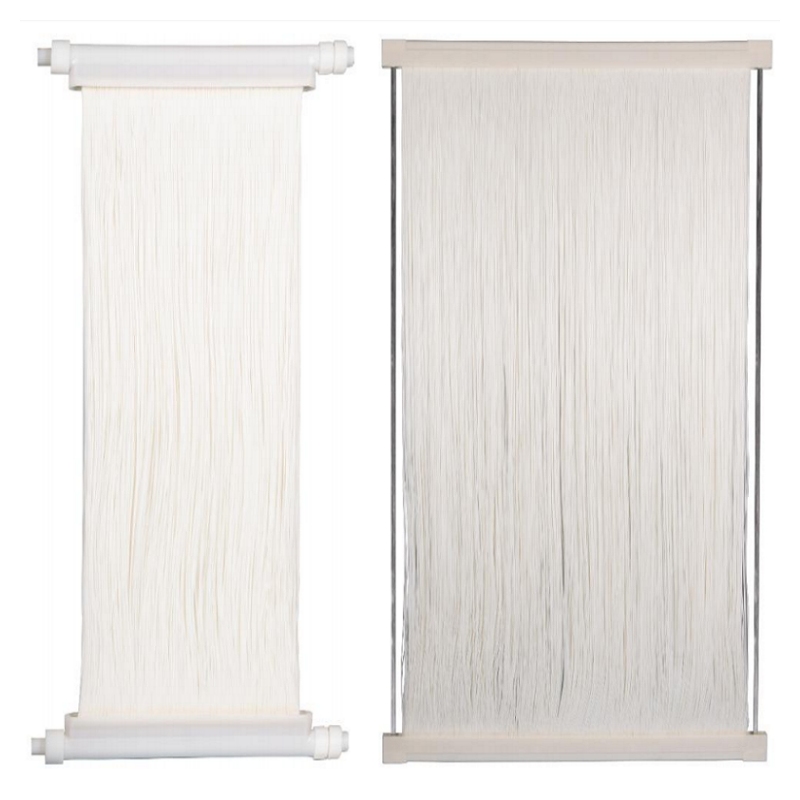
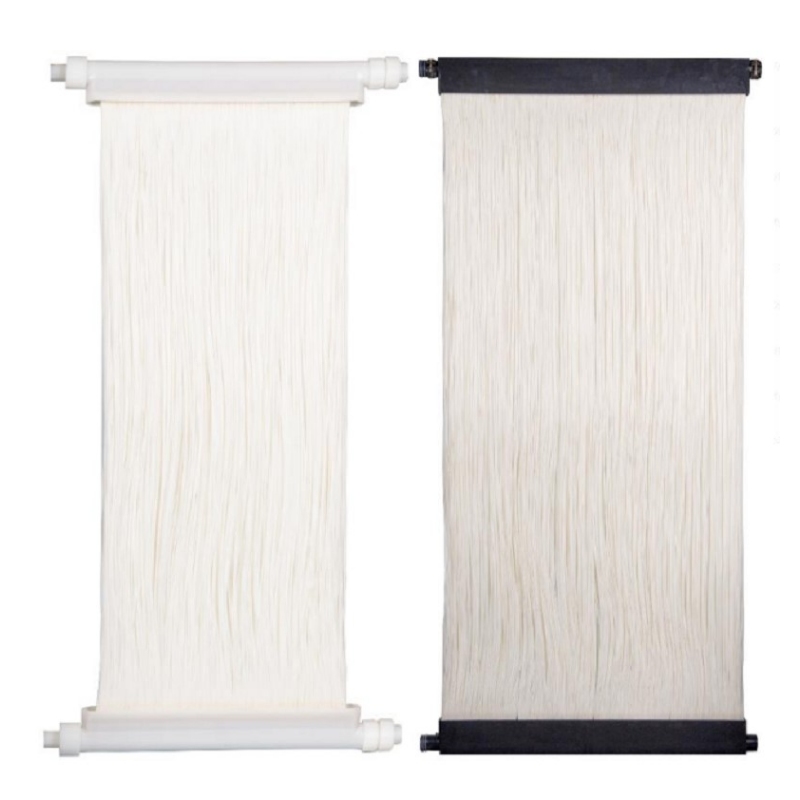
Modern municipal wastewater treatment adopts a progressive three-stage treatment process, including preliminary physical filtration, biochemical degradation, and advanced fine filtration, which removes water pollutants step by step. The third-stage advanced treatment mainly adopts a combined MBR-Ultrafiltration process, serving as the core guarantee for wastewater reuse.
Stage 1: Primary Physical Treatment – Removal of Large Debris
As the first procedure of wastewater treatment, primary treatment relies purely on physical interception and sedimentation to rapidly eliminate large visible pollutants in water bodies:
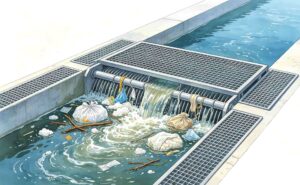
- Bar screens: Trap large floating debris such as plastic bags, tree branches, fabric scraps, and foam;
- Grit chambers: Remove high-density solid particles including sand and stones via gravitational sedimentation;
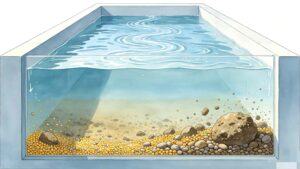
- Primary sedimentation tanks: Settle suspended solids in water and preliminarily reduce the pollution load of wastewater.
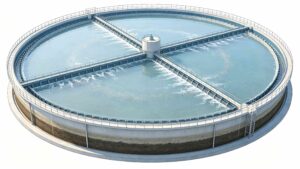
After primary treatment, most large impurities are removed, yet abundant soluble organic matter and fine suspended solids remain, leaving the water still turbid and failing to meet discharge standards. This stage eliminates 30% to 40% of total pollutants in wastewater.
Stage 2: Secondary Biochemical Treatment – Degradation of Organic Pollutants
Secondary biochemical treatment acts as the core foundational procedure of wastewater treatment, leveraging the metabolic activity of microorganisms to break down organic contaminants in water. Once wastewater flows into biochemical tanks, massive microorganisms contained in activated sludge adsorb and decompose organic pollutants such as food residues, faecal waste and detergents, converting them into carbon dioxide and harmless water.
Secondary treatment removes 85% to 90% of organic pollutants, drastically clarifying the water. Nevertheless, trace fine suspended solids, residual ammonia nitrogen, bacteria and refractory organic compounds still persist, resulting in unstable water quality. Water treated to this standard only meets basic discharge requirements and cannot be reused directly, mandating further refinement via tertiary advanced treatment.
Stage 3: Tertiary Advanced Treatment – Dual Fine Purification via MBR & Ultrafiltration to Enable Wastewater Reuse
Tertiary treatment marks the critical transition from “compliant discharge” to “resource recycling of wastewater”. The widely adopted high-efficiency industrial solution integrates a Membrane Bioreactor (MBR) for pre-advanced purification, followed by ultrafiltration membrane precision filtration. The two technologies perform distinct yet complementary functions, completely resolving issues of unstable water quality and residual impurities from secondary effluent.
1. Membrane Bioreactor (MBR): Advanced Biochemical Polishing to Lay a Solid Foundation for Effluent Quality
MBR is an efficient pre-treatment technology integrating biochemical degradation and membrane separation, replacing traditional advanced sedimentation tanks. Specially engineered microporous membrane modules fully retain activated sludge and functional microorganisms inside biochemical tanks, significantly boosting biochemical reaction efficiency. It thoroughly decomposes residual small-molecule organic matter and ammonia nitrogen, while fully intercepting micro-suspended solids.
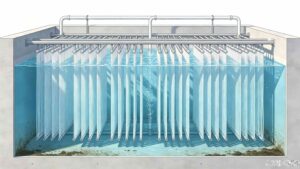
Compared with conventional processes, MBR achieves an overall pollutant removal rate of over 93%, delivering effluent with nearly zero suspended solids, exceptional clarity, and stable quality. It reduces the operational burden of subsequent ultrafiltration precision filtration and prevents membrane fouling, acting as the core precondition for producing high-grade reclaimed water.
2. Ultrafiltration Membrane: Ultimate Precision Screening to Ensure Safe Reuse
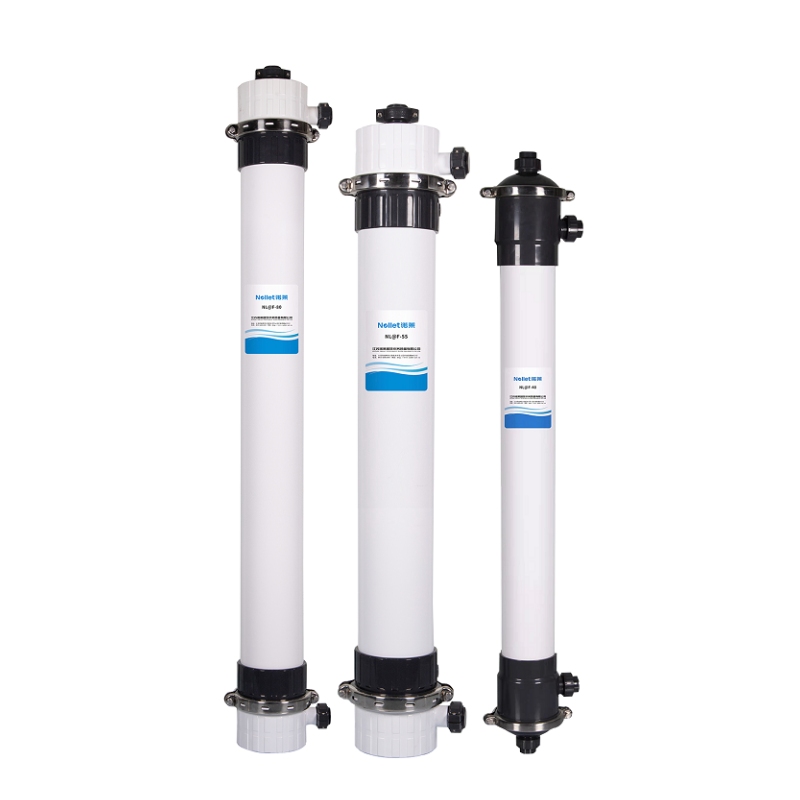
Water purified by MBR then enters the ultrafiltration membrane system for final refinement. Featuring ultra-fine micropores ranging from 0.01 to 0.1 micrometres, ultrafiltration membranes conduct purely physical screening to accurately intercept trace residual bacteria, viruses, colloidal particles, and macromolecular organic matter from MBR effluent. This further improves water transparency and biological safety, bringing the water fully up to reclaimed water reuse standards.
Thanks to the combined MBR-ultrafiltration process, polluted domestic and industrial wastewater can undergo a fundamental quality transformation. What unique advantages does this core water purification technology hold? How does the standardised water treatment workflow operate? How high is the quality of fully purified wastewater? We will elaborate on the core purification technologies, actual water quality test data, and the immense value of wastewater resource recycling in the next instalment.
Continue reading: Wastewater’s Journey to Rebirth (Part 2)——MBR-Ultrafiltration Technology Powers Wastewater to Become a New Urban Water Source