
Abstract
Water hardness — driven by elevated concentrations of calcium (Ca²⁺) and magnesium (Mg²⁺) ions — ranks among the most persistent and costly challenges in industrial water treatment. Untreated hard water accelerates scale deposition in heat exchangers, boilers, and piping networks, driving up energy consumption and maintenance costs across manufacturing, utilities, and process industries.
Nanofiltration (NF) membranes have emerged as a technically precise and commercially competitive softening solution. Operating at lower pressures than reverse osmosis while achieving divalent ion rejection rates exceeding 95%, NF membranes occupy a strategically valuable position in the membrane separation hierarchy. They selectively reject hardness-causing divalent ions while allowing beneficial monovalent ions to pass, preserving water chemistry balance without excessive demineralization.
This article covers the core mechanism behind NF-based hardness removal, critical performance parameters, applicable compliance standards, procurement specifications, and the commercial value proposition across key industrial sectors. Whether evaluating NF membranes for boiler feed water conditioning, food processing, or municipal softening, this guide provides the technical foundation procurement and engineering teams need to make informed decisions.
1: Understanding Water Hardness and Why It Matters in Industrial Applications
1.1: What Causes Water Hardness — Calcium, Magnesium, and Scale Formation
Water hardness is defined by the concentration of dissolved divalent cations, primarily calcium (Ca²⁺) and magnesium (Mg²⁺), typically expressed as milligrams per liter of equivalent CaCO₃. Water is classified as moderately hard at 100–150 mg/L CaCO₃ and very hard above 300 mg/L. These ions enter source water through geological contact with limestone, dolomite, and gypsum formations.
In industrial systems, the consequences of unmanaged hardness are measurable and severe:
- Scale formation: Ca²⁺ and Mg²⁺ precipitate as carbonates and sulfates on heat transfer surfaces, reducing thermal efficiency by up to 20–30% with just 3 mm of scale buildup.
- Equipment fouling: Scaling inside boiler tubes, cooling coils, and membrane housings shortens equipment service life and increases unplanned downtime.
- Process contamination: In food, beverage, and pharmaceutical manufacturing, hardness ions interfere with product quality, reaction chemistry, and regulatory compliance.
- Elevated TDS: Hard water typically correlates with higher total dissolved solids (TDS), compounding treatment challenges across downstream unit operations.
The economic burden of scale-related failures — including energy penalties, chemical descaling, and premature equipment replacement — makes hardness control a primary operational priority.
1.2: Limitations of Conventional Softening Methods vs. Membrane Technology
Traditional water softening technologies each carry significant operational constraints that limit their scalability and cost-effectiveness in modern industrial settings:
- Ion exchange (IX) softening: Highly effective for small-scale applications but requires frequent regeneration with sodium chloride brine, generating chloride-rich wastewater that is increasingly subject to discharge restrictions. Resin replacement and brine handling add recurring operational costs.
- Lime-soda softening: Suitable for large municipal volumes but generates substantial sludge requiring disposal, demands precise chemical dosing, and introduces process complexity incompatible with continuous industrial operations.
- Chemical scale inhibitors: Antiscalant dosing delays precipitation but does not remove hardness ions from the water stream. This approach addresses symptoms rather than root causes and adds chemical procurement and handling costs.
Nanofiltration membranes address these limitations directly: no regeneration chemicals, no sludge generation, continuous operation, and a compact footprint adaptable to both new installations and retrofits. The shift to membrane-based softening reflects broader industry trends toward chemical-free, energy-efficient water treatment.
2: How Nanofiltration Membranes Remove Hardness — Mechanism and Technical Principles
2.1: The Nanofiltration Separation Mechanism (Size Exclusion + Donnan Effect)
Nanofiltration membranes operate through two complementary separation mechanisms that together deliver high selectivity for divalent hardness ions:
Size exclusion governs the physical rejection of solutes based on molecular size relative to membrane pore dimensions. NF membranes feature an effective pore size range of 0.5–2 nanometers and a molecular weight cutoff (MWCO) of 200–1000 Daltons. This range is precisely positioned to reject hydrated Ca²⁺ and Mg²⁺ ions (hydrated radii ~4.1 Å and ~4.3 Å, respectively) while allowing smaller monovalent ions such as Na⁺ and Cl⁻ to pass through.
The Donnan exclusion effect contributes charge-based selectivity. NF membranes — typically fabricated from thin-film composite (TFC) polyamide — carry a net negative surface charge at neutral to alkaline pH. This electrostatic repulsion preferentially excludes divalent anions (SO₄²⁻, CO₃²⁻) and their associated cations, reinforcing the physical size exclusion mechanism. The combined effect produces high rejection of hardness-forming ion pairs without requiring the elevated pressures of reverse osmosis.
This dual mechanism is what distinguishes NF from both ultrafiltration (which lacks sufficient charge selectivity for ionic removal) and RO (which rejects virtually all dissolved ions indiscriminately).
2.2: Key Performance Parameters for Hardness Removal
Industrial-grade NF membranes for hardness removal are characterized by the following operational parameters:
- Ca²⁺/Mg²⁺ rejection rate: Typically >95%, with premium spiral-wound TFC membranes achieving 97–99% under optimized conditions.
- Operating pressure: 3–20 bar, significantly lower than RO systems (15–70 bar), directly reducing energy consumption per cubic meter of treated water.
- Permeate flux: 15–40 L/m²·h at standard test conditions, dependent on feed water temperature and fouling index.
- System recovery rate: 70–85% in well-designed NF systems, minimizing concentrate volume and water waste.
- MWCO: 200–1000 Da, calibrated to target divalent ions while preserving monovalent mineral balance.
| Sistem de membrană la presiune | NF Membrane | RO Membrane | Ion Exchange | Lime Softening |
|---|---|---|---|---|
| Ca²⁺/Mg²⁺ Rejection Rate | >95% | >99% | >99% | 85–95% |
| 0,5–2,0 bar (aspirație scăzută) | 3–20 bar | 15–70 bar | N/A (hydraulic) | N/A |
| Monovalent Ion Passage | High (selective) | Very low | Low (Na⁺ added) | Moderată |
| 2,5–4,0 kWh/m³ | Low–Medium | Înaltă | Scăzută | Scăzută |
| Chemical Waste Generated | Minimal | Minimal | High (brine) | High (sludge) |
| Typical Recovery Rate | 70–85% | 60–80% | ~100% (batch) | ~95% |
3: Compliance Standards and Membrane Specifications for Industrial Procurement
3.1: Relevant Industry Standards and Certifications
Procurement teams must verify that NF membranes meet applicable standards for their target application:
- NSF/ANSI 58: The primary certification for reverse osmosis and nanofiltration systems used in drinking water treatment. Covers material safety, structural integrity, and contaminant reduction claims.
- ISO 9001: Quality management system certification confirming consistent manufacturing process control — a baseline requirement for industrial-grade membrane suppliers.
- EU Drinking Water Directive (2020/2184): Governs material contact compliance for membranes used in potable water systems across European markets, requiring positive list compliance for membrane polymer components.
- WHO Guidelines for Drinking-Water Quality: Reference framework for hardness and TDS targets in municipal softening applications globally.
- Food-grade compliance (FDA 21 CFR): Required for NF membranes deployed in food and beverage processing where permeate contacts consumable products.
Suppliers should provide full material safety data, third-party test reports, and traceability documentation for regulated applications.
3.2: Selecting the Right NF Membrane — Specification Checklist for Buyers
Key procurement criteria for industrial NF membrane selection:
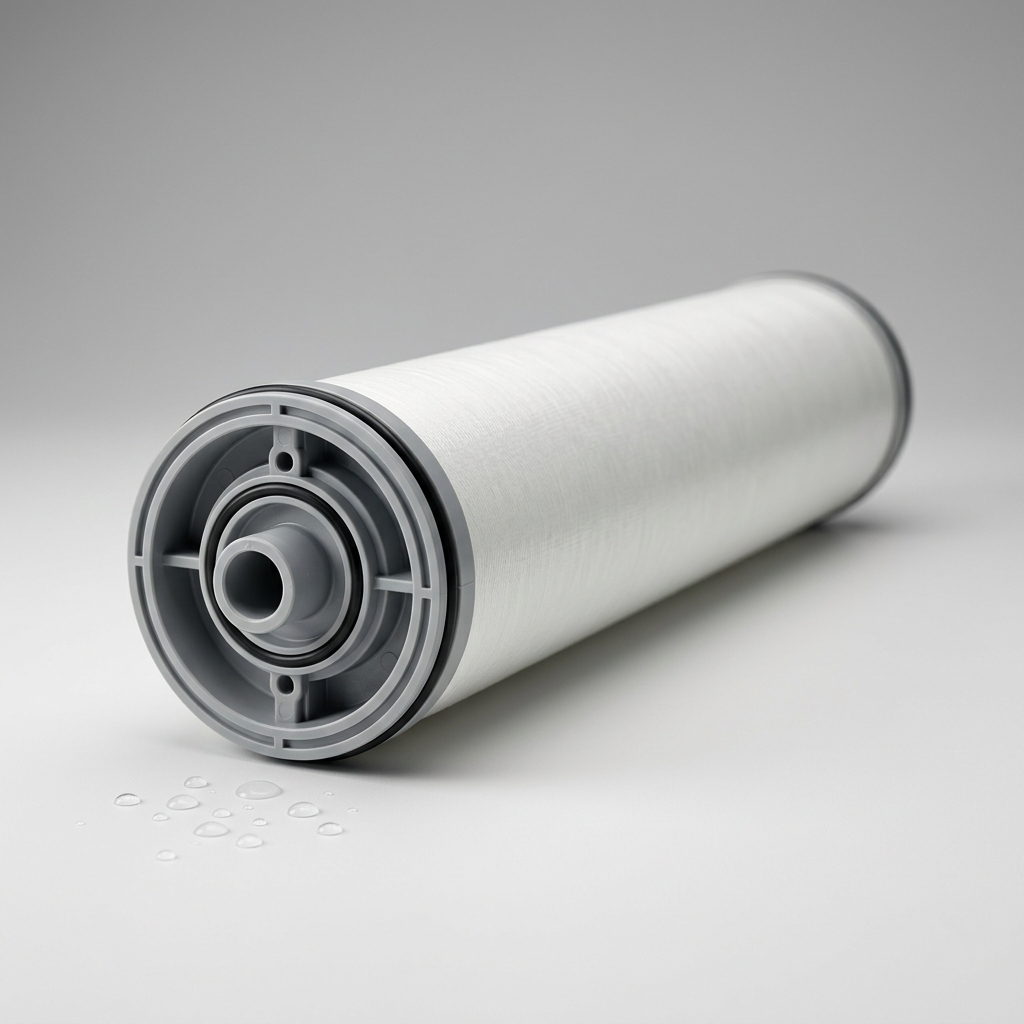
- Configuration: Spiral-wound elements (8-inch diameter standard) dominate high-volume industrial applications due to high packing density and low cost per unit area. Tubular configurations suit high-turbidity or viscous feed streams.
- Materialul membranei: Thin-film composite (TFC) polyamide is the industry standard, offering superior rejection performance and broad chemical compatibility.
- pH tolerance: Confirm operating range (typically pH 3–10) and cleaning range (pH 1–12 for CIP cycles) to ensure compatibility with feed water chemistry and maintenance protocols.
- Temperature range: Standard NF membranes operate at 5–45°C; high-temperature variants extend to 60°C for process water applications.
- Chlorine resistance: Standard polyamide TFC membranes have limited chlorine tolerance (<0.1 ppm continuous). Specify chlorine-tolerant or modified polyamide membranes for chlorinated municipal feed water applications.
- Antifouling surface treatment: Hydrophilic surface modifications reduce organic and biological fouling, extending cleaning intervals and membrane service life.
4: Industrial Application Scenarios and Commercial Value
4.1: Key Application Sectors — Where NF Hardness Removal Delivers ROI
Boiler feed water conditioning: Boiler systems require feed water hardness below 0.1 mg/L CaCO₃ to prevent scale in high-pressure steam generators. NF membranes as a pre-treatment stage protect downstream RO or ion exchange polishing units, extending their service intervals and reducing total chemical consumption.
Cooling tower makeup water: Reducing hardness in cooling water makeup lowers the Langelier Saturation Index, enabling higher cycles of concentration and reducing blowdown volume — directly cutting water consumption and chemical treatment costs.
Food and beverage processing: Breweries, dairy operations, and beverage manufacturers require precise mineral profiles. NF softening adjusts hardness without stripping beneficial monovalent minerals, supporting product consistency and process water compliance.
Pharmaceutical manufacturing: Purified water systems (per USP and EP standards) require controlled hardness levels as a precursor to final polishing. NF pre-treatment reduces the load on mixed-bed deionization or EDI systems.
Municipal water softening: Water utilities serving hard-water regions increasingly deploy NF as a centralized softening solution, replacing lime softening plants with lower-footprint, lower-waste membrane systems.
4.2: Total Cost of Ownership and Operational Benefits
The economic case for NF membrane softening rests on multiple cost vectors:
- Energy efficiency: Operating at 3–10 bar versus 15–30 bar for comparable RO systems, NF reduces energy consumption by 30–50% per m³ of treated water in softening applications.
- Eliminated chemical costs: Removing ion exchange brine regeneration eliminates recurring salt procurement (typically 100–300 g NaCl per liter of resin per cycle) and associated wastewater treatment costs.
- Extended downstream equipment life: Reducing scaling in heat exchangers, boilers, and piping systems can extend equipment service intervals by 2–4×, with measurable reductions in unplanned maintenance expenditure.
- Compact system footprint: Spiral-wound NF skids require significantly less floor space than equivalent-capacity lime softening or IX systems, reducing civil and installation costs.
- Membrane service life: Industrial TFC NF membranes typically achieve 3–7 years of service life under proper operating conditions, with predictable replacement cost modeling for CAPEX planning.
FAQ
Q1: What is the typical calcium and magnesium rejection rate of a nanofiltration membrane?
Industrial NF membranes achieve Ca²⁺ and Mg²⁺ rejection rates of 95–99% under standard test conditions (typically 500 mg/L CaCO₃ feed, 25°C, 8 bar). Actual field performance depends on feed water composition, operating pressure, recovery rate, and membrane fouling state. Higher feed water hardness concentrations and elevated pH generally support stronger Donnan exclusion effects, maintaining high rejection rates.
Q2: Can a nanofiltration membrane fully replace a traditional water softener in industrial systems?
For most industrial softening applications — including cooling water, boiler pre-treatment, and process water — NF membranes can replace ion exchange softeners as the primary hardness removal stage. However, applications requiring near-zero hardness (ultra-pure water, high-pressure boilers >100 bar) typically combine NF pre-softening with polishing-stage RO or mixed-bed deionization. NF eliminates brine regeneration entirely, which is a decisive operational advantage in water-stressed or discharge-restricted facilities.
Q3: How does feed water TDS and pH affect nanofiltration membrane performance for hardness removal?
Higher feed water TDS increases osmotic pressure, requiring slightly elevated operating pressure to maintain target flux. At pH above 7, the negative surface charge of polyamide TFC membranes intensifies, enhancing Donnan exclusion of divalent ions and improving rejection rates. At low pH (<5), charge effects weaken and mechanical rejection becomes the dominant mechanism, potentially reducing divalent ion selectivity. Feed water with high sulfate or bicarbonate concentrations may require antiscalant pre-dosing to prevent scaling on the membrane surface at high recovery rates.
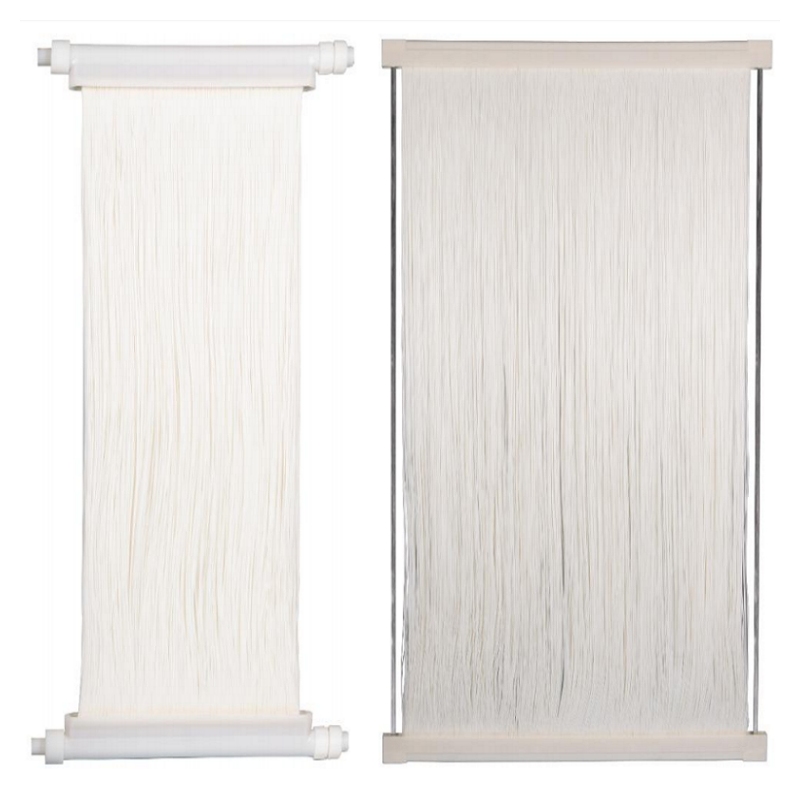
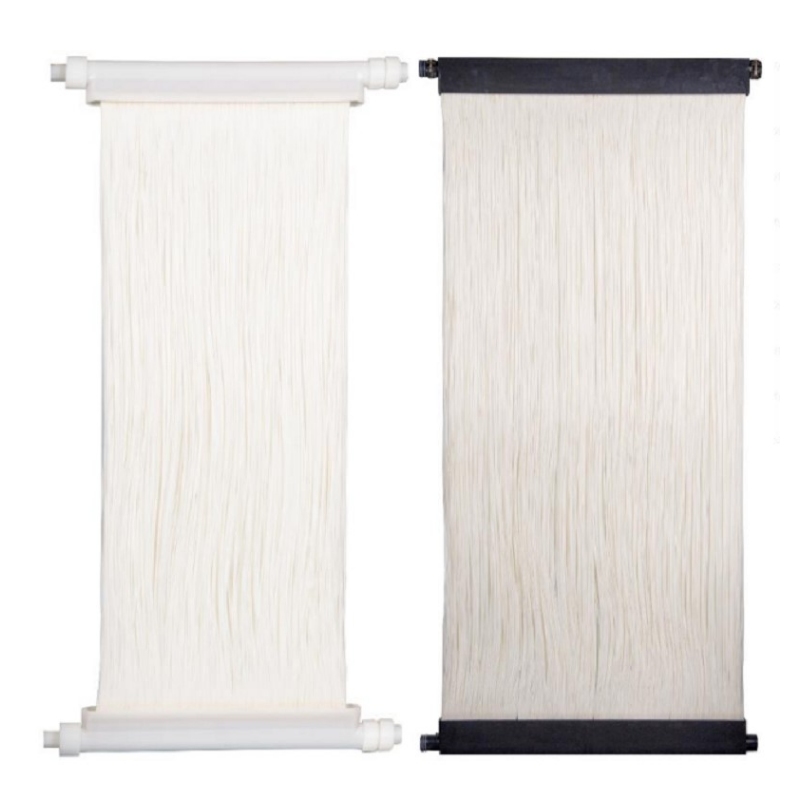
Modulul submersibil de membrană reprezintă o schimbare paradigmatică în tratarea apei, oferind rezultate superioare în scenarii care cer spațiu compact, calitate stabilă a efluentului, consum redus de energie și rezistență puternică la poluare. De la sistemele municipale MBR și reutilizarea apei industriale până la producția de apă potabilă și tratarea lichidelor de percolare din depozitele de gunoi, depășește procesele convenționale și tehnologiile cu membrane presurate în cele mai dificile aplicații.
Nanofiltration membranes represent a technically mature and commercially proven solution for industrial water hardness removal. By combining physical size exclusion with charge-based Donnan selectivity, NF membranes achieve >95% rejection of Ca²⁺ and Mg²⁺ ions at operating pressures 50–70% lower than reverse osmosis — delivering meaningful energy savings without sacrificing softening performance.
For procurement and engineering teams, the key selection criteria are clear: verify NSF/ANSI 58 or equivalent certification for your application, specify TFC polyamide spiral-wound elements with appropriate pH and temperature ratings, and evaluate total cost of ownership against incumbent ion exchange or lime softening systems. In most industrial scenarios — from boiler feed water to food processing — NF softening reduces chemical consumption, eliminates brine waste, and extends downstream equipment life simultaneously.
As water scarcity and discharge regulations tighten globally, the operational and regulatory advantages of membrane-based softening will continue to strengthen the business case for NF adoption. Evaluating nanofiltration membranes against your specific hardness targets and water quality parameters is a sound starting point for any industrial water treatment optimization initiative.