
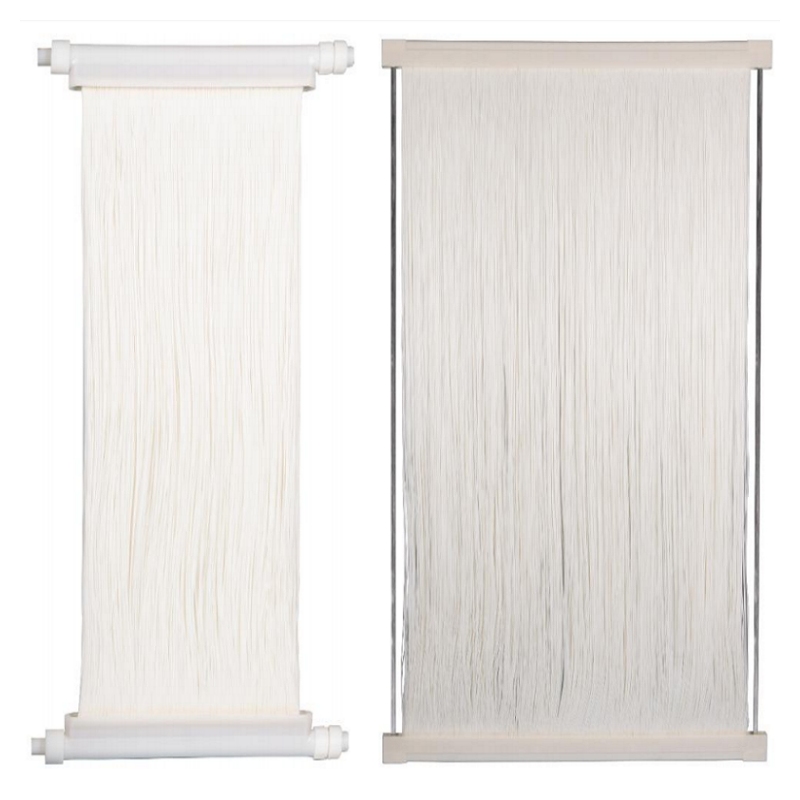
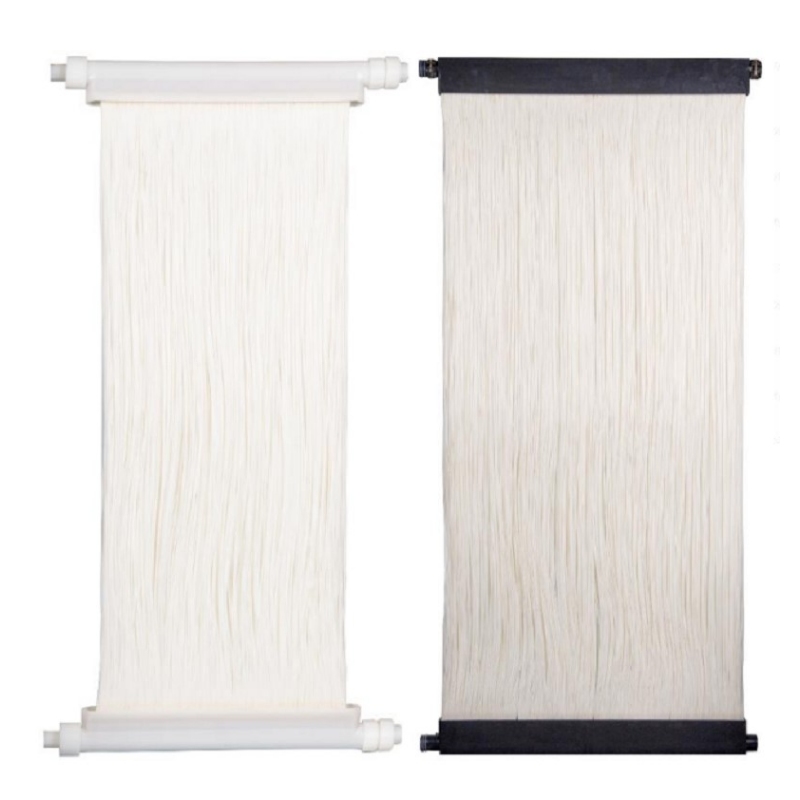
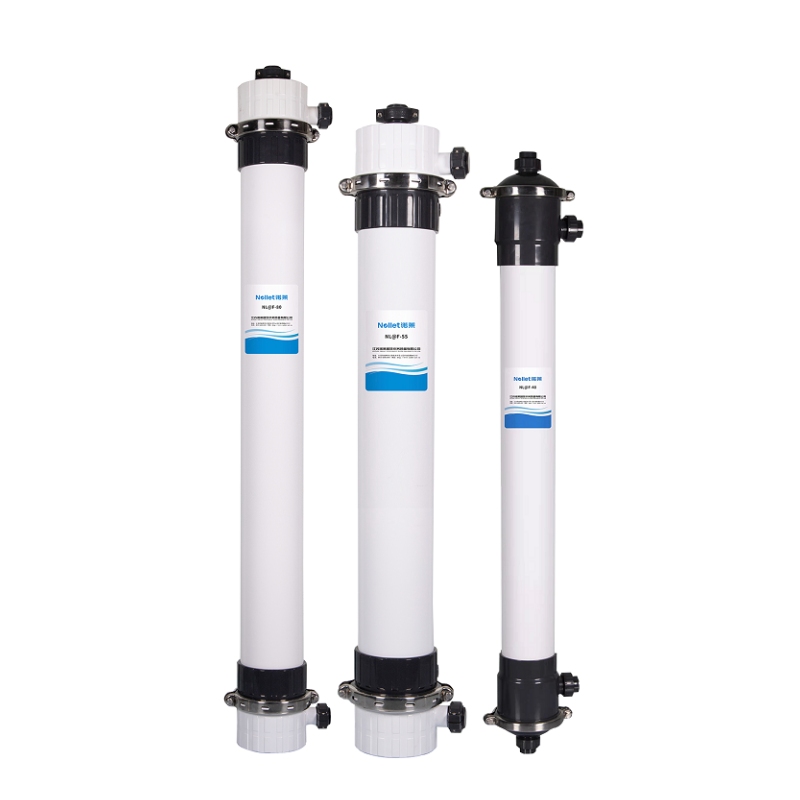
High-turbidity source water from seasonal floods, reservoir fluctuations, or industrial process streams creates major challenges for membrane filtration. Conventional inside-out ultrafiltration systems often struggle under high solids loading, causing TMP increases, fiber blockage, and more frequent cleaning.
Ультрафильтрующая мембрана снаружи-внутрь technology offers a more reliable solution for high-turbidity applications. By directing feed water from the shell side and allowing permeate to pass through the fiber wall into the lumen, outside-in UF membrane modules reduce internal blockage, improve fouling control, and handle elevated turbidity levels with less dependence on pretreatment.
This guide explores how outside-in ultrafiltration membrane modules perform in high-turbidity conditions, key selection parameters, compliance requirements, and TCO advantages for municipal and industrial water treatment.
1. Why High-Turbidity Feed Challenges Conventional Membrane Systems
1.1 The Limitation of Inside-Out Ultrafiltration Under High Solids Loading
Inside-out ultrafiltration membranes force feed water through the hollow fiber lumen, typically with an inner diameter of 0.6–1.0 mm. When total suspended solids (TSS) increase, particles can accumulate inside the narrow channels, restricting flow paths and causing rapid transmembrane pressure (TMP) increases.
For turbidity levels above 50–100 NTU, inside-out UF systems often require additional pretreatment, such as coagulation, flocculation, and sedimentation, to reduce solids loading. Without sufficient protection, internal fouling can become difficult to remove through standard backwashing, resulting in lower flux, more frequent cleaning, and shorter membrane lifespan.
For municipal and industrial water operators, these limitations increase both CAPEX for pretreatment infrastructure and OPEX for chemical cleaning and membrane replacement.
1.2 How Outside-in UF Membranes Improve Fouling Control
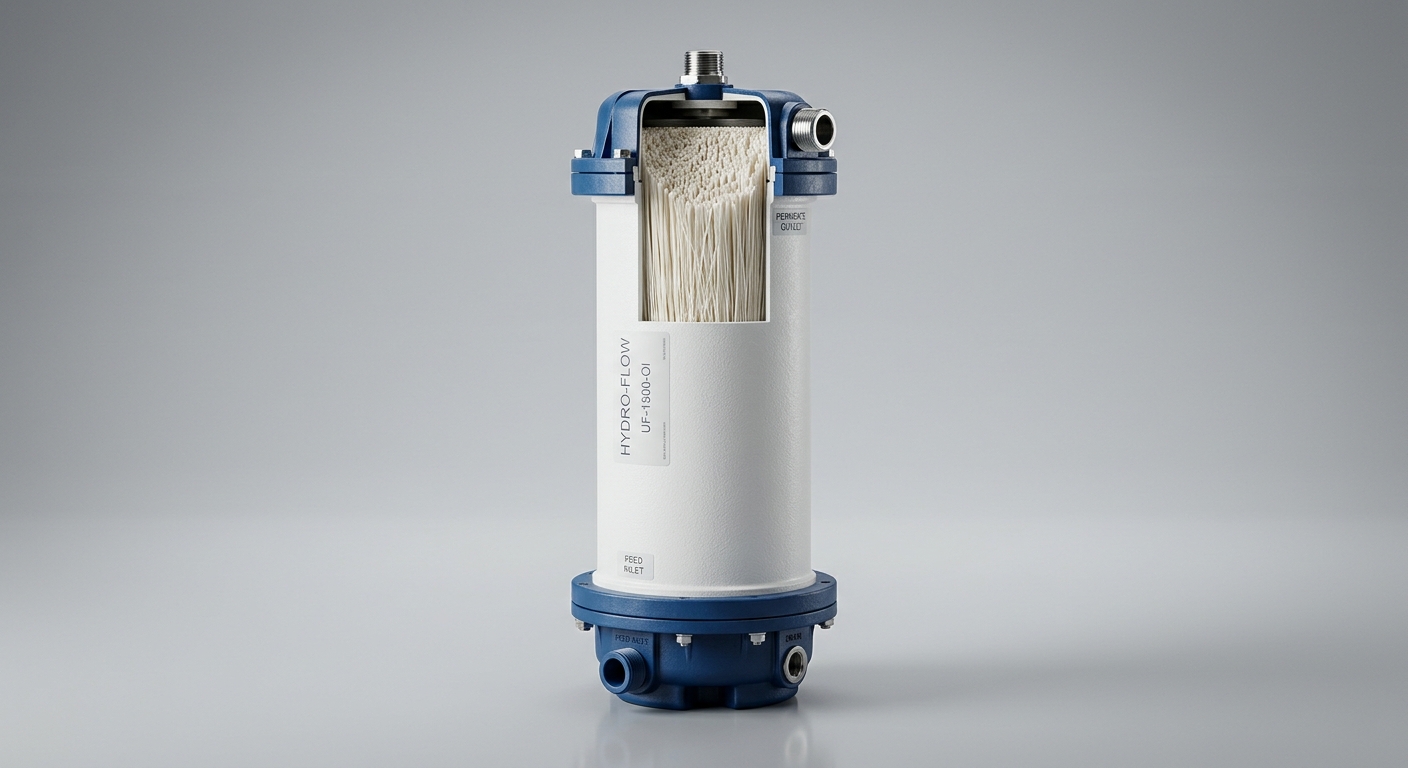
Ультрафильтрующая мембрана снаружи-внутрь modules use a different flow configuration: feed water contacts the outer fiber surface, while permeate flows inward through the membrane wall into the lumen. This design changes how suspended solids accumulate during operation.
Instead of blocking the inside of hollow fibers, particles form a removable cake layer on the outer surface. This surface fouling layer is easier to remove through air-water backwashing, improving fouling recovery and allowing stable operation under higher turbidity conditions.
The larger shell-side flow area also reduces the risk of fiber blockage and supports longer cleaning intervals compared with conventional inside-out configurations. As a result, outside-in UF membrane systems are widely used for challenging feed water sources, including rivers, reservoirs, and industrial process streams.
2. Technical Specifications & Performance Parameters of Outside-in UF Membrane Modules
2.1 Key Design Parameters for High-Turbidity Applications
The performance of an outside-in ultrafiltration membrane module depends on factors such as fiber structure, operating flux, MWCO, and cleaning capability. The following comparison highlights key differences between outside-in and inside-out UF configurations:
| Мембранная система под давлением | Outside-in UF Module | Inside-out UF Module |
|---|---|---|
| Max Feed Turbidity (NTU) | 200–500 NTU (application-dependent) | 20–100 NTU |
| Typical Operating Flux (LMH) | 40–80 LMH | 50–100 LMH |
| Fiber Diameter (mm) | 1.2–2.0 mm (OD) | 0.8–1.4 mm (ID-based) |
| MWCO Range (kDa) | 50–150 kDa | 50–150 kDa |
| Backwash Frequency | Every 20–45 min | Every 15–30 min |
| Pretreatment Requirement | Screening in many applications | Coagulation/sedimentation often required |
| Typical Applications | Rivers, reservoirs, industrial feed water | Groundwater, pre-treated municipal water |
Outside-in UF membrane modules designed for high-turbidity service typically use larger fiber diameters and a more open shell-side structure, helping reduce solids accumulation and improve backwash recovery. For municipal surface water treatment, MWCO values around 100 kDa are commonly selected to remove bacteria, protozoa such as криптоспоридий и лямблия, and suspended colloidal particles while maintaining stable permeate production.
2.2 Backwash and Chemical Cleaning for High-Turbidity Operation
Fouling control in outside-in UF membrane systems usually combines automated air-water backwashing, chemically enhanced backwash (CEB), and periodic clean-in-place (CIP) procedures.
During air-water backwashing, air is introduced to create turbulence around the fiber surface, helping remove accumulated solids and restore filtration performance. The frequency typically depends on feed turbidity, flux settings, and operating conditions.
For more persistent fouling caused by organic matter, algae, or mineral scaling, CEB cleaning may use oxidizing agents such as sodium hypochlorite or mild acids such as citric acid. PVDF-based outside-in UF membranes are widely selected for these applications due to their chemical resistance and durability under repeated cleaning cycles.
In high-turbidity applications, CIP intervals are generally influenced by feed quality and operating strategy. Compared with inside-out systems, outside-in UF configurations can reduce cleaning frequency by improving solids removal and minimizing irreversible internal fouling.
3. Compliance Standards & Application Scenarios
3.1 Regulatory Standards for Outside-in Ultrafiltration Membrane Performance
Outside-in Ultrafiltration Membrane modules used for drinking water treatment and food-related industrial applications must meet relevant safety, material, and performance requirements. Key standards and guidelines include:
- NSF/ANSI 61: Ensures that membrane materials used in potable water applications meet safety requirements and do not introduce harmful substances into treated water.
- WHO Drinking Water Guidelines: Provide reference criteria for pathogen removal performance. Properly operated UF systems can achieve high log removal values (LRV) for microorganisms such as криптоспоридий и лямблия through verified membrane integrity.
- GB/T Standards (China): Standards such as GB/T 32360 define testing requirements for hollow fiber ultrafiltration membrane modules, including pressure resistance, flux stability, and rejection performance.
- US EPA LT2ESWTR: Establishes integrity testing and pathogen removal verification requirements for surface water treatment systems.
When selecting an Outside-in Ultrafiltration Membrane supplier, procurement engineers should evaluate third-party certification reports, integrity testing methods, and compliance documents according to the requirements of the target application market.
3.2 Application Scenarios for High-Turbidity Feed Water
Outside-in Ultrafiltration Membrane systems are widely applied in water treatment projects where feed water contains high turbidity, suspended solids, or fluctuating water quality. Typical applications include:
Municipal Surface Water Treatment
River and reservoir sources often experience seasonal turbidity changes caused by rainfall, flooding, or sediment disturbance. Outside-in UF membrane modules provide stable filtration performance under variable feed conditions and can reduce reliance on complex clarification processes through effective solids management.
Industrial Process Water Pretreatment
Industries such as food and beverage, power generation, and manufacturing require reliable pretreatment before RO systems, boilers, and cooling processes. Outside-in Ultrafiltration Membranes help remove suspended solids, improve downstream water quality, and reduce fouling risks in subsequent treatment stages.
Water Reuse and Wastewater Recovery
For municipal wastewater reuse and industrial water recovery projects, Outside-in UF membrane systems provide strong fouling resistance and efficient backwash recovery, making them suitable for applications with high organic loading and biological fouling potential.
3.3 Outside-in Ultrafiltration Membrane for High-Turbidity River Water Treatment
A municipal water treatment project facing seasonal river turbidity fluctuations adopted an Outside-in Ultrafiltration Membrane system to improve filtration stability and reduce fouling risks.
During heavy rainfall periods, increased suspended solids and sediment disturbance caused significant variations in feed water quality. The outside-in UF configuration helped maintain stable filtration performance through effective air-water backwashing and improved solids removal capability.
By selecting suitable PVDF-based Outside-in Ultrafiltration Membrane modules and optimizing operating conditions, the system achieved reliable turbidity control, reduced cleaning requirements, and consistent treated water quality.
This application demonstrates the advantages of outside-in UF technology for challenging surface water sources and variable industrial feed streams.
4. Commercial & Procurement Value for Industrial Buyers
4.1 Total Cost of Ownership: Pretreatment Reduction & Operational Savings
The TCO benefits of Outside-in Ultrafiltration Membrane systems in high-turbidity applications are mainly reflected in three key areas:
Reduced pretreatment requirements: Compared with conventional inside-out UF systems, Outside-in Ultrafiltration Membrane modules provide better solids handling capability and fouling control when treating variable-quality surface water. By allowing more efficient removal of accumulated solids through backwashing, outside-in UF systems can reduce dependence on complex pretreatment processes and simplify overall plant design.
Extended membrane service life: PVDF-based Outside-in Ultrafiltration Membranes are widely selected for demanding water treatment applications due to their chemical resistance and stable filtration performance. By minimizing the risk of internal fiber blockage, these membranes help maintain consistent flux performance and reduce the frequency of membrane replacement.
Lower operating costs: The improved fouling resistance of Outside-in UF Membrane systems allows more effective air-water backwashing and reduces the need for frequent chemical cleaning. This helps lower long-term maintenance costs and improves overall system efficiency in municipal and industrial water treatment applications.
4.2 How to Choose the Right Outside-in Ultrafiltration Membrane Module?
When selecting an Outside-in Ultrafiltration Membrane module, engineers should evaluate several key factors based on feed water characteristics, operating conditions, and system requirements.
Feed Water Quality and Turbidity Range
The first consideration is the expected turbidity fluctuation and suspended solids concentration. For river water, reservoir water, or industrial process streams with unstable feed conditions, Outside-in UF membrane modules with strong fouling resistance and effective backwash performance are generally preferred.
Membrane Material and Chemical Resistance
PVDF is commonly selected for Outside-in Ultrafiltration Membranes because of its mechanical strength, chemical resistance, and durability during repeated cleaning cycles. Material selection should match the required cleaning frequency and operating environment.
Flux and Module Design
Operating flux, fiber diameter, membrane area, and module configuration directly influence filtration stability. A suitable Outside-in Ultrafiltration Membrane module should balance production capacity with fouling control rather than maximizing flux alone.
Integrity Testing and Certification
For drinking water and critical industrial applications, suppliers should provide integrity testing data, LRV validation, and relevant certifications to ensure reliable pathogen removal performance.
4.3 How to Select the Right Outside-in Ultrafiltration Membrane Supplier
When evaluating an Outside-in Ultrafiltration Membrane supplier, procurement engineers should focus on membrane performance, system reliability, and long-term technical support:
- Integrity testing capability: Suppliers should provide membrane integrity testing procedures, including pressure decay testing (PDT), and relevant performance documentation to verify pathogen removal capability.
- Module scalability: A reliable Outside-in Ultrafiltration Membrane supplier should offer consistent module designs from pilot-scale testing to full-scale deployment, ensuring stable performance during system expansion.
- Replacement module availability: Long-term operation requires reliable access to replacement Outside-in Ultrafiltration Membrane modules, clear delivery timelines, and technical support for maintenance requirements.
- Application engineering support: High-turbidity projects often involve changing feed conditions. Suppliers with operational guidance, troubleshooting support, and customized filtration recommendations can help reduce long-term operational risks.
Часто задаваемые вопросы
Q1: What turbidity can outside-in ultrafiltration membrane modules handle?
Most outside-in ultrafiltration membrane modules can treat feed water with 200–300 NTU turbidity without coagulation pretreatment when proper screening is applied. High-solids configurations may handle up to 500 NTU depending on membrane design and operating conditions.
Q2: How does outside-in UF compare with inside-out UF?
Compared with inside-out systems, outside-in UF membrane modules provide better solids management and fouling control. They reduce internal blockage risks, improve backwash recovery, and are more suitable for rivers, reservoirs, and high-turbidity industrial feed water.
Q3: What certifications are needed for outside-in UF membranes?
For drinking water and food-related applications, verify certifications such as NSF/ANSI 61, LRV validation, integrity testing records, and applicable regional standards including GB/T or US EPA requirements.
Q4: Why choose PVDF for outside-in ultrafiltration membranes?
PVDF is widely used in outside-in ultrafiltration membranes because it offers strong chemical resistance, mechanical durability, and stable performance during repeated backwashing and cleaning cycles.
Q5: How do you select an outside-in UF membrane module?
Selection should consider feed turbidity, flux requirements, membrane material, MWCO, cleaning frequency, and supplier support to ensure reliable long-term filtration performance.
Заключение
Outside-in Ultrafiltration Membrane technology provides an effective solution for high-turbidity feed water by improving solids control, fouling resistance, and filtration stability. With its outside-in flow design, these UF membrane modules enable easier backwashing, reduce pretreatment requirements, and help lower long-term operating costs in municipal and industrial water treatment applications.
When selecting an Outside-in Ultrafiltration Membrane supplier, engineers should consider membrane integrity testing, performance certification, and technical support capabilities. Contact our team to explore reliable outside-in UF solutions for rivers, reservoirs, and challenging industrial feed water applications.