
Abstract
Nanofiltration (NF) membrane technology occupies a critical position between ultrafiltration (UF) and reverse osmosis (RO) in the pressure-driven membrane separation spectrum. Operating within a molecular weight cutoff (MWCO) range of 200–1000 Da and at pressures of 3–20 bar, NF membranes deliver a unique combination of divalent ion rejection and monovalent ion permeability that neither UF nor RO can replicate economically.
This article examines the operating principles, key performance parameters, regulatory compliance requirements, and industrial application scenarios of nanofiltration membrane systems — with a focus on heavy metal removal from wastewater, dye concentration membrane filtration, and zero liquid discharge (ZLD) objectives. Procurement engineers and plant managers will find a structured technical reference to support system selection and supplier evaluation across electroplating, mining, textile, and chemical processing industries.
1. Working Principles of Nanofiltration Membrane Technology
1.1 Separation Mechanisms: Size Exclusion, Charge Repulsion & Solute Diffusion
Nanofiltration selectivity is governed by three co-existing transport mechanisms that operate simultaneously across the membrane active layer:
Steric hindrance (size exclusion) physically blocks solutes larger than the membrane’s effective pore diameter (0.5–2 nm). Molecules exceeding approximately 300 Da — including most reactive dyes, metal complexes, and organic micropollutants — are rejected based purely on molecular geometry.
Donnan exclusion (charge repulsion) is the mechanism that distinguishes NF from simple size-based sieves. The negatively charged surface of polyamide thin-film composite (TFC) membranes repels divalent anions (SO₄²⁻, CrO₄²⁻) and divalent cations (Pb²⁺, Cd²⁺, Cu²⁺) far more effectively than monovalent ions (Na⁺, Cl⁻). This electrostatic selectivity enables NF systems to achieve >95% rejection of target heavy metals while allowing partial passage of sodium chloride — a critical advantage in applications requiring selective demineralization.
Solution-diffusion governs the transport of small, uncharged solutes and water molecules through the dense polymer matrix. The relative diffusivity of water versus dissolved contaminants determines the permeate quality at a given operating pressure.
The interplay of these three mechanisms gives NF membranes their defining characteristic: high rejection of divalent ions and organic molecules in the 200–1000 Da range, combined with lower energy consumption than RO.
1.2 NF vs. UF vs. RO: Positioning in the Membrane Filtration Spectrum
Understanding where NF sits in the filtration hierarchy is essential for system design decisions:
| Мембранная система под давлением | Ультрафильтрация (UF) | Нанофильтрация (NF) | Reverse Osmosis (RO) |
|---|---|---|---|
| Pore size | 2–100 nm | 0.5–2 nm | <0.5 nm |
| Operating pressure | 0.5–5 bar | 3–20 bar | 15–80 bar |
| MWCO | 1,000–300,000 Da | 200–1,000 Da | <200 Da |
| Monovalent salt rejection | <10% | 10–50% | >95% |
| Divalent ion rejection | <20% | >90% | >99% |
| Primary removal target | Suspended solids, bacteria | Heavy metals, dyes, hardness | Total dissolved solids |
For wastewater treatment applications where the objective is selective removal of heavy metals or concentration of high-value dye streams — without the energy penalty of full desalination — NF represents the optimal process choice.
2. Core Performance Parameters & Membrane Specifications
| Specification | Polyamide TFC (Spiral Wound) | Ceramic (Tubular) |
|---|---|---|
| MWCO (Da) | 200–1,000 | 300–2,000 |
| Operating pressure (bar) | 3–20 | 5–25 |
| Water flux (L/m²·h) | 15–50 | 20–80 |
| Divalent salt rejection (%) | 90–99 | 85–98 |
| pH tolerance | 3–10 | 1–14 |
| Temperature range (°C) | 5–45 | 5–90 |
| Suitable wastewater type | Textile, electroplating, municipal | Mining, acid/alkali effluents, food processing |
2.1 Key Filtration Metrics for Industrial Wastewater Applications
For procurement specification sheets, four KPIs define NF membrane suitability in industrial wastewater contexts:
- Rejection coefficients: Verified >95% for Cr⁶⁺, Pb²⁺, and Cd²⁺ under standardized test conditions (5 bar, 25°C, 500 mg/L feed concentration). Reactive and acid dye rejection should exceed 98% at molecular weights above 400 Da.
- Flux stability: Sustained permeate flux over 500–1,000 operating hours without exceeding a 15% decline threshold indicates acceptable fouling propensity for a given feed matrix.
- Modified Fouling Index (MFI): Feed water MFI values below 5 s/L² are generally required to maintain stable NF operation. Higher MFI feeds necessitate upstream pretreatment intensification.
- Recovery rate: Industrial NF systems typically operate at 70–85% water recovery. Higher recovery increases concentrate salinity and requires careful management to avoid scaling from sparingly soluble salts (CaSO₄, BaSO₄).
2.2 Membrane Module Configurations: Spiral Wound vs. Tubular vs. Ceramic Flat Sheet
Module geometry directly determines operational suitability:
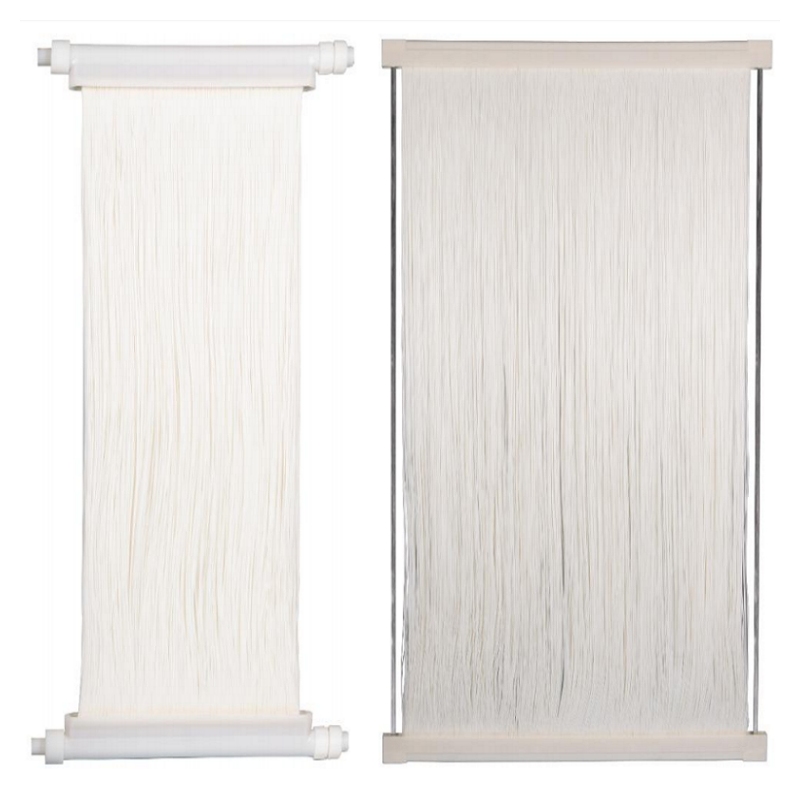
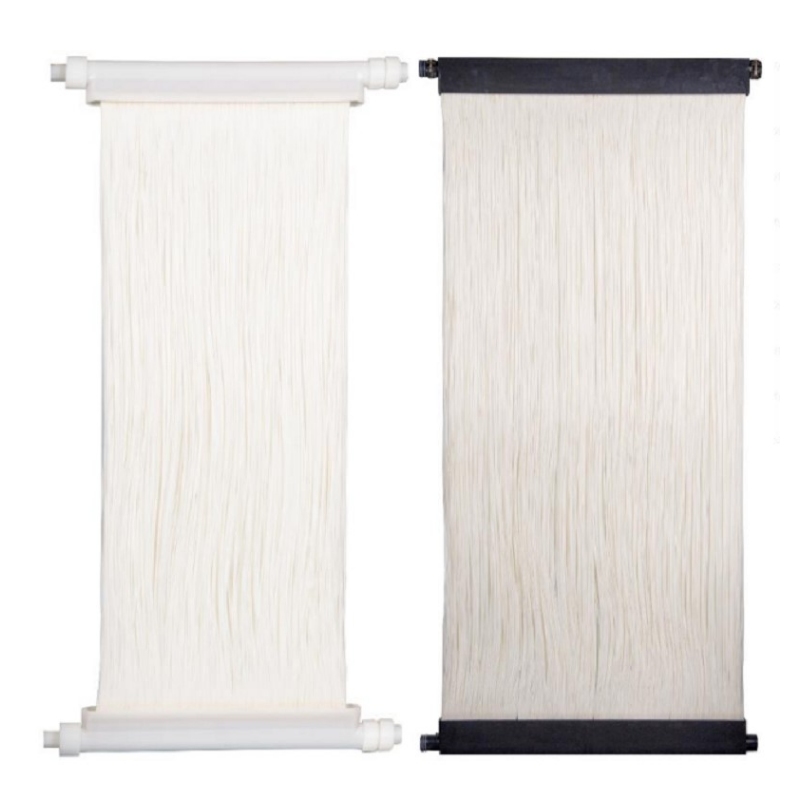
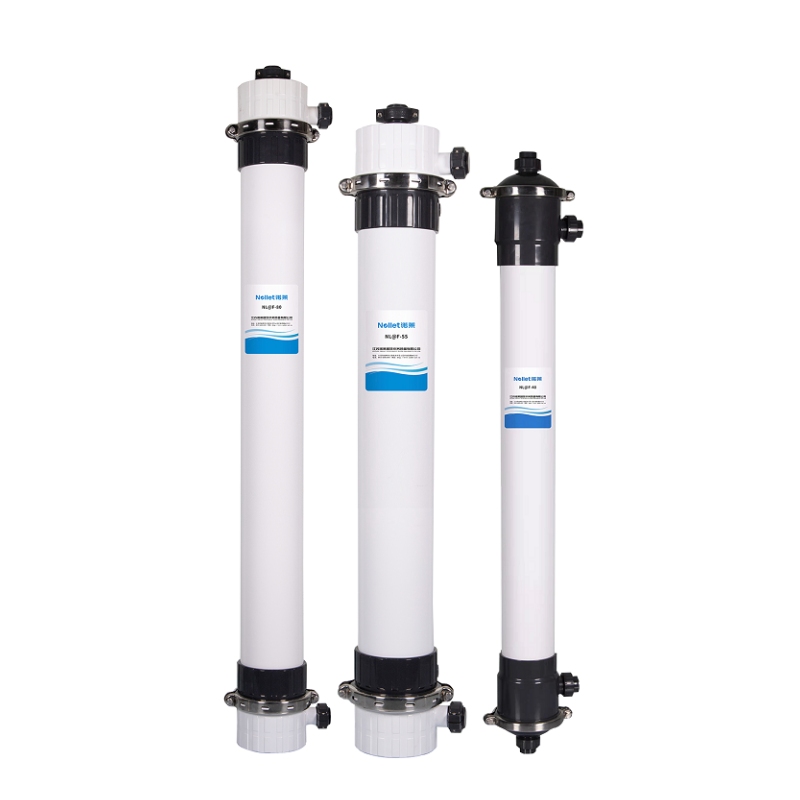
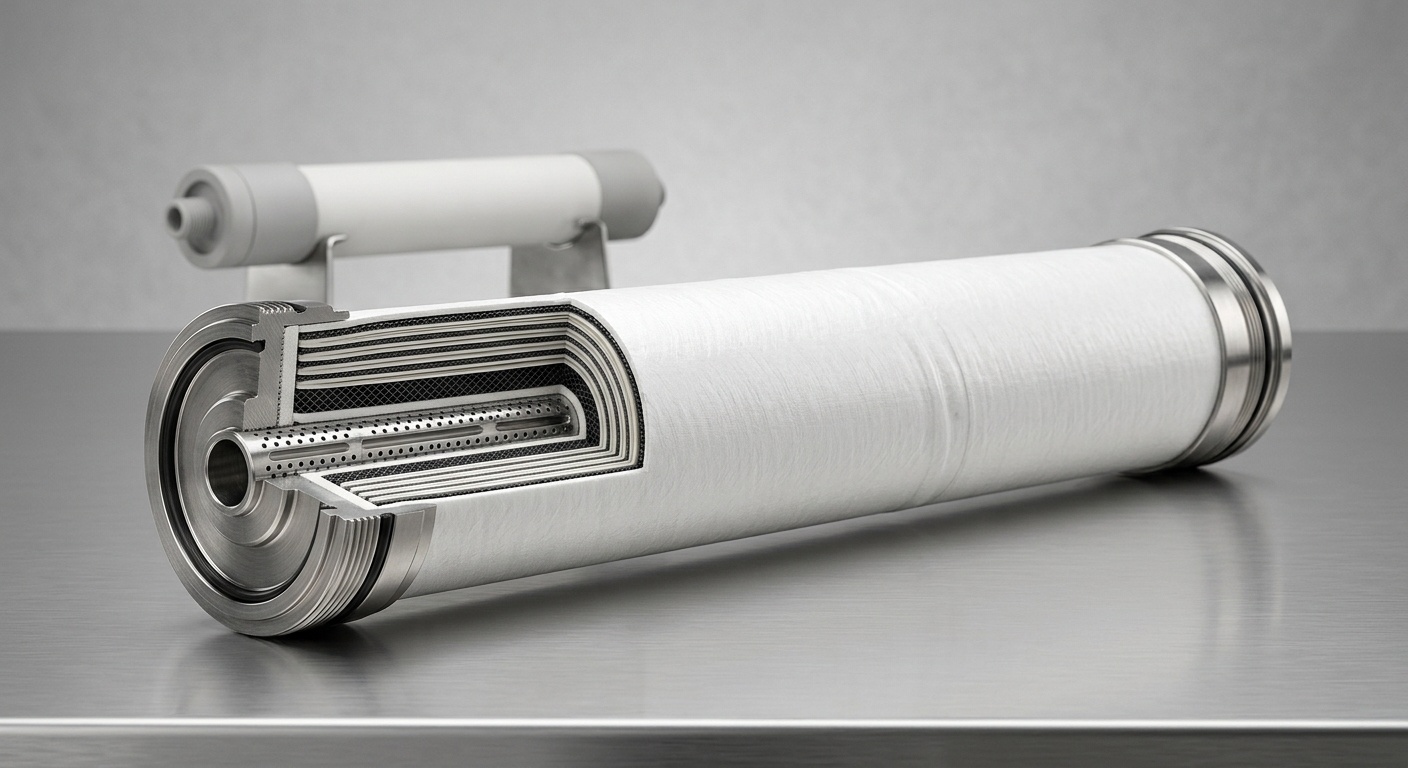
Spiral wound modules offer the highest packing density (500–1,000 m²/m³) and lowest capital cost per unit area, making them the default choice for relatively clean feeds (SDI <5) in textile and light industrial wastewater applications. However, their narrow feed channels (0.7–1.2 mm) are susceptible to plugging in high-turbidity streams.
Tubular modules (ceramic or polymeric) feature large feed channel diameters (6–25 mm), enabling processing of high-viscosity, high-suspended-solids effluents from mining tailings, pulp and paper, and metal finishing operations. Packing density is lower, but cleanability and service life under aggressive chemical cleaning are significantly superior.
Ceramic flat sheet modules combine chemical inertness with mechanical robustness, tolerating pH extremes (1–14) and temperatures up to 90°C. They are the preferred configuration for acid mine drainage and concentrated acid/alkali effluent treatment where polymer membranes would degrade rapidly.
3. Industrial Application Scenarios
3.1 Heavy Metal Removal from Wastewater (Electroplating, Mining & Metal Finishing)
Electroplating and metal finishing operations generate effluents containing Cr⁶⁺, Ni²⁺, Zn²⁺, Cu²⁺, and Cd²⁺ at concentrations that typically exceed discharge limits by one to three orders of magnitude. Nanofiltration membrane systems address this challenge with a structured process sequence:
Pre-treatment is non-negotiable. Feed water must pass through pH adjustment (to 6–8), coagulation/flocculation, and a UF or MF barrier to reduce suspended solids below 5 NTU and SDI below 5 before entering the NF stage. Failure to implement adequate pretreatment is the leading cause of premature membrane fouling in metal wastewater applications.
NF rejection performance: Under optimized conditions, polyamide TFC membranes achieve rejection rates of 96–99% for Cr⁶⁺ (as chromate), 97–99% for Pb²⁺, and 95–98% for Cd²⁺. The Donnan exclusion mechanism is particularly effective against divalent metal cations, enabling permeate quality that meets EPA effluent guidelines and China GB 8978 Class I discharge limits in a single NF pass for many feed compositions.
Concentrate management and ZLD integration: The NF concentrate stream — typically 15–30% of feed volume — contains the recovered heavy metals at 5–10× concentration. This stream can be routed to electrochemical recovery units (for copper, nickel) or to a downstream evaporator/crystallizer for ZLD compliance. The permeate is recycled as process water, reducing fresh water consumption by 70–85%.
3.2 Dye Concentration & Color Removal in Textile Wastewater
Textile dyeing effluents present a dual challenge: high color (COD 500–5,000 mg/L) combined with significant salt loads from dyebath auxiliaries. Nanofiltration’s selective permeability makes it uniquely suited to this application.
Dye rejection: NF membranes achieve >98% rejection for reactive dyes (MW 600–1,500 Da) and >95% for acid dyes (MW 300–900 Da) through combined steric and Donnan exclusion. The permeate — clear, low-color water with residual NaCl — can be directly recycled to dyeing operations, reducing freshwater consumption by 60–80%.
Brine recovery economics: In reactive dyeing, sodium chloride or sodium sulfate concentrations of 50–100 g/L are standard. NF selectively retains the dye while passing the monovalent salt, enabling brine recovery and reuse in the dyebath. This salt recovery pathway generates measurable cost savings — typically $15–40/ton of textile produced — while simultaneously reducing effluent treatment loads.
Dye concentration for reuse or disposal: The NF retentate contains dye at 5–15× the original concentration. Depending on dye value and purity, this stream can be reprocessed or sent to high-efficiency incineration, significantly reducing hazardous waste volumes compared to conventional coagulation-based color removal.
4. Regulatory Compliance & System Integration Standards
4.1 Applicable Discharge Standards & Certification Requirements
Industrial NF system deployments must satisfy a layered compliance framework:
- Качество сточных вод: EPA 40 CFR Part 433 (metal finishing), EU Water Framework Directive (2000/60/EC) priority substance limits, and China GB 8978-1996 Class I/II standards set the performance benchmarks that NF rejection rates must meet or exceed.
- Membrane material safety: NSF/ANSI 61 certification is required for membranes used in potable water or food-contact applications. For industrial wastewater, CE marking (EU Machinery Directive) and ISO 9001:2015 quality management certification from the membrane manufacturer provide the baseline procurement assurance.
- System documentation: B2B procurement specifications should require third-party rejection test reports (ISO 19020 or equivalent), material safety data sheets for all membrane polymers and cleaning chemicals, and documented membrane autopsy protocols for warranty claims.
4.2 Nanofiltration Membrane System Design: Pre-treatment, CIP & ZLD Configuration
A robust nanofiltration membrane system follows a defined process architecture:
Pre-treatment train: Coagulation/flocculation → sedimentation → multimedia filtration → cartridge filtration (5–20 μm) → MF or UF polishing. This sequence reduces SDI to <3, TSS to <1 mg/L, and free chlorine to <0.1 mg/L before the NF stage.
CIP protocols: Cleaning-in-place frequency depends on feed fouling potential — typically every 30–90 days for well-pretreated feeds. Approved reagent sequences include alkaline cleaning (NaOH, pH 11–12, 35°C) for organic/biofouling, followed by acid cleaning (citric acid or HCl, pH 2–3) for inorganic scaling. Membrane flux recovery >90% post-CIP indicates acceptable fouling reversibility.
ZLD configuration: NF concentrate feeds a thermal or mechanical vapor recompression (MVR) evaporator, which reduces volume by a further 80–90%. The resulting brine is processed in a forced-circulation crystallizer to produce dry salt cake for disposal or sale. This integrated NF + evaporation + crystallization sequence is the industry-standard ZLD pathway for electroplating and textile facilities operating under zero-discharge mandates.
Часто задаваемые вопросы
Q1: What is the typical rejection rate of a nanofiltration membrane for heavy metals such as chromium and lead in industrial wastewater?
Under standard operating conditions (5–15 bar, pH 6–8, 25°C), high-performance polyamide TFC nanofiltration membranes achieve 96–99% rejection for Cr⁶⁺ (chromate form), 97–99% for Pb²⁺, and 95–98% for Cd²⁺. Actual rejection rates in field installations depend on feed pH, ionic strength, competing ion concentrations, and membrane fouling state. Pilot testing with site-specific feed water is recommended before final system sizing.
Q2: How does a nanofiltration membrane system integrate into a zero liquid discharge (ZLD) process for textile or electroplating plants?
NF serves as the volume reduction and concentration stage in a ZLD train. The NF unit reduces wastewater volume by 70–85%, producing a clean permeate for reuse and a concentrated reject stream. This concentrate — at 5–10× the original contaminant concentration — feeds a downstream MVR evaporator and crystallizer, which eliminate the remaining liquid fraction and produce a solid waste for compliant disposal. NF’s role is critical because it reduces the thermal evaporation load by 70–85%, dramatically lowering ZLD operating costs.
Q3: What pre-treatment conditions are required to prevent fouling and extend the service life of nanofiltration membranes in high-COD wastewater streams?
Effective pre-treatment requires reducing SDI to <3–5, TSS to <1 mg/L, free chlorine to <0.1 mg/L (polyamide membranes are chlorine-sensitive), and oil/grease to <0.1 mg/L. For high-COD streams (>500 mg/L), upstream biological treatment or advanced oxidation (ozone, UV/H₂O₂) reduces organic fouling precursors. Antiscalant dosing is required when the feed LSI exceeds 0.5 or when sulfate/carbonate scaling indices indicate precipitation risk at the target recovery rate.
Заключение
Nanofiltration membrane systems deliver a technically and commercially compelling solution for industrial wastewater treatment where selective contaminant rejection, water reuse, and regulatory compliance must be achieved simultaneously. The combination of Donnan exclusion and steric hindrance enables >95% rejection of divalent heavy metals and >98% rejection of textile dyes, while the lower operating pressure compared to RO translates directly into reduced energy costs.
For procurement teams, the critical selection criteria are: verified rejection coefficients for target contaminants under site-representative conditions; module configuration matched to feed turbidity and fouling potential; chemical compatibility with the required CIP reagents; and third-party certifications (NSF/ANSI 61, ISO 9001, CE) that provide quality assurance throughout the membrane service life.
When integrated into a complete pre-treatment → NF → ZLD process train, nanofiltration membrane systems enable electroplating, mining, and textile facilities to meet the most stringent discharge standards while recovering water, salts, and valuable metals — converting a compliance cost into an operational efficiency gain.