


Введение
Industries are adopting an Интеллектуальная платформа управления водными ресурсами not because it is trendy, but because the economic case has become difficult to ignore. A 2025 McKinsey analysis reports that fully digitized water-quality operations can achieve an average ROI of 187% within three years—well above typical industrial IoT implementations. At the same time, global freshwater demand is projected to exceed supply by 40–56% by 2030, according to the UN and World Resources Institute. Water is increasingly a limiting factor for industrial expansion, and an intelligent water management platform has become one of the most practical tools for addressing this constraint. As a result, more facilities are integrating such platforms as core infrastructure rather than optional systems.
This article explains why this shift is occurring, based on operational data rather than vendor claims.
What Exactly Is an Intelligent Water Management Platform?
Let’s remove the jargon. An intelligent water management platform is a software-based system that collects data from sensors deployed across water infrastructure—such as flow meters, pressure sensors, water quality analyzers, and pump condition monitors—and converts it into operational insights. Its primary function is to translate raw data into decisions that reduce water consumption, energy use, and operational cost. It typically provides three core functions:
Visibility – Track water usage across the entire system in real time
Control – Automatically respond to operational changes, such as shutting off the supply to idle equipment
Prediction – Identify equipment degradation or water quality deviations before failures occur
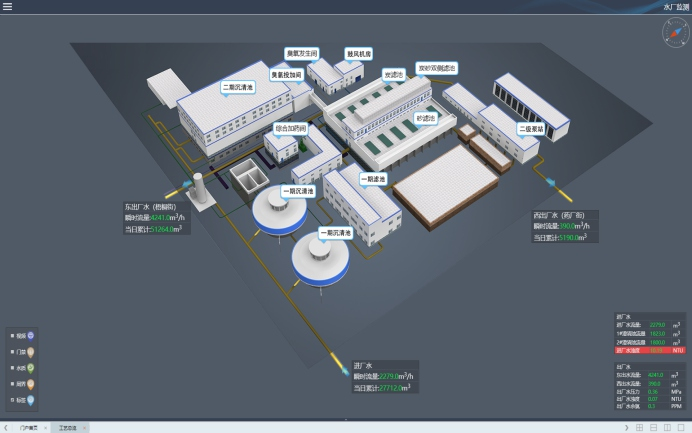
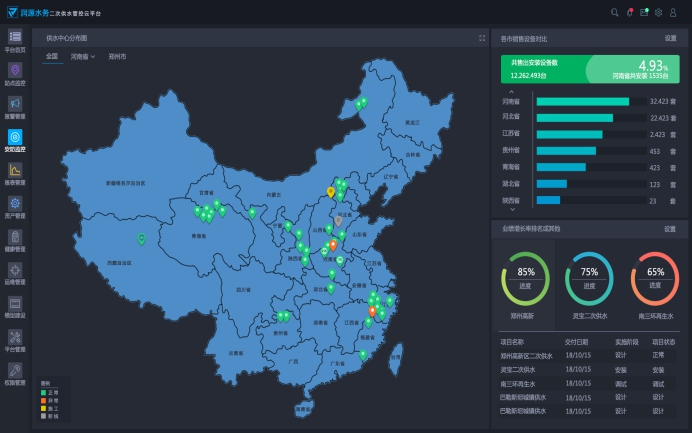
Nollet’s platform is designed as a cloud-based system where each water-related device is equipped with a wireless communication module. Key parameters such as flow rate, water level, pressure, and quality indicators are continuously transmitted to a central cloud database. This data is then processed for statistical analysis, operational decision-making, and GIS-based visualization accessible from any location with internet connectivity.
Market data reflects this growing adoption. 360iResearch estimates the smart water management market at USD 20.9 billion in 2025, with projections reaching USD 47.7 billion by 2032 at a CAGR of 12.5%. Approximately 47% of urban utilities and 42% of industrial facilities have already implemented some form of real-time water monitoring.
However, these aggregated figures do not fully reflect operational realities. The actual challenges become clearer at the facility level.
Why Traditional Water Management Fails (And You’re Paying for It)
In most industrial facilities, water management is still fragmented, manual, and reactive. The typical operational pattern looks like this:
Common failure modes of traditional systems:
- Operators manually record readings from analog meters once per shift
- Small leaks remain undetected until they cause visible damage or noticeable cost increases
- Water quality samples are analyzed externally, with results returned days later—often after affected batches have already been processed
- Equipment runs on fixed schedules rather than actual demand, leading to unnecessary energy and water consumption
- Many production lines lack submetering, making it impossible to determine accurate water distribution
These inefficiencies translate into measurable losses. A leak of just 10 drops per minute can waste over 500 gallons per year. A 1mm hole in a pressurized 100 PSI line can result in losses of up to 2,500 gallons per day. Without continuous monitoring, such issues often persist for extended periods.
An intelligent water management platform helps close these visibility gaps. Continuous monitoring enables early leak detection, while submetering identifies inefficiencies at the process level. Automated sampling and analysis also allow compliance data to be available in real time instead of relying on delayed laboratory reporting.
This transition—from reactive estimation to data-driven optimization—represents one of the most significant opportunities for water and cost reduction in industrial operations.
Key Capabilities: What a Platform Actually Does
Every intelligent water management platform worth considering should offer these core capabilities. Here’s a breakdown of the specific functions that differentiate an Интеллектуальная платформа управления водными ресурсами from basic monitoring.
Real-time data acquisition:
-
Flow rate (precision ±0.5% of reading)
-
Pressure (accuracy ±0.25% full scale)
-
Water quality parameters: pH, conductivity, turbidity, dissolved oxygen, temperature
-
Equipment status: pump runtime, valve position, filter differential pressure
-
Sampling intervals configurable from 1 minute to 1 hour
Wireless connectivity:
-
Cellular (4G/5G) for remote sites without existing network infrastructure
-
LoRaWAN for low-power, long-range sensor networks within a facility
-
Integration with existing SCADA systems via Modbus, OPC UA, or MQTT
Cloud-based analytics:
-
Real-time dashboards accessible from any device
-
Automated alerts for threshold violations (e.g., pH out of range >10 minutes)
-
Trend analysis and historical comparison
-
Predictive algorithms for pump seal failure, filter breakthrough, and pipe corrosion
Automated control (closed-loop optional):
-
Trigger valve adjustments based on real-time demand
-
Modulate pump speed to maintain pressure setpoints.
-
Divert flow to alternate treatment trains when quality degrades.
The Predictive Edge: Stopping Problems Before They Start
Preventive maintenance relies on fixed schedules, while predictive maintenance is driven by operational data. An intelligent water management platform supports predictive maintenance by detecting early patterns that often indicate equipment degradation or failure.
Typical predictive signals include:
Pump failure – gradual increase in vibration or declining discharge pressure under constant operating speed
Filter breakthrough – unexpected drop in differential pressure followed by unstable recovery trends
Pipe leakage – continuous imbalance between inlet and outlet flow within a defined system segment
Heat exchanger fouling – reduced heat transfer efficiency despite stable flow conditions
Valve degradation – delayed response or slower actuation compared to baseline performance
Financial and Operational Impact
The financial benefits of data-driven water management are well documented in industrial and academic studies.
A peer-reviewed analysis of a water distribution network in Madeira, Portugal, using digital twin-based monitoring on a smart water grid reported an 80% reduction in real water losses. This equates to approximately 434,000 cubic meters of water saved annually, or about €165,000 in reduced operating costs. The system’s infrastructure leakage index was reduced significantly, highlighting the gap between traditional monitoring and data-driven optimization approaches.
Further research from the University of Lisbon, which combined IoT monitoring with AI-based optimization across multiple industrial sites, reported the following improvements:
41.5% reduction in operating cost
57.2% reduction in energy cost intensity
26.4% internal rate of return
3.8-year average payback period
Net CO₂ reduction of approximately 160,000 kg per year
These results illustrate how operational data translates directly into measurable financial and environmental performance improvements.
Case Studies: Practical Implementation
Fine Tubes (UK manufacturing facility)
After deploying submeters and digital flow monitoring across chemical milling and pickling processes, and implementing automated shutdown logic during idle periods, the facility reduced overall water consumption by 41% within six months. The improvement was primarily driven by improved visibility rather than process redesign.
Corning (Poland plant)
The facility transitioned selected production lines from open-loop to closed-loop water systems and introduced daily meter tracking. This enabled identification of inefficiencies across specific processes, followed by targeted meter expansion and system adjustments. Annual water savings exceeded 8.5 million gallons, with additional reductions achieved through corrective maintenance actions.
Sugar factory (Thailand)
The facility deployed an intelligent water management platform to centralize monitoring of flow balance, recycling efficiency, energy use, and maintenance scheduling. This enabled a shift from reactive operations to data-driven control. The case demonstrates that even traditionally low-digitalization industries can achieve measurable efficiency gains through structured water data management.
Mexico City municipal system
A collaborative deployment between Xylem and Amazon introduced advanced leak detection analytics, enabling a large-scale reduction in distribution losses. The project is estimated to save over 800 million liters annually, alongside associated reductions in treatment energy and chemical usage. A parallel deployment in Monterrey contributes additional savings of approximately 560 million liters per year.
Platform vs. Traditional SCADA: A Practical Comparison
Many people assume SCADA already does what an Интеллектуальная платформа управления водными ресурсами does. That’s like assuming a car‘s speedometer does what GPS navigation does. Related, but not the same.
| Capability | Intelligent Water Management Platform | Traditional SCADA |
|---|---|---|
| Real-time monitoring | Yes, at configurable intervals down to 1 minute | Yes, typically 1–5 second polling |
| Data storage | Cloud-based, unlimited historical retention | On-premise, limited by server storage |
| Predictive analytics | AI/ML models for failure prediction, optimization | None or basic threshold alarms |
| Visualization | Interactive dashboards, GIS mapping, digital twin models | 2D mimic diagrams, trend charts |
| Remote access | Any device with internet, built-in | Requires VPN, dedicated client software |
| Integration with other systems | REST APIs, webhooks, and MQTT | Limited to OPC and industrial protocols |
| Deployment time | Days to weeks for a typical facility | Months to over a year |
| Upfront cost (typical) | 15,000–50,000 for platform + sensors | 150,000–500,000+ for similar scope |
| Typical user | Plant engineer, environmental manager | Dedicated control room operator |
The practical implication: SCADA remains appropriate for high-speed processes requiring millisecond control loops (e.g., chemical reactor control). For water management—where decision horizons are minutes to hours—an intelligent water management platform provides more capability at a fraction of the cost and complexity.
Most importantly, the two can coexist. Many installations pull data from existing SCADA systems into the platform, adding analytics and visualization without replacing the underlying control infrastructure.
Total Cost of Ownership: Why “Do Nothing” Costs More
A 2026 report from Ecolab indicates that the financial impact of inaction on water risk can be up to five times higher than proactive investment. The Carbon Disclosure Project reports a similar conclusion, showing that unmanaged water risk often results in costs significantly exceeding the capital required for monitoring and control systems.
Let’s break this down.
Costs of “Do Nothing” (typical medium-sized industrial facility)
- Undetected leaks: 5–15% of total water consumption, often translating to $20,000–$100,000 per year
- Inefficient cooling systems: 30–50% excess water usage, plus additional chemical treatment costs
- Compliance penalties: $10,000–$500,000+ per violation, including potential operational restrictions
- Unplanned downtime: $10,000–$1,000,000+ per day, depending on production criticality
- Energy inefficiency: 15–40% of pumping energy is wasted due to uncontrolled flow conditions
Cost of implementing an intelligent water management platform (typical)
- Sensor hardware: $200–$1,000 per monitoring point
- Wireless gateways: $500–$2,000 per facility
- Platform subscription: $5,000–$20,000 annually, depending on scale
- Installation and commissioning: $5,000–$15,000 one-time
Across published implementations, payback periods typically range from 6 to 24 months, with most projects achieving ROI within 12–18 months. After payback, operational savings generally stabilize at 15–40% of water-related costs.
The financial implication is straightforward: costs that are not addressed immediately tend to accumulate over time rather than remain static.
Addressing Common Objections
“We already have a water treatment contractor.”
Contractors provide maintenance and expertise, but not continuous system visibility. A monitoring platform complements existing service arrangements by providing real-time operational data.
“Our facility is too small to justify this.”
Smaller facilities often lack dedicated water optimization resources, which can result in higher relative waste. A system with 10–20 sensors (approx. $15,000 investment) can still generate $20,000–$50,000 annual savings depending on usage patterns.
“Our operators aren’t technically trained.”
Modern systems are designed for operational simplicity, with visual dashboards and mobile alerts that require no programming or analytical expertise.
“We already use SCADA.”
In most cases, the platform can operate as an analytics layer on top of existing SCADA infrastructure, adding predictive and optimization capabilities without replacing control systems.
Regulatory Trends: Why Waiting Increases Risk
Global water-related regulatory frameworks are becoming more stringent and data-driven.
- China: 2026 VOC-related standards introduced tighter emission thresholds and expanded monitoring requirements, with increasing emphasis on real-time compliance data
- EU: Updated Urban Wastewater Treatment Directive requires more continuous monitoring across additional discharge parameters
- US: EPA NPDES reporting is moving toward higher-frequency digital submissions instead of periodic reporting cycles
In this context, adopting an intelligent water management platform early reduces exposure to compliance pressure and avoids rushed system deployment under regulatory deadlines.
Implementation Roadmap: Practical Deployment Steps
Phase 1 (Weeks 1–2): System Assessment
- Identify high-consumption and high-risk water points
- Deploy 5–10 pilot sensors on critical infrastructure
- Establish baseline dashboards
Phase 2 (Weeks 3–6): Data Baseline
- Collect operational data for 30 days
- Identify inefficiencies such as leakage or abnormal consumption patterns
- Configure automated alerts for key thresholds
Phase 3 (Months 2–4): System Expansion
- Extend the sensor network based on initial findings
- Introduce predictive models for recurring equipment issues
- Begin semi-automated control in stable processes
Phase 4 (Months 5–12): Optimization
- Integrate with SCADA or BMS systems where applicable
- Deploy digital twin simulations for operational planning
- Optimize chemical dosing, pump scheduling, and cycle efficiency
Most facilities begin realizing measurable ROI during Phase 2, with full optimization typically achieved within 12 months.
Часто задаваемые вопросы
What’s the difference between an intelligent water management platform and standard SCADA?
SCADA focuses on real-time process control with fast response cycles, while an intelligent water management platform focuses on analytics, prediction, and long-term optimization. In many facilities, both systems are used together.
How much data does the platform require to make accurate predictions?
Most predictive models require 30–90 days of historical data at 15-minute intervals to establish a stable baseline. Accuracy improves continuously as data volume increases.
Can the platform integrate with existing PLCs and flow meters?
Yes. Most intelligent water management platform deployments support Modbus, OPC UA, MQTT, and REST APIs. Integration with existing industrial equipment is typically straightforward.
What happens if the internet connection fails?
Local gateways store data temporarily and sync once connectivity is restored. Critical alarms can still be triggered locally via SMS or on-site alerts.
Is the platform secure against cyber threats?
Yes. A secure intelligent water management platform typically uses TLS encryption, role-based access control, encrypted storage, and optional on-premises deployment for sensitive environments.
Conclusion: The Choice Isn’t Whether, But When
Water costs are rising, regulations are tightening, and operational risks are increasing. An intelligent water management platform helps facilities respond to all three by improving visibility, control, and efficiency.
The evidence is consistent:
- 187% average ROI over three years (McKinsey)
- 12–24 month typical payback period
- 15–40% reduction in water-related operating costs
- Up to 80% reduction in real water losses in digitalized systems
Facilities that delay adoption will continue absorbing avoidable losses, while competitors using an intelligent water management platform move toward lower operating costs and stronger compliance performance.
The decision is no longer theoretical. It is operational timing.
Start with a pilot deployment. Validate performance on real facility data. Then scale step by step based on measurable results.
Ready to See What an Intelligent Water Management Platform Can Do for Your Facility?
Nollet’s cloud-based intelligent water management platform connects wireless modules to monitor flow, level, pressure, and water quality in real time, with centralized cloud analytics for decision support. It can be configured for single lines or multi-site systems, with fast pilot deployment and easy integration into existing operations.