


In most modern cities, water is always available. Offices, hospitals, schools, factories, and residential buildings all rely on centralized supply systems. Water flows consistently, and for many people, this reliability creates an assumption: if water is clear and odorless, it must be safe.
That assumption is not always accurate.
Municipal treatment plants are designed to remove a wide range of contaminants before water enters the distribution network. However, once water leaves the treatment facility, it travels through kilometers of pipelines. These networks may include aging infrastructure, storage tanks, pressure zones, and branching systems. Along this journey, secondary contamination can occur.
Sediment from corroded pipes, dissolved metals from plumbing materials, microbial regrowth in stagnant sections, and chemical residues may all affect final water quality at the point of use. In some regions, groundwater sources naturally contain elevated levels of dissolved solids or heavy metals.
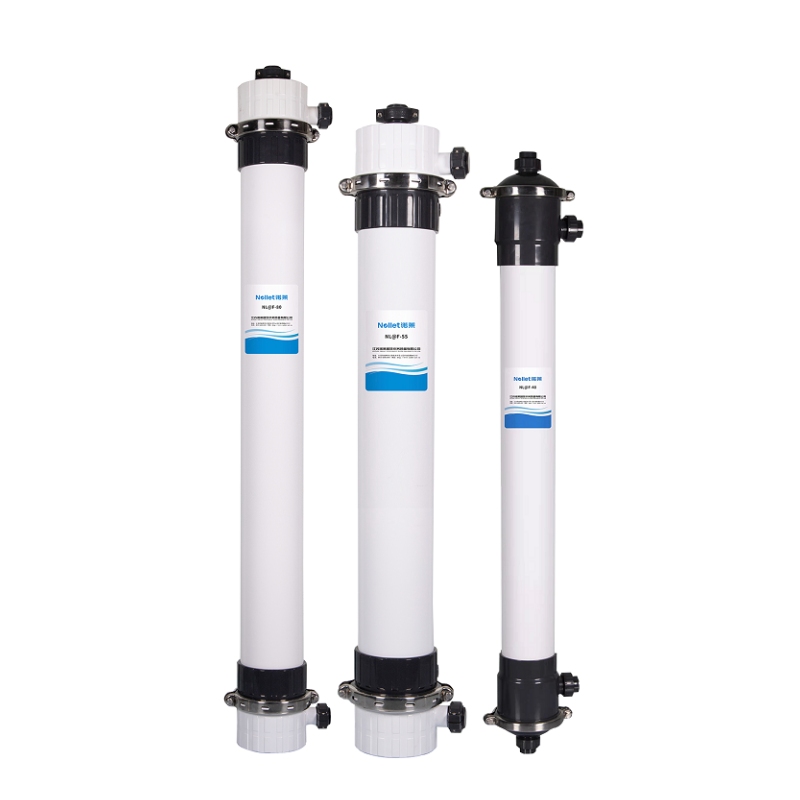
The gap between treated water and truly safe direct drinking water is where intelligent membrane purification equipment plays a critical role.
Why Clean Drinking Water Matters More Than Ever
Long-Term Health Implications of Trace Contaminants
Drinking water is consumed daily, often multiple times per day. Even low concentrations of contaminants can accumulate over years of exposure.
Heavy metals such as lead, cadmium, or arsenic may not cause immediate symptoms. However, chronic exposure has been associated with neurological damage, organ stress, and developmental risks. Elevated total dissolved solids (TDS) can influence kidney function and alter mineral balance in the body.
Residual chlorine is used in municipal disinfection to control pathogens, but it may react with organic matter to form byproducts. While these are regulated, their presence highlights a broader reality: water safety is complex, and chemical interactions do not stop at the treatment plant.
The key issue is that most of these substances are invisible. Clear water does not equal pure water.
Microbial Risk in Large Building Systems
In large commercial and public buildings, internal plumbing systems introduce additional complexity. Water storage tanks, circulation loops, and low-usage branches can create conditions favorable to bacterial growth.
Hospitals face particularly high standards. Patients with weakened immune systems cannot be exposed to even small microbial fluctuations. Schools, with high daily consumption rates, require consistent safety assurance for children.
In these environments, an additional purification barrier is not optional. It becomes part of the risk management strategy.
Sustainability and Operational Considerations
Many organizations rely on bottled water to avoid uncertainty in tap water quality. This approach introduces recurring costs, supply chain dependence, and environmental concerns related to plastic waste.
A centralized direct drinking water system supported by membrane purification offers long-term control. Instead of transporting purified water from external sources, purification occurs at the point of use.
Clean water, therefore, intersects with environmental responsibility, cost management, and infrastructure planning.
The Evolution from Traditional Filtration to Membrane Technology
Limitations of Conventional Filters
Traditional water filters typically combine sediment cartridges and activated carbon elements. Sediment filters remove larger particles such as sand or rust. Activated carbon improves taste and odor by adsorbing chlorine and some organic compounds.
These systems are useful for aesthetic improvement, but they are limited in scope. Dissolved heavy metals, salts, and microscopic contaminants can pass through standard filters.
Mechanical filtration alone cannot guarantee molecular-level separation.
How Membrane Filtration Works
Membrane technology introduces a semi-permeable barrier designed to allow water molecules to pass while blocking many contaminants.
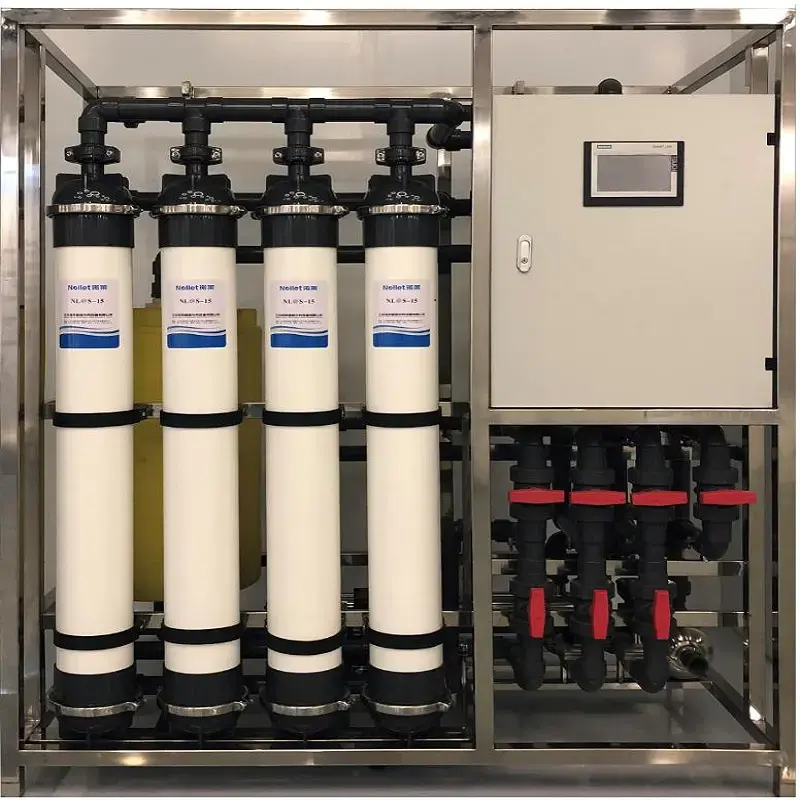
Ultrafiltration membranes remove bacteria and suspended solids. Reverse osmosis membranes operate at an even finer scale, removing dissolved salts, heavy metals, and numerous organic compounds.
At its core, membrane filtration is a physical separation process. It does not rely on chemical additives to neutralize contaminants. Instead, it creates a controlled barrier that enforces size and molecular selectivity.
This precision makes membrane systems especially suitable for producing direct drinking water from variable source conditions.
What Makes Intelligent Membrane Purification Equipment Different
Membrane technology is powerful, but intelligence transforms it into a managed system.
Traditional purification devices operate passively. They filter water until performance declines. Users often realize something is wrong only after taste changes or flow rates drop.
Intelligent membrane purification equipment integrates sensors, automation, and data systems that continuously evaluate performance.
Real-Time Water Quality Monitoring
Sensors track parameters such as:
-
Total dissolved solids levels
-
Inlet and outlet pressure
-
Flow rate stability
-
Temperature variations
By analyzing these metrics, the system can detect membrane fouling, abnormal operation, or declining efficiency before water quality is compromised.
This proactive approach reduces risk and enhances trust.
Automated Maintenance and System Protection
Membrane fouling is a natural process caused by the accumulation of contaminants on the membrane surface. Intelligent systems incorporate automatic flushing cycles that reduce buildup and extend membrane lifespan.
These automated processes improve stability and reduce reliance on manual intervention.
Data Integration and Remote Supervision
Modern intelligent water purification systems often connect to building management platforms. Facility operators can monitor system performance remotely, schedule maintenance based on real data, and generate reports for compliance purposes.
This integration shifts water purification from a standalone device to part of a broader infrastructure network.
Applications in Modern Commercial and Public Infrastructure
Intelligent direct drinking water membrane purification equipment supports diverse environments.
In hospitals, consistent microbial control is critical. Monitoring ensures that the output water meets strict internal standards.
In educational institutions, centralized systems provide uniform quality across multiple buildings, reducing dependence on disposable bottled water.
In office buildings, direct drinking water stations support sustainability initiatives and improve occupant experience.
In industrial parks, stable water quality may also support specific production processes alongside drinking needs.
Across all these applications, three factors remain consistent:
-
Reliability
-
Traceability
-
Scalability
Intelligence ensures that purification performance can be measured and documented rather than assumed.
Building a Long-Term Water Safety Strategy
Clean drinking water should not be treated as a one-time equipment purchase. It is a long-term operational system.
Intelligent membrane purification equipment contributes to sustainability by:
-
Optimizing filter replacement intervals through data-driven alerts
-
Maintaining energy efficiency through pressure management
-
Reducing emergency maintenance costs
-
Supporting environmental goals by minimizing plastic waste
Over the years of operation, these factors significantly influenced total lifecycle cost.
Water safety becomes measurable rather than speculative.
The Future of Drinking Water Infrastructure
Urbanization, environmental variability, and aging distribution networks are reshaping water management strategies. Final-point purification is increasingly recognized as a necessary layer of control.
Just as digital systems rely on multiple layers of cybersecurity, water systems benefit from layered protection. Municipal treatment provides the first stage. Intelligent membrane purification equipment provides the final safeguard at the point of consumption.
As expectations around health standards and sustainability continue to rise, intelligent systems will likely become standard components of commercial building design.
Clean Water Is a Managed System, Not Just a Filter
Safe drinking water is defined by consistent purity, not visual clarity.
Membrane technology enables molecular-level separation. Intelligent monitoring enables real-time oversight and preventive maintenance. Together, they transform water purification from a passive device into an actively managed infrastructure solution.
In modern buildings, clean drinking water is not simply a utility. It is a measurable standard supported by technology, data, and system design.
When purification becomes intelligent, water safety becomes controllable.