
Введение
Membrane fouling is a common challenge in water and wastewater treatment, leading to reduced flux, higher operating pressure, and more frequent cleaning. The design of the membrane module plays a key role in controlling fouling and maintaining system performance.
An inside-out membrane module, where feed water flows through the hollow fiber lumen and permeate passes outward, offers significant advantages in cleaning efficiency and operational reliability. In this article, we’ll explore how its unique design helps reduce fouling, simplify cleaning, and improve long-term performance.
Understanding the Inside-out Flow Configuration
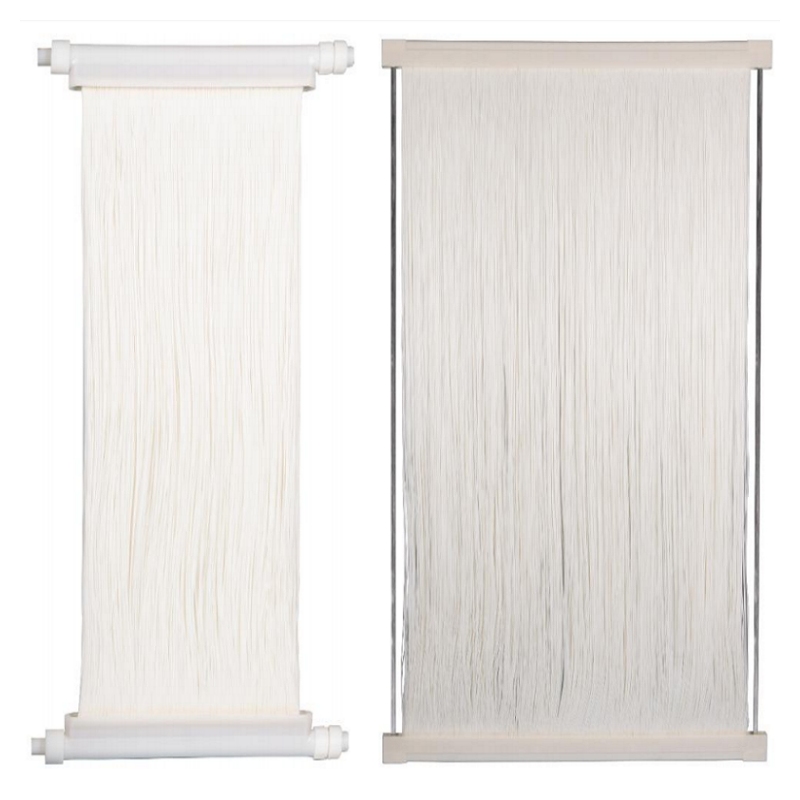
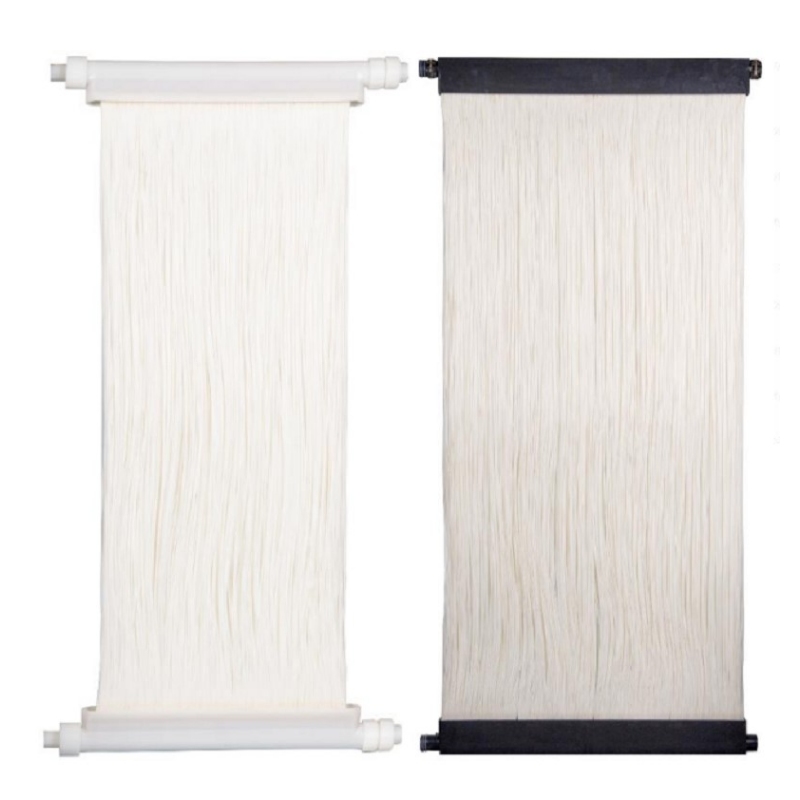
Before we get into cleaning, it helps to understand what “inside-out” actually means. In an inside-out membrane module, the feed water enters the hollow fiber lumens—the tiny channels running through the center of each fiber. Filtration happens as pressure drives water from the inside of the fiber through the membrane wall to the outside. Permeate collects in the space surrounding the fibers and exits through the module outlet.
Think of it like this: the dirty water goes into the straw, and clean water comes out through the straw walls. Contaminants—bacteria, viruses, colloids, and suspended solids—are retained on the inner surface of the fiber. This is the critical distinction. In an outside-in module, foulants accumulate on the outer surface of the fibers. That difference in where the foulants sit has enormous implications for how easy—or difficult—cleaning becomes.
How Backwashing Works in an Inside-out Module
Backwashing is the most common physical cleaning method for hollow fiber membranes. The principle is simple: reverse the flow direction temporarily to dislodge accumulated foulants. In an inside-out membrane module, backwashing means pumping clean permeate from the outside of the fibers back through the membrane wall and into the lumen. The reverse flow pushes foulants off the inner surface and flushes them out of the module.
Here is why this matters. Because the foulants are on the inner surface, the backwash flow travels through the entire length of the fiber, sweeping contaminants along the way. The hydraulic force is distributed evenly across the membrane surface. In outside-in modules, backwashing pushes water from the inside out—but foulants on the outer surface are not always effectively dislodged, especially if they have formed a dense cake layer.
Research has demonstrated that inside-out membrane modules arranged in parallel configurations and operated with regular backwashing can maintain productivity significantly better than systems without adequate backwash protocols. Studies have shown that increasing backwashing frequency, particularly with chlorinated water, significantly improves membrane productivity through enhanced foulant removal. For inside-out modules, this means the backwash is not just a cursory rinse—it is a highly effective cleaning mechanism that directly targets the fouling layer.
Channel Washing: The Inside-out Advantage You Did Not Know About
Backwashing is effective, but there is another cleaning mechanism that takes the inside-out membrane module to another level: channel washing. A 2024 computational fluid dynamics study compared backwashing and channel washing within hollow fiber membrane modules. The findings were striking. Channel washing showed more than 42 times the average velocity at the membrane inner surface and pores compared with backwashing. The applied pressure on the module and membrane during channel washing was much lower because most injected fluid flows directly from the inlet to the outlet without penetrating the membrane.
What does this mean in practice? Channel washing creates high-velocity flow along the inner surface of the fibers, effectively scouring foulants away. For an inside-out membrane module, the geometry naturally supports this cleaning mode—the fibers are open at both ends, allowing fluid to flow through the lumens at high velocity. Outside-in modules cannot leverage channel washing in the same way because the foulants are on the exterior, and there is no “channel” to scour.
The practical implication is significant: inside-out membrane modules can achieve more thorough cleaning with lower pressure and less energy than outside-in designs. Less pressure means less stress on the membrane and longer service life.
Lower Operating Pressure, Less Fouling Stress
Here is another factor that makes inside-out membrane modules easier to clean: they typically operate at lower pressures than outside-in configurations. The product specifications for Nollet’s inside-out modules list an operating pressure range of 0.1–0.3 MPa. This relatively low pressure means the membrane experiences less compaction and less irreversible fouling over time.
Lower operating pressure also means lower energy consumption, but from a cleaning perspective, the benefit is subtler: when the membrane is not being driven hard during filtration, it does not accumulate foulants as aggressively. The foulant layer that does form is less dense and easier to remove during backwashing. This creates a virtuous cycle: easier cleaning leads to better flux recovery, which means less frequent chemical cleaning, which means longer membrane life.
Chemical Cleaning: Simpler, Safer, More Effective
Even with regular backwashing, every membrane system eventually needs chemical cleaning to remove irreversible fouling. Here too, the inside-out membrane module offers distinct advantages.
Because the foulants are on the inner surface of the fibers, chemical cleaning agents can be introduced directly into the lumen—the same path the feed water takes. This means the cleaning solution is in direct contact with the fouling layer from the moment it enters the module. In outside-in modules, chemicals must diffuse through the membrane wall to reach the foulants on the exterior, which is less efficient and requires higher concentrations or longer contact times.
The result? Inside-out membrane modules typically require less chemical volume, shorter cleaning cycles, and lower chemical concentrations to achieve the same level of cleanliness. This translates to lower operating costs, less chemical handling risk, and reduced environmental impact. A typical chemical cleaning cycle for an inside-out module takes about 6 hours, including circulation and soaking periods. For outside-in modules, similar results often require longer cycles or more aggressive chemical formulations.
Comparing Inside-out vs. Outside-in: A Side-by-Side Look
| Factor | Мембранный модуль «внутрь-наружу» | Мембранный модуль снаружи-внутрь |
|---|---|---|
| Foulant location | Inner surface of hollow fibers | Outer surface of hollow fibers |
| Backwash mechanism | Permeate flows from outside to inside, sweeping foulants from the inner surface | Permeate flows from inside to outside, pushing against foulants on the exterior |
| Channel washing | Highly effective—42× higher velocity than backwashing at the inner surface | Limited effectiveness |
| Operating pressure | 0.1–0.3 MPa | Typically higher |
| Chemical cleaning | Direct contact with foulant layer; lower chemical consumption | Chemicals must diffuse through the membrane wall; higher consumption |
| Cleaning frequency | Less frequent due to effective backwash and channel wash | More frequent due to less effective physical cleaning |
| Материал мембраны | PES (polyethersulfone) with 0.01 μm pore size | Various |
| Typical applications | River water, reservoir water, seawater pretreatment, industrial wastewater, sewage reuse | Similar, but may struggle with high-solids feed |
Real-World Performance Data
The cleaning advantages of inside-out membrane modules are not just theoretical. Pilot-scale studies have demonstrated that inside-out hollow fiber UF membranes, operated in dead-end filtration mode with frequent backwashing, maintain stable performance over extended periods. Research on tertiary wastewater treatment showed that increasing backwashing with chlorine addition significantly improved membrane productivity. The enhanced foulant removal came from both physical backwashing and chemical oxidation, but the key enabler was the inside-out configuration that allowed backwash water to reach the entire fouling layer.
Field data from full-scale operations tells a similar story. A pilot-scale water treatment plant in Sweden operated an inside-out membrane module for 12 months with consistent performance. The module’s ease of cleaning meant that operators could maintain flux without resorting to frequent, aggressive chemical cleanings that would shorten membrane life.
Applications Where Cleaning Ease Matters Most
The cleaning advantages of inside-out membrane modules make them particularly well-suited for certain applications.
Industrial wastewater treatment is a prime example. Wastewater streams often contain high concentrations of organics, oils, and suspended solids that foul membranes aggressively. The ability to backwash effectively and perform channel washing means operators can maintain productivity without constant chemical interventions.
Pretreatment for seawater desalination is another application where cleaning ease is critical. Seaw reverse osmosis systems require high-quality feed water, and any membrane fouling in the pretreatment stage cascades into problems downstream. Inside-out modules provide the reliability and cleanability that desalination plants demand.
Surface water treatment—rivers, reservoirs, and mountain springs—also benefits. These sources can have variable water quality, with seasonal algae blooms or storm-driven turbidity spikes. The ability to clean the module effectively after these events ensures consistent treated water quality.
Maintenance Best Practices for Inside-out Modules
To get the most out of an inside-out membrane module, follow these maintenance guidelines:
-
Regular backwashing: Perform backwashing every 20–60 minutes during operation, with a backwash time of about 1 minute at 0.2 MPa. This prevents foulants from building up to the point where they become difficult to remove.
-
Periodic chemical cleaning: Even with regular backwashing, schedule chemical cleanings based on transmembrane pressure or flux decline. Use appropriate cleaning agents—acids, caustics, surfactants, or oxidants—depending on the foulant type and membrane material.
-
Avoid drying: Never allow the hollow fibers to dry out. Drying can cause irreversible damage to the membrane structure. Store modules wet when not in operation.
-
Monitor feed quality: Keep influent turbidity below 20 NTU to prevent excessive fouling. Pre-treatment, like screening or sedimentation, can help extend cleaning intervals.
-
Track performance: Monitor flux, transmembrane pressure, and permeate quality to identify when cleaning is needed before performance degrades significantly.
Conclusion: Easier Cleaning, Lower Operating Costs
The cleaning advantages of an inside-out membrane design come down to its flow path and fiber structure. Because foulants accumulate on the inner surface of the hollow fibers, backwashing and channel cleaning can remove them more effectively. The result is lower fouling, reduced chemical consumption, lower operating pressure, and longer membrane service life.
For water treatment operators, these benefits mean less downtime, simpler maintenance, and more stable system performance. Whether used in industrial wastewater treatment, seawater pretreatment, or drinking water production, inside-out modules provide a practical solution for improving efficiency and reducing operating costs.
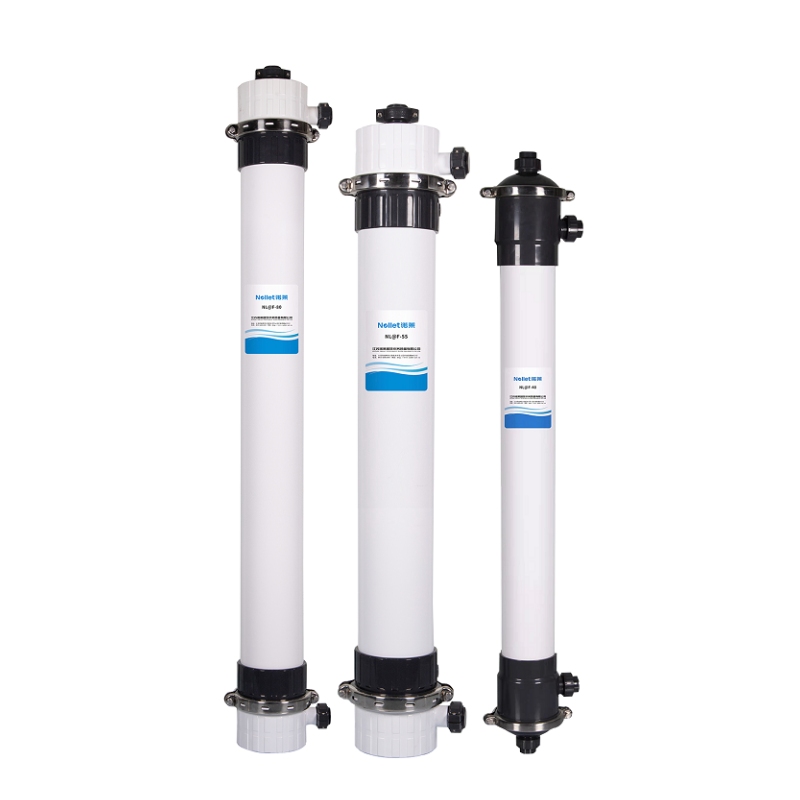
Nollet’s inside-out membrane modules feature PES hollow fiber membranes, a 0.01 μm pore size, and membrane areas of up to 45 m². Designed for durability, easy maintenance, and reliable performance, they help water treatment systems operate more efficiently over the long term. Contact our team to discuss the right solution for your application.